Complete Guide to F1 Tire Strategy and Pit Tactics
Discover the secrets of F1 tire strategy and pit tactics that shape every race. Learn how teams make split-second decisions for victory.
Formula 1 isn’t just a high-speed battle of engines and drivers; it’s a meticulously calculated game of strategy where even a single decision can determine the outcome of a race. Among the many tactics at play, tire strategy reigns supreme - a silent chess match that can elevate underdogs to the podium or crush championship dreams. This article dives deep into the intricacies of F1 tire strategy, giving you a comprehensive understanding of how it shapes every battle on the track.
Why Tire Strategy Matters in Formula 1
Imagine this: It’s the final laps of a race at Silverstone. Two drivers are neck and neck. One gambles on worn tires, while the other dives into the pits for fresh rubber. In a matter of seconds, the tide shifts, and a bold tire call propels the underdog to victory. Tire strategy isn’t just a supporting detail in Formula 1 - it’s the backbone of every race, influencing speed, grip, and even championship outcomes.
Understanding tire strategy allows fans to see beyond the overtaking and pit stops, uncovering the layers of science, engineering, and split-second decision-making that make Formula 1 so thrilling.
Breaking Down F1 Tires: The Building Blocks of Strategy
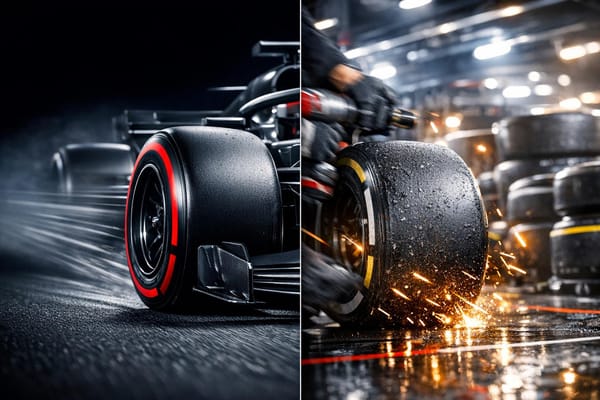
To appreciate the nuances of tire strategy, you first need to understand how tires work in F1. Pirelli, the sport’s exclusive tire supplier, provides a variety of compounds designed for specific track conditions.
Tire Compounds and Their Characteristics
- C1 to C5 (Dry Weather Tires):
- Soft (C3-C5): Maximum grip and fastest lap times but limited durability. Ideal for qualifying and short stints.
- Medium (C2-C4): A balance between performance and longevity, making it the default race tire for many strategies.
- Hard (C1-C3): Long-lasting but with the least grip, used for endurance on high-degradation tracks.
- Wet Weather Tires:
- Intermediates: Designed for light rain or a drying track, offering a balance of grip and water clearance.
- Full Wets: Built for heavy rain and standing water, with deep treads to prevent aquaplaning.
Each driver is allocated 13 sets of dry-weather tires, four sets of intermediates, and three sets of wets for a race weekend. Effective tire management across practice, qualifying, and the race is critical to executing successful strategies.
Rules and Regulations That Shape Tire Strategy
F1’s regulations significantly influence how teams use their tire allocations. Key rules include:
- Mandatory Two Compounds in Dry Races: Drivers must use at least two different dry compounds, ensuring at least one pit stop.
- Wet Race Adjustments: If a race is declared wet, teams can bypass the two-compound rule.
- Tire Allocation Across Sessions: Teams must return a specific number of sets after each practice session, limiting their choices for qualifying and the race.
These constraints make strategic planning essential, as teams must carefully juggle performance, durability, and the unpredictable nature of races.
Unpacking F1 Race Strategies and Pit Tactics
The One-Stop Strategy: Efficiency Over Aggression
The one-stop strategy is the most conservative approach, minimizing time lost in the pits. Drivers start on one compound, pit to switch to another, and aim to complete the race with minimal tire degradation. This strategy is common on tracks with low tire wear, such as Monaco, where overtaking is challenging.
However, it comes with risks. Unexpected tire degradation or a poorly timed safety car can derail a one-stop plan, forcing last-minute adjustments.
The Two-Stop Strategy: The Modern Standard
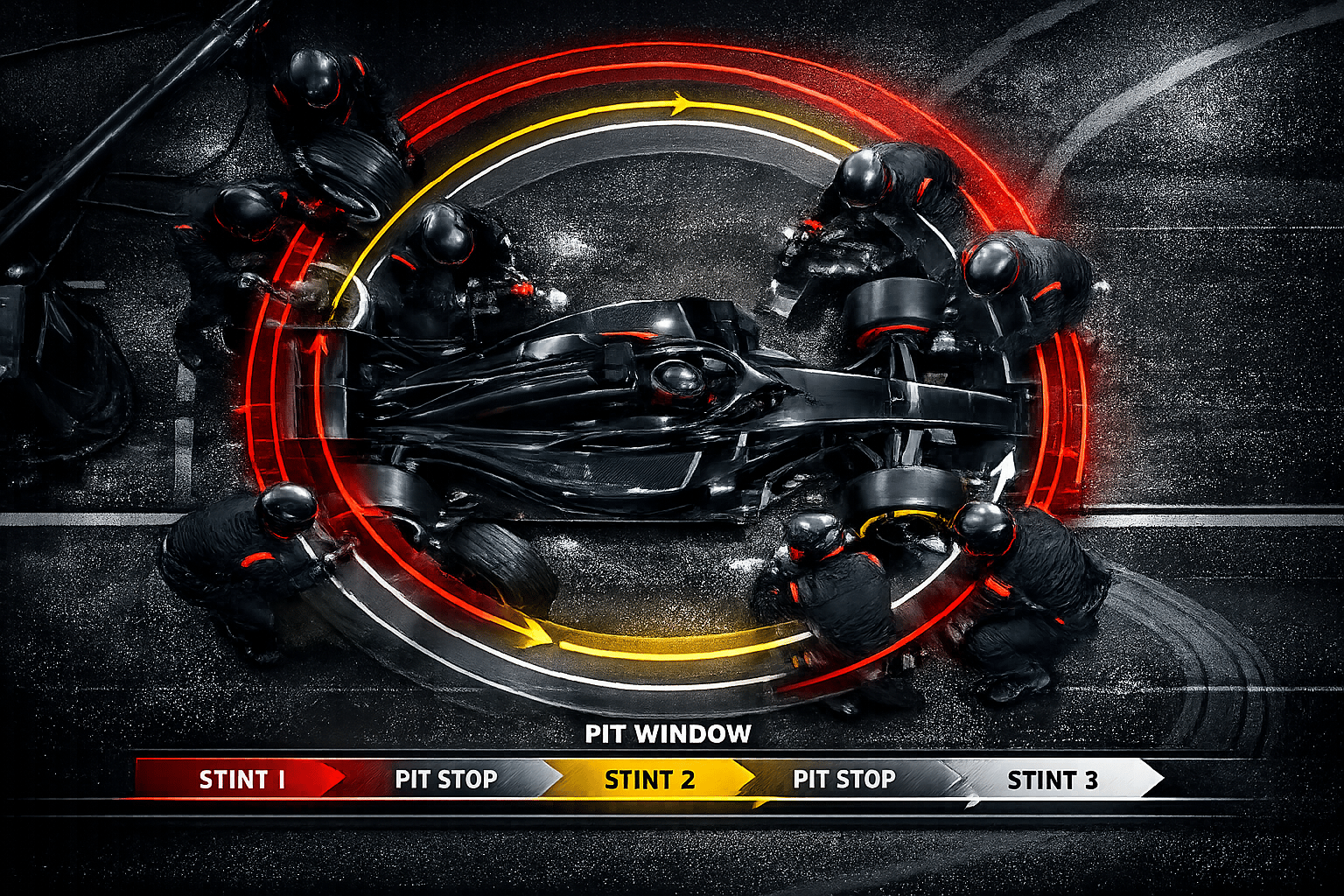
The two-stop strategy, often the default in modern F1, involves using three stints with two pit stops. This allows drivers to push harder on softer compounds, maximizing lap times. While it offers greater flexibility, it requires precision in timing pit stops to avoid traffic or inefficient tire use.
Tracks like Bahrain and Spain, known for high tire degradation, often favor this strategy.
Multi-Stop Strategies: Risky but Rewarding
Rare but effective in specific scenarios, multi-stop strategies involve three or more pit stops. These are utilized when fresh tires provide a speed advantage that outweighs the time lost in the pits. Iconic examples include Michael Schumacher’s four-stop win at the 2004 French Grand Prix, which showcased masterful pace and execution.
Undercut vs. Overcut: Tactical Pit Battles
- The Undercut: Pitting early to gain an advantage on fresher tires, allowing a driver to leapfrog a rival during the pit window. It’s most effective on high-degradation tracks or when new tires offer a substantial performance boost.
- The Overcut: Staying out longer than a rival in the hope of setting faster laps on worn tires while the competitor struggles to warm up fresh rubber. This strategy excels at circuits like Monaco, where track position is crucial.
Adapting to Unpredictable Elements
Safety Car and Virtual Safety Car (VSC) Scenarios
Safety cars and VSC periods can dramatically alter tire strategies, as pitting under these conditions costs significantly less time. Teams must decide whether to make an early stop, switch compounds, or react to rivals’ decisions. Timing is everything - an early safety car can enable a one-stop race, while a late one opens the door for a sprint finish on soft tires.
Wet Weather and Red Flags
Rain introduces a layer of unpredictability, forcing teams to choose between intermediates and wets and to time the switch back to slicks on a drying track. Red flags, which temporarily halt races, provide opportunities for teams to change tires without losing track position, often disrupting strategies and forcing rapid recalculations.
The Human Element: Drivers and Pit Crews
Tire Management and Skill
Drivers play a crucial role in tire strategy, balancing aggression with preservation to avoid overheating or premature wear. Some tracks, like Silverstone, are known for high degradation, requiring skilled management to maintain performance over long stints.
The Pit Crew Factor
Pit stops are as critical as they are fleeting, often lasting less than two seconds. A slow stop or error can cost positions, while a flawless change can be the difference between victory and defeat. Teams practice relentlessly to ensure coordination, communication, and speed under pressure.
The Future of F1 Tire Strategy
As F1 evolves, so too will tire strategy. The introduction of 18-inch tires in 2022 has already changed tire behavior, and future regulations may further impact strategy. For instance, potential bans on tire blankets or innovations in sustainable materials could reshape how teams approach tire management.
Key Takeaways
- Tires Are Everything: Understanding compounds, degradation, and operating windows is essential to grasp F1 strategy.
- One-Stop vs. Two-Stop: Each race demands a tailored approach, with one-stops prioritizing efficiency and two-stops enabling aggression.
- Undercut/Overcut Dynamics: Pit stop timing can make or break a race.
- Safety Cars Change the Game: Pitting under safety cars or VSCs can save valuable seconds, but requires impeccable timing.
- The Driver’s Role: Tire management is as much about the driver’s finesse as it is about engineering.
- The Pit Crew Is Key: A well-rehearsed pit stop can swing the outcome of a Grand Prix.
- Rain is a Wild Card: Wet weather demands adaptability and razor-sharp decision-making.
- The Future is Uncertain: Upcoming regulations and sustainability measures will likely redefine tire strategy.
Final Thoughts
F1 tire strategy is a delicate dance of science, intuition, and bold decision-making. It’s the invisible thread that connects every lap, every pit stop, and every victory. The next time you watch a Formula 1 race, pay attention to the tires - they are the unsung heroes of motorsport drama, shaping the narratives that make F1 the ultimate test of man, machine, and mind.
Source: "Every F1 Tire Strategy Explained in 13 Minutes" - Formulised, YouTube, Aug 13, 2025 - https://www.youtube.com/watch?v=MqEZ8BpdBSI