How Regulation Changes Impact F1 Development
How 2026 F1 rule changes — active aerodynamics, hybrid power overhaul, sustainable fuels and lighter cars — force teams to redesign, strategize and adapt.
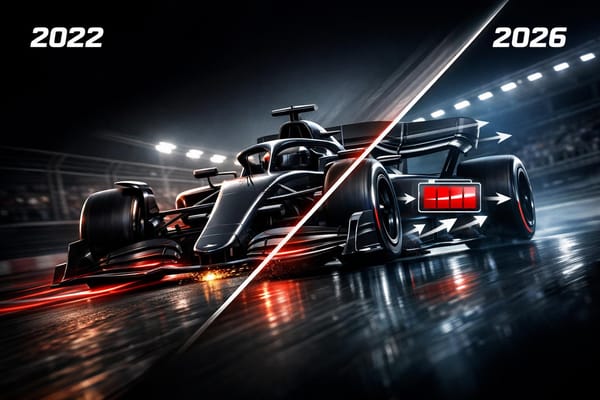
In Formula 1, regulation changes are a driving force behind car design, team strategies, and technological progress. These updates, introduced by the FIA, often force teams to rethink everything - from aerodynamics to power units - pushing the limits of engineering while prioritizing safety and competition. The 2026 regulations are set to bring some of the most dramatic shifts in years, including:
- Active Aerodynamics: Moveable wings will replace DRS, switching between modes for corners and straights.
- Power Unit Overhaul: A 50/50 split between electric and combustion power, with electric output increasing from 120 kW to 350 kW.
- Sustainable Fuels: Transition to 100% advanced fuels derived from waste and other renewable sources.
- Smaller, Lighter Cars: Reduced weight (from 1,759 lbs to 1,693 lbs) and tighter dimensions for improved agility.
These changes demand early planning and precise execution. Teams face tough decisions, like balancing current season performance with future development. History shows that early preparation and flexible design approaches are key to staying competitive during regulation shifts. The 2026 era will test every team's ability to adapt and innovate.
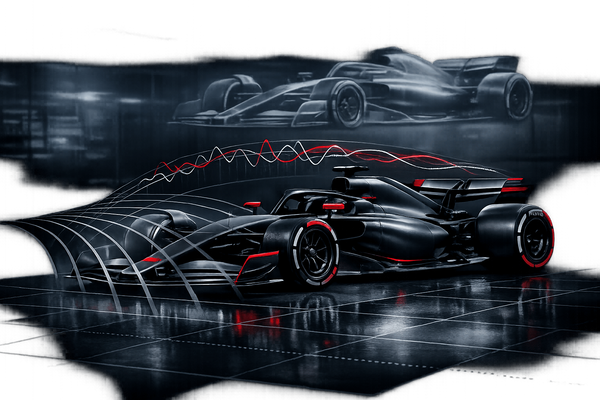
The first hints of extreme 2026 F1 car designs
Main Technical Areas Affected by Regulation Changes
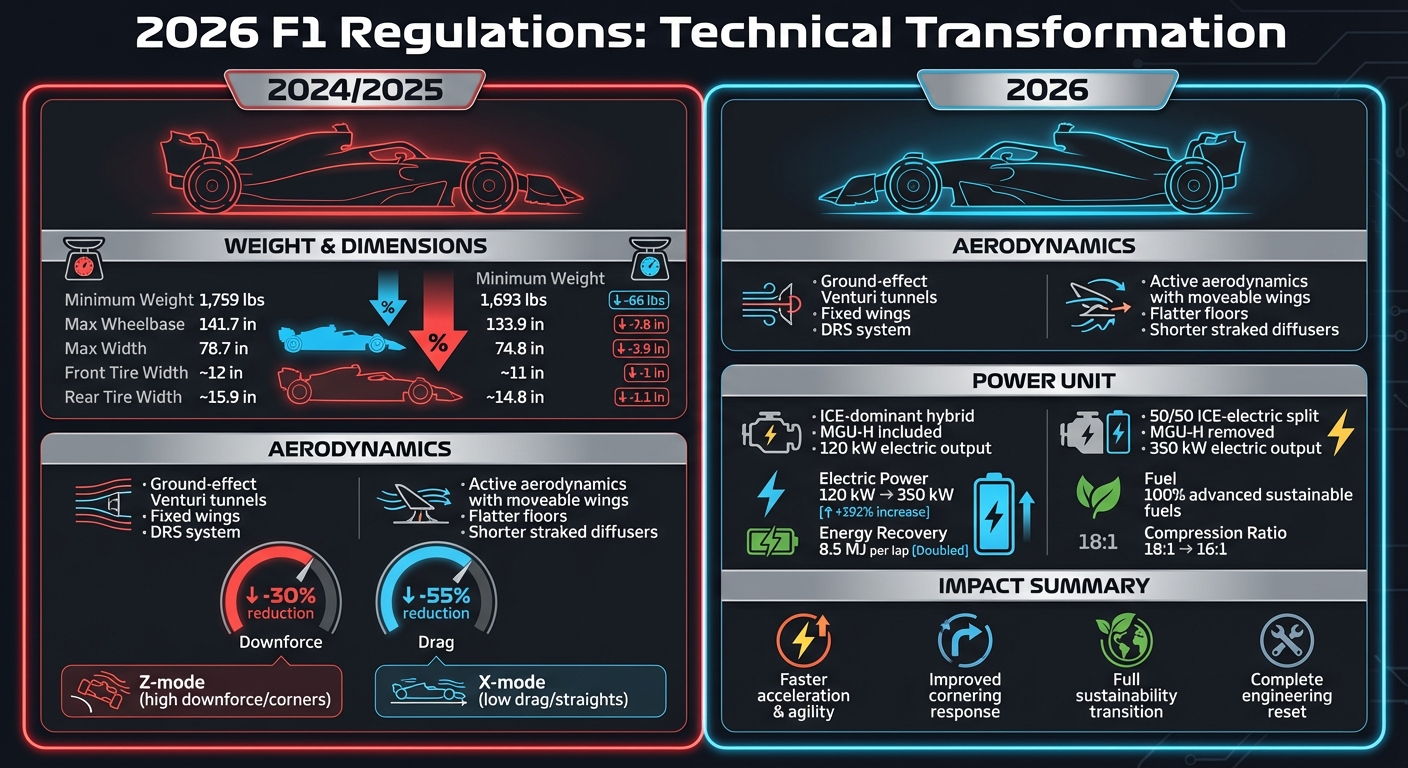
F1 2024 vs 2026 Technical Regulations Comparison
The latest F1 regulation updates target three key areas: aerodynamics, power units, and weight limits. Each change challenges teams to rethink their engineering strategies, pushing the boundaries of design and performance.
Aerodynamics and Chassis Design
Aerodynamic rules shape everything from a car's overall profile to its suspension layout. The 2026 regulations introduce active aerodynamics, allowing drivers to adjust moveable front and rear wings. These can switch between "Z-mode" for high downforce in corners and "X-mode" for reduced drag on straights. Additionally, the ground-effect Venturi tunnels, used from 2022 to 2025, will be replaced by flatter floors and shorter, straked diffusers. This shift reduces downforce by 30% and drag by 55%. Teams will also face new size constraints, with maximum wheelbase shrinking from 141.7 inches to 133.9 inches and overall width narrowing from 78.7 inches to 74.8 inches.
McLaren's 2023 performance highlights the impact of smart aerodynamic choices. Under Andrea Stella and then–Technical Director James Key, McLaren shaved nearly 2.0 seconds per lap in just a year. They achieved this by adopting a front pull-rod suspension to improve airflow and introducing significant aerodynamic upgrades at the Austrian and Singapore Grands Prix. These updates, including a "downwash" sidepod design, boosted the MCL60’s cornering speeds to rival Red Bull's RB19.
Looking ahead, teams must also overhaul their power units to meet the new standards.
Power Unit Development
The 2026 engine regulations mark a major shift, requiring a near-equal split between internal combustion engine (ICE) and electric power - a significant departure from the current ICE-heavy setup. The MGU-K’s output will increase from 120 kW to 350 kW, while the MGU-H will be removed to simplify the system and improve its relevance to consumer vehicles. Teams must also double their energy recovery during braking, with a new target of 8.5 MJ per lap.
Fuel regulations are evolving too. The sport will transition to 100% advanced sustainable fuels derived from carbon capture, municipal waste, or non-food biomass. To streamline development, the FIA has capped fuel energy flow at 3,000 MJ/h and reduced the maximum compression ratio from 18:1 to 16:1.
Six manufacturers - Ferrari, Mercedes, Alpine (Renault), Honda, Audi, and Red Bull Powertrains-Ford - are already gearing up for these changes.
But the adjustments don't stop there. New size and weight limits add another layer of complexity.
Weight and Size Restrictions
The 2026 "nimble car" concept aims to reverse years of weight increases, lowering the minimum car weight from 1,759 pounds to 1,693 pounds - a reduction of 66 pounds. This lighter design enhances acceleration and agility but also brings new engineering challenges.
Smaller dimensions will test packaging solutions. Shorter diffusers, for example, are expected to push teams toward pull-rod rear suspension layouts to optimize airflow. Tire sizes are also changing: front tires will narrow from about 12 inches to 11 inches, and rear tires will shrink from approximately 15.9 inches to 14.8 inches. While these adjustments reduce aerodynamic drag, they also decrease mechanical grip, requiring engineers to maximize performance from the available downforce.
| Feature | 2024/2025 Regulations | 2026 Regulations | Impact |
|---|---|---|---|
| Minimum Weight | 1,759 lbs | 1,693 lbs | Faster acceleration, better agility |
| Max Wheelbase | 141.7 in | 133.9 in | Improved cornering response |
| Max Width | 78.7 in | 74.8 in | Reduced drag, smaller footprint |
| Front Tire Width | ~12 in | ~11 in | Lower front-end grip |
| Rear Tire Width | ~15.9 in | ~14.8 in | Decreased traction potential |
Despite the focus on reducing weight, safety remains a priority. Roll hoops now must endure 23% more load - equivalent to the weight of nine family cars - ensuring robust driver protection even as cars become lighter.
How Regulation Changes Affect Competition and Strategy
Major regulation changes can completely shift the competitive landscape, forcing teams to make tough strategic decisions about where to focus their investments.
The Regulation Reset Effect
When Formula 1 introduces sweeping regulatory changes, it often disrupts the established hierarchy. The upcoming 2026 overhaul is expected to create fresh opportunities for teams to challenge their rivals and potentially leap ahead. History shows that such significant changes can turn long-standing dynamics on their head.
Teams that quickly spot ambiguities or loopholes in the new rules can gain a significant edge. For instance, a possible interpretation related to fuel compression in the 2026 regulations might offer a 0.4-second per lap advantage - a game-changing margin in F1. This potential advantage caused Ferrari, Audi, and Honda to unite in sending a letter to the FIA, demanding clarification. Nikolas Tombazis, the FIA's Single Seater Director, responded firmly:
"We made it clear to the teams that we will not tolerate anyone exploiting loopholes in the regulations that they have kept hidden from us".
Ferrari's Team Principal, Frederic Vasseur, highlighted the uncertainty surrounding the impact of the new regulations:
"This can be a gamechanger for everybody because we don't know the impact on every single team of the new regulation".
Regulation changes don't always wait for the off-season. Mid-season Technical Directives can also shake things up by addressing gray areas that teams have exploited. A notable example is the 2025 flexi-wing clampdown, which reduced front wing deflection tolerances from 0.59 inches to 0.39 inches under load. This adjustment disrupted some teams' designs while benefiting others.
These shifts force teams to walk a tightrope: balancing current performance with the need to prepare for future regulations.
Balancing Current Season Performance with Future Preparation
Teams often face a tough choice: should they focus on maximizing their performance in the current season or shift resources toward adapting to future regulations?
In 2025, Alpine made a bold decision to halt development of their A525 car as early as January, redirecting their resources entirely toward the 2026 season. Technical Director David Sanchez explained their approach:
"Our strategy was in '25 essentially we want to invest as much as possible, as early as possible, on the 2026 car... the strategy was for the car launch we do one aero package, and that's it, we stopped there".
This decision came at a cost. Alpine finished last in the championship with just 22 points, but they gained maximum wind tunnel time and CFD allocation for 2026 development.
Other teams chose a different path. Haas, for instance, introduced major upgrades late in the 2025 season, opting to prioritize short-term competitiveness. These upgrades, rolled out as late as the Austin Grand Prix in October, demonstrated their focus on immediate results rather than long-term planning. Alpine's Managing Director Steve Nielsen suggested that Haas's strategy might leave them at a disadvantage for the 2026 season, as they had not allocated sufficient resources to their future car.
McLaren faced a unique challenge in 2025. Locked in a battle for both championships, they couldn't afford to compromise their current performance. Instead of overhauling their aerodynamic concept, they refined an existing low-drag rear wing package tailored for high-speed circuits like Monza and Las Vegas. This approach helped them secure the Constructors' Championship with six races to spare, but it remains to be seen how this strategy will hold up in the 2026 era.
Adding another layer of complexity is the Aerodynamic Testing Restrictions (ATR) sliding scale. Teams finishing lower in the championship gain more wind tunnel time and CFD runs, creating an incentive to accept short-term struggles for long-term benefits. On top of that, teams must use "mule cars" during end-of-season testing to assess 2026-spec tires and downforce levels - all while still competing for championship points.
Handling Uncertainty During Regulation Transitions
Regulation changes in motorsport are rarely crystal clear. Teams often have to interpret ambiguous language, navigate potential loopholes, and adapt to evolving FIA rulings - all while designing and building multi-million-dollar cars. Those who handle this uncertainty well can gain a critical advantage.
Flexible Design Approaches
Unclear regulations push teams to build flexibility into their car designs. Instead of locking into one interpretation of the rules, they design components that can be adjusted as FIA clarifications emerge.
A great example of this came in October 2024 with Red Bull's RB20. The car featured a clever bib height adjustment device - a screw located in the cockpit footwell. This allowed engineers to tweak the T-tray height during setup when the car was disassembled. As Max Verstappen explained:
"For us, it was just an easy tool. When the parts were off, it was easy to adjust. But once the whole car is built together, you can't touch it".
When the FIA questioned whether this device complied with parc fermé rules, Red Bull worked closely with officials to seal the mechanism, avoiding a costly redesign.
The FIA also helps teams navigate uncertainty by phasing in new regulations. For example, in 2025, Technical Directive TD018 reduced permissible front wing flexibility from 15 mm (about 0.59 in) to 10 mm (roughly 0.39 in). Teams were given an eight-race grace period before stricter tests began at the Spanish Grand Prix. This allowed teams to continue using their existing designs while developing compliant alternatives.
During such transitional periods, teams face a tough decision: stick with the current design to maximize performance for as long as possible, or switch early to comply with the stricter rules. Ferrari learned this the hard way in late 2024. Team Principal Fred Vasseur admitted they delayed building a flexible front wing, assuming the FIA would ban the technology after a fact-finding mission at the Belgian Grand Prix. When the ban didn’t happen, Ferrari lost precious development time:
"We were convinced that it would go for the 'no go'. And it went for the 'go!' So probably we lost one or two months".
Beyond design adjustments, teams also employ proactive strategies to stay ahead of regulatory changes.
Tracking Changes and Backup Planning
To stay prepared, teams closely monitor regulatory developments and maintain open communication with the FIA. These efforts help balance immediate performance goals with long-term compliance.
One key strategy is keeping an eye on FIA data-gathering tools. For instance, the nose-mounted cameras introduced in 2024 signaled upcoming Technical Directives. By tracking these signals, teams can anticipate changes and plan accordingly.
Teams also analyze competitors' technical submissions to the FIA. If they notice a rival exploiting a potential loophole, they can request immediate clarification. The FIA has made its stance clear: hidden loopholes undermine fair competition and pose risks to the sport's integrity.
Another effective approach is maintaining constant dialogue with the FIA technical department. Mercedes exemplified this during their 2026 power unit development, ensuring their interpretation of fuel compression limits aligned with FIA intentions. Ferrari’s Vasseur echoed the importance of this proactive engagement:
"If it's a kind of loophole in the wording and so on, it's much more difficult for everybody - and much more dangerous for F1".
Case Studies from Past Regulation Changes
Two major regulation shifts - the 2014 hybrid revolution and the 2022 ground effect overhaul - highlight both effective strategies and common pitfalls. These examples reveal how teams approached new regulatory challenges, showcasing what worked and what didn’t.
The 2014 Hybrid Power Unit Era
In 2014, Formula 1 introduced 1.6-liter V6 turbo hybrid engines, marking a seismic shift in technology. Teams had to master complex systems like the MGU-H and MGU-K, focusing on energy recovery and efficient power deployment. It was the most dramatic change in the sport's technical rules to date.
Mercedes emerged as the clear leader, thanks to early preparation and a groundbreaking "power unit-led" design philosophy. Instead of treating the engine as just another component, they built the car around it, ensuring optimal integration. Their investment in hybrid technology - well before the rules took effect - paid off handsomely, giving them a dominant edge.
Meanwhile, rivals like Ferrari, Renault, and Honda faced significant challenges. Issues with reliability and power delivery plagued their hybrid systems, illustrating the steep learning curve and the advantage Mercedes gained by starting early.
The 2022 Ground Effect Revival
The 2022 regulations brought another major shift, focusing on ground effect aerodynamics. By channeling airflow through Venturi tunnels under the car, the primary source of downforce moved from the upper body to the floor. This change drastically reduced the loss of downforce for trailing cars - from about 50% to just 5–10%. Other changes included 18-inch wheel rims and an increase in minimum car weight to 798 kg (approximately 1,759 lbs).
Red Bull adapted brilliantly to these changes, maintaining a performance edge throughout the season. Their engineers mastered the ride height sensitivity that comes with ground effect designs. This was critical because improper ride height could cause "bottoming out", potentially damaging the mandatory wooden plank and risking disqualification. Additionally, Red Bull optimized the T-tray at the front of the floor, creating vortices that energized airflow into the underfloor tunnels, enhancing performance.
McLaren, on the other hand, provides an example of a team recovering from a rough start. The 2023 season began poorly for them at Bahrain, but under Andrea Stella's leadership and with key hires from Ferrari and Red Bull, they turned things around. A series of updates, rolled out in three stages starting at the Austrian Grand Prix, transformed the MCL60 into one of the fastest cars on the grid by the Japanese Grand Prix in September 2023. The car excelled in high-speed corners and came close to matching Red Bull's performance, recovering nearly 2 seconds in pace within a single year.
Adrian Newey summed up the challenge of adapting to new regulations:
"If you get the basic architecture wrong, within reason, you have to maintain it for at least one season".
These examples highlight how early preparation, technical insight, and the ability to pivot quickly can make or break a team's success under new regulations.
Conclusion: Regulation Changes as a Constant in F1
In Formula 1, regulation changes aren't just occasional shake-ups - they're the lifeblood of the sport. From the 2014 introduction of hybrid engines to the upcoming 2026 shift to active aerodynamics, each new set of rules forces teams to rethink their approach from the ground up. These changes fuel technical advancements, pushing engineers into unexplored territory where previous advantages can disappear overnight, and new opportunities arise.
This relentless evolution demands that teams balance immediate performance with long-term planning. Success often hinges on getting the car's foundation right from the outset, as a flawed design can haunt a team for an entire season. Teams can't afford to wait for the new rules to take effect - they need to invest early, adopt adaptable design philosophies, and maintain open communication with the FIA to avoid costly errors.
The changes coming in 2026 are monumental: electric power output will triple, cars will become lighter and more compact, and the sport will fully transition to sustainable fuels. Additionally, cars will feature narrower, shorter designs and active aerodynamics to replace the traditional DRS system. These updates will completely redefine how F1 cars are built and raced.
If history has taught us anything, it's that flexibility and foresight are what separate the front-runners from the rest. Teams that invest too late, misjudge timelines, or cling to flawed concepts often find themselves paying a steep price. Even a few months of delay in adopting flexible designs can mean the difference between vying for podiums and languishing in the midfield.
As Formula 1 continues to evolve, staying adaptable will remain a non-negotiable part of thriving in this ever-changing landscape of motorsport innovation.
FAQs
How will active aerodynamics reshape F1 racing in 2026?
Starting in 2026, active aerodynamics will introduce a game-changing feature for F1 cars, enabling them to adjust downforce and drag on the fly during races. Paired with tighter regulations for DRS zones, this advancement is set to reduce turbulent air, paving the way for more overtaking opportunities.
These updates are designed to bring cars closer together on the track, making races more thrilling. Drivers will have the ability to strategically tweak their aerodynamics, leading to intense head-to-head battles and a stronger focus on tactical decisions throughout the race. Fans can expect a whole new level of excitement and strategy in the sport.
What challenges will F1 teams face with the new 2026 power unit regulations?
The 2026 power unit regulations bring a host of technical hurdles for F1 teams to tackle. One major shift is the removal of the MGU-H, placing a much greater load on the MGU-K, which now needs to handle up to 350 kW (roughly 470 bhp) - more than three times the current capacity. This change forces teams to rethink their hybrid systems, ensuring they can recover and deploy energy efficiently without compromising car stability, particularly as power fades at higher speeds. On top of that, the move to 100% sustainable fuel means teams must rework combustion systems and engine mapping to align with the new fuel's energy density and combustion characteristics.
These updates also ramp up the strain on key components like the gearbox, rear axle, and battery. Teams will need to rely on stronger yet lightweight materials to meet these demands while staying within the sport's strict minimum weight requirements. Managing power delivery on long straights without breaching deployment limits will demand not just mechanical adjustments but also cutting-edge software solutions and dynamic strategies. Smaller teams, however, may feel the pinch of increased development costs and fewer testing opportunities, making reliability a top priority as the season unfolds.
How do F1 teams balance current season performance with preparing for future regulation changes?
F1 teams face a constant juggling act: pushing for peak performance now while preparing for major regulation changes down the road. To stay ahead, they typically divide their efforts into two areas - one fine-tuning the current car and another laying the groundwork for future designs. For instance, teams are already experimenting with modular aerodynamic parts, such as under-floor components, which are expected to be crucial in the 2026 ground-effect era. This strategy helps them avoid starting from scratch when the new rules come into play.
The upcoming changes to power unit regulations in 2026 add another layer of complexity. With the removal of the MGU-H and a boost in MGU-K energy recovery capacity, teams are busy rethinking cooling systems and energy deployment strategies. At the same time, they’re still focused on squeezing every bit of reliability and performance out of the existing 1.6-liter V6 turbo engines. By striking a balance between immediate upgrades and forward-looking innovation, teams ensure they remain competitive today without losing ground in the future.
Additionally, regulatory updates like the 2025 flexi-wing restrictions underscore the importance of flexible development plans. Teams treat these adjustments as stepping stones, making gradual improvements to their designs that enhance current performance while staying aligned with future demands. This methodical approach enables them to stay competitive now while building a solid platform for what’s ahead.