Ground Effect in 2025: What Changed?
Explore the evolution of ground effect in Formula One from 2022 to 2025, its impact on car performance, and the upcoming regulatory changes for 2026.
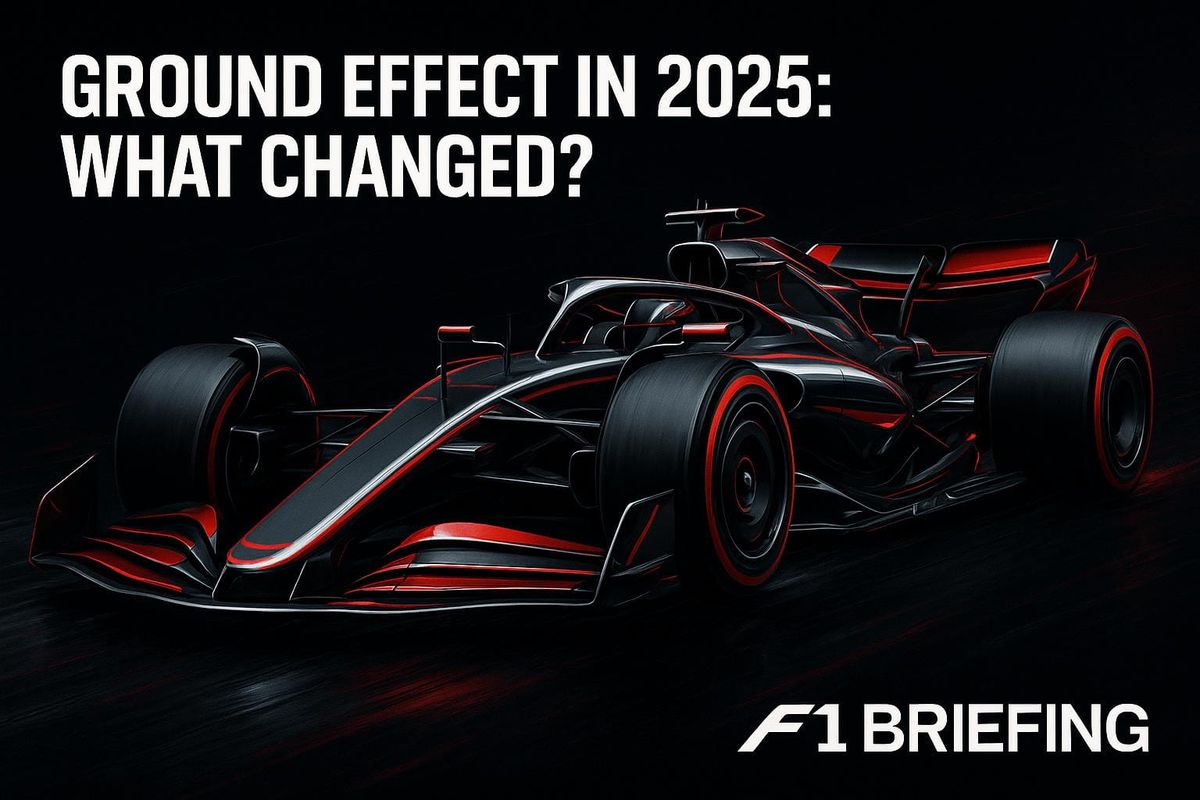
Ground effect aerodynamics, reintroduced in Formula One in 2022, transformed car design and racing dynamics. By generating downforce through underfloor Venturi tunnels rather than wings, this approach improved cornering stability and reduced "dirty air", allowing for closer racing. However, challenges like porpoising and ride-height sensitivity initially complicated its implementation.
From 2022 to 2025, teams refined ground effect technologies, optimizing floor designs and suspension systems to enhance performance. These advancements enabled faster, more stable cars and tighter competition. However, the benefits diminished over time due to regulatory tweaks and technical limitations.
Looking ahead, 2026 regulations will partially phase out ground effect, introducing lighter cars, reduced downforce, and more efficient power units. These changes aim to balance performance with new racing dynamics while addressing the challenges of the ground effect era.
With Ground Effect Gone For 2026... What Is Next For F1?
Ground Effect Development: 2022 to 2025
Since the regulatory overhaul in 2022, teams have steadily advanced ground effect designs. Over three seasons, engineers have fine-tuned aerodynamics to boost performance while tackling the challenges that emerged with the reintroduction of this technology.
Sharper Aerodynamic Designs
Following the 2022 changes, teams went beyond the basic Venturi tunnel concept, honing floor edge geometry and suspension configurations to optimize airflow and maintain a stable ride height. These refinements struck a better balance between mechanical grip and aerodynamic efficiency, ensuring cars could adapt to a variety of track conditions.
Tackling Early Issues: Porpoising and Ride-Height Challenges
The return of ground effect in 2022 wasn’t without its hurdles. One of the biggest problems was porpoising - a high-speed bouncing caused by disruptions in the aerodynamic seal under the car. Early fixes, like adjusting suspension and ride height, often came at the cost of performance. Over time, teams developed floor designs that smoothed pressure transitions beneath the car, reducing porpoising while maintaining downforce. By 2025, a deeper understanding of how floor design and suspension interact has led to more stable performance without compromising efficiency.
Ground Effect in Modern Aerodynamics
Today, ground effect isn’t just about the car’s floor; it’s part of an integrated aerodynamic system that includes front and rear wing elements. Advances in computer modeling and materials have allowed teams to create precise and adaptable floor shapes. These innovations make it easier to fine-tune setups throughout a race weekend, ensuring peak performance under varying conditions.
The journey from 2022 to 2025 showcases how overcoming initial setbacks led to significant breakthroughs in ground effect design. These developments have not only shaped team strategies but also redefined the performance landscape heading into 2025.
Impact of Ground Effect on Car Performance and Racing
Ground effect has reshaped how cars perform and how races unfold, with advancements in aerodynamics between 2022 and 2025 playing a key role. Let’s break down its influence on performance, racing dynamics, and the hurdles it presents.
How It Boosts Car Performance
By generating downforce directly from the car's floor rather than relying on intricate wing designs, ground effect enhances cornering stability and allows cars to maintain higher speeds. This approach also helps tires and suspension systems perform more consistently, making vehicles more predictable and competitive during races.
Tighter Racing and Closer Finishes
One of the standout benefits of ground effect is its ability to minimize the aerodynamic disadvantages of drafting. This means cars can follow each other more closely without losing stability, leading to tighter, more action-packed races.
The Challenges It Brings
Despite its advantages, ground effect isn’t without issues. Drivers have noted the physical strain caused by stiffer suspensions, a necessary trade-off for maintaining the aerodynamic seal. Teams also face difficulties in optimizing tire performance and setups, especially under unpredictable conditions like rain, where maintaining that seal becomes even trickier.
sbb-itb-7c68254
Team Approaches and Strategies in 2025
In 2025, teams face the dual challenge of squeezing every ounce of performance from their current ground effect systems while laying the groundwork for the significant regulation changes coming in 2026. These efforts set the stage for technical breakthroughs and team strategies that will be explored further.
Preparing for the 2025 Transition Year
Teams are balancing their focus between short-term gains and long-term planning. One leading contender is fine-tuning its current ground effect package while simultaneously channeling resources into developing next-generation power units. Another team is using this season as a testing ground for bold floor and suspension concepts, even if it means sacrificing some immediate performance. Meanwhile, a third team is sticking to a consistent setup philosophy while quietly preparing for future upgrades.
Main Areas for Technical Development
Aerodynamics remains the heart of technical development, with floor design continuing to be a key battleground. Engineers are honing features like edge wing profiles and diffuser throat geometry to extract maximum downforce and maintain a tight aerodynamic seal with the track surface. Even small improvements in these areas can make a big difference in race performance.
Airflow management is another critical focus. Teams are finding new ways to guide air around the wheels and through brake ducts, which not only improves aerodynamic efficiency but also helps with tire temperature control and brake cooling. Additionally, advancements in ride height control systems are ensuring cars stay within optimal aerodynamic conditions, whether on smooth circuits or bumpier tracks. The following case studies highlight how these efforts translate into on-track success.
Case Studies of Leading Teams
Several teams have made noteworthy strides by refining their approaches. One team has concentrated on improving its floor design and suspension geometry, resulting in better stability and cornering performance at lower speeds.
Another team has taken a research-heavy approach, investing in extensive wind tunnel testing. This has allowed them to experiment with and validate new aerodynamic ideas, leading to more consistent race-day performance.
Even smaller teams are making their mark. One has focused on rear floor aerodynamics and diffuser efficiency, tackling airflow separation issues head-on. Their innovative solutions have shown that clever engineering can narrow the gap, even with limited resources.
Across the grid, these varied strategies highlight a common theme: success under the current ground effect rules isn’t just about having the biggest budget. It’s about smart decision-making, a deep understanding of aerodynamics, and knowing how to allocate resources effectively.
Comparison of Ground Effect Era (2022–2025) vs. Pre-2022 and Future Regulations
The ground effect era brought fresh dynamics to Formula One, but its outcomes have been a mixed bag compared to pre-2022 aerodynamics. While early gains were noticeable, team innovations gradually chipped away at the initial benefits.
Pros and Cons of Ground Effect
Over the last four years, ground effect regulations have showcased clear strengths and weaknesses:
| Aspect | Advantages | Disadvantages |
|---|---|---|
| Racing Quality | By early 2022, dirty air effects were reduced significantly, improving following distances by about 18% compared to pre-2022 levels. | By 2024, interventions like technical directive TD039 saw dirty air levels return to pre-2022 conditions. |
| Performance | Ground effect cars generated high downforce with relatively low drag, leading to impressive top speeds. | Drivers faced severe porpoising and cars were highly sensitive to ride height adjustments, making them tricky to handle. |
| Competitiveness | Performance gaps across the grid shrank, creating tighter competition compared to the 2017–2021 seasons. | Early aerodynamic challenges required mid-season fixes to address porpoising issues. |
| Aesthetics | The cars' sleek, modern designs were widely praised for their visual appeal. | However, some of these design upgrades compromised driver comfort and handling consistency. |
The introduction of a cost cap during this period also played a role in reducing performance disparities. While the era delivered some successes, it also highlighted areas for improvement, setting the stage for major regulatory changes in 2026.
What to Expect in 2026
The 2026 season is poised to bring a bold overhaul of F1 regulations, taking lessons from the ground effect era while addressing its shortcomings.
Physical Changes:
- Cars will shed 30 kg, bringing the total weight down to 768 kg (including 722 kg for the chassis and approximately 46 kg for the tires).
- The wheelbase will be shortened by 200 mm to 3,400 mm, with the overall width reduced by 100 mm to 1,900 mm.
- Tire widths will also shrink, with a 25 mm reduction at the front and a 30 mm reduction at the rear.
Aerodynamic Overhaul:
The 2026 cars will feature 30% less downforce and 55% less drag compared to their 2025 counterparts. Ground effect will be partially phased out in favor of flat floors and active aerodynamic systems, marking a significant departure from the Venturi tunnel approach.
Power Unit Evolution:
- The hybrid powertrain's internal combustion to electric ratio will shift from 80:20 to an even 50:50 split.
- The MGU-H will be eliminated, and the MGU-K’s electrical output will rise from 120 kW to 350 kW.
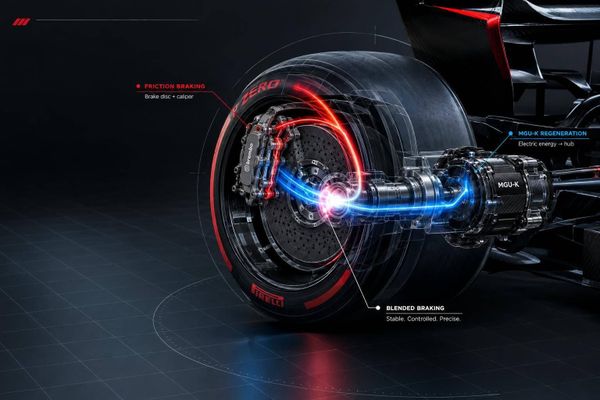
- Energy recovery during braking will double, reaching approximately 8.5 megajoules per lap.
These updates aim to balance competitive lap times with improved racing dynamics and align with Formula One's sustainability objectives. Active aerodynamic systems are expected to make cars more predictable in terms of handling, while the increased focus on sustainable fuels and enhanced electrical power underscores a commitment to blending performance with environmental responsibility.
Conclusion: Ground Effect's Impact on F1
The ground effect era brought a seismic shift to Formula One, introducing groundbreaking innovations while presenting challenges that continue to shape the sport's direction.
On the track, ground effect revolutionized racing dynamics, enabling closer competition between teams - at least initially. While early designs maximized these advantages, subsequent tweaks to technical rules and regulations tempered the gains, showcasing the constant push-and-pull between engineering creativity and rule-making.
From an engineering standpoint, ground effect forced teams to rethink car setups, especially in areas like aerodynamics and suspension systems. This reimagining of design principles set a new standard for what Formula One cars could achieve, pushing the boundaries of performance and efficiency.
Regulatory adjustments also played a key role during this period. Lessons learned from the ground effect era directly influenced ongoing rule changes, highlighting Formula One's dedication to balancing innovation with safety and fair competition. This constant evolution underscores the sport's commitment to refining its technical framework without losing sight of its core values.
The ground effect era didn't just alter how cars performed - it redefined the very fabric of Formula One. It showcased the sport's ability to embrace significant technical shifts while maintaining its competitive spirit. More importantly, it underscored the need for continuous adaptation to keep innovation sustainable and regulated.
As Formula One looks to the future, the ground effect years stand as both a milestone in engineering ingenuity and a reminder of the challenges in governing cutting-edge technology. This period in F1 history offers valuable lessons that will undoubtedly influence the sport's next chapter.
FAQs
Why has ground effect technology become less effective in Formula One by 2025?
By 2025, ground effect technology in Formula One has lost much of its edge, largely due to regulatory shifts and technical hurdles. Originally reintroduced in 2022 to encourage closer racing and more overtaking, ground effect has faced challenges as teams grappled with managing turbulence and maintaining the precise ride height needed for peak performance.
On top of that, the 2022 regulations, aimed at reducing cars' sensitivity to ride height changes, have pushed teams to refocus on generating downforce through wings instead. Coupled with the FIA’s ongoing efforts to prioritize safety and ensure fair competition, these changes have diminished the overall impact of ground effect technology on the sport.
How have F1 teams adjusted their car designs and strategies to handle porpoising and ride-height challenges since ground effect returned?
Since ground effect made its comeback in 2022, F1 teams have been busy fine-tuning their cars to tackle challenges like porpoising and ride-height sensitivity. By slightly raising the ride height, teams have managed to cut down on the aerodynamic oscillations created by the Venturi effect, effectively reducing porpoising.
On top of that, engineers have rolled out updates such as reworked floor designs and improved aerodynamic components. These changes help strike a balance between stability and downforce, allowing the cars to deliver top-tier performance without sacrificing safety or control.
How will the 2026 F1 regulation changes affect car performance and racing dynamics?
The 2026 Formula 1 regulations are set to bring a wave of changes designed to improve both performance and the spectacle of racing. Cars will be smaller, lighter, and more agile, with a greater emphasis on electrical power. One of the standout updates is the substantial increase in energy recovery system capacity, jumping from 120 kW to 350 kW. Additionally, the introduction of active aerodynamics will help maximize grip and cut down drag during races.
Although these updates might result in lap times slowing by 1 to 2.5 seconds, the trade-off is a boost in handling and the potential for closer, more competitive racing. With better aerodynamics and advanced energy management systems, drivers are likely to find more opportunities for overtaking, creating thrilling moments for fans and adding a new layer of challenge for teams and drivers alike.