How Budget Caps Shape F1 Team Development
How F1 budget caps reshape team spending, development trade-offs and competitive balance — and what the 2026 cap changes mean for team strategies.

Formula 1's budget cap, introduced in 2021, changed how teams compete by limiting spending. Initially set at $145 million, it dropped to $135 million by 2023, with adjustments for inflation. In 2025, the cap is $140.4 million, with extra funds for races beyond 21. Starting in 2026, the cap will rise to $215 million, covering more areas like HR and infrastructure costs.
Key points:
- Purpose: Reduce financial gaps and encourage smarter spending.
- Impact: Top teams downsized; smaller teams gained stability but still face challenges.
- Controversies: Red Bull's 2021 breach led to a fine and reduced testing time, sparking debates on penalties.
- Future: The 2026 cap increase will test teams' ability to balance growth and efficiency under stricter rules.
The cap has created a more competitive framework but hasn't fully leveled the field, as established teams still benefit from existing resources and expertise.
How F1 Budget Caps Have Changed Over Time
Financial Disparities That Led to Budget Caps
Before 2021, the financial gap between Formula 1 teams was staggering. The top teams were spending over $400 million per season, giving them massive advantages in areas like wind tunnel testing, engineering expertise, and the ability to roll out multiple car upgrades. This created a cycle where success led to even more sponsorships and resources, leaving smaller teams struggling to compete.
Lewis Hamilton once said he could have won the 2021 world title if Mercedes had spent just $300,000 more on upgrades like "a new floor or an adapted wing". His comment underscores how even relatively small differences in spending could tip the scales in a sport where teams already pour hundreds of millions into their operations.
The FIA recognized that this "arms race" wasn’t sustainable. Smaller teams were being priced out of contention, and the sport risked becoming an exclusive playground for the wealthiest. To address this, the FIA introduced a budget cap in 2021, signaling a major shift from unlimited spending to a more regulated, efficiency-driven approach. This recalibration of financial rules set the stage for the evolving cap structure.
Current Cap Structure and Exemptions
Since its debut, the budget cap has seen several adjustments. It started at $145 million in 2021, gradually dropping to $135 million for the 2023–2025 period. Inflation adjustments will bring the effective cap to about $141.2 million by 2025.
The cap covers essential racing operations - everything from car design and development to production, chassis components, aerodynamic parts, and race operations. However, not all expenses are included. Driver salaries and marketing costs remain outside the cap, giving teams the freedom to invest in star drivers and maintain their commercial edge without affecting their technical budgets.
Power units are governed by a separate cap. Engine manufacturers are limited to $95 million for the 2022–2025 period, with this figure increasing to $130 million in 2026. For teams that purchase engines, these costs are excluded from the primary budget cap.
To ensure compliance, the FIA has established clear penalties for breaches. Overspending by less than 5% - a "minor" breach - can result in fines, points deductions, or restrictions on development. More severe overspending, classified as a "major" breach, carries harsher consequences. For instance, Red Bull's minor breach in 2021 led to a $7 million fine and a 10% reduction in aerodynamic testing for 2023. The penalty stemmed from misinterpretations of regulations in thirteen areas, including staff catering costs. While some critics argued the punishment was too lenient, Red Bull's performance afterward showed that efficient operations could still thrive under these constraints.
How Calendar Expansion and Inflation Affect the Cap
Over time, the growing race calendar and inflation have required adjustments to the budget cap. With the F1 calendar expanding to include more races, teams face higher operational costs. To address this, the FIA allows an additional $1.2 million for every race beyond the baseline 21-race season, helping teams cover the increased expenses for travel, logistics, and equipment transport.
Inflation has also influenced the cap. Rising costs for materials, labor, and operations led the FIA to implement a 3.1% inflation adjustment for 2022. These annual adjustments, managed by the FIA’s Cost Cap Administration, ensure the cap reflects changing economic realities.
Looking ahead, the budget cap is set for a major shift in 2026, increasing to approximately $215 million. This substantial rise accounts for new technical and power unit regulations, Audi’s entry into the sport (with higher salary demands in Switzerland), and the inclusion of previously exempt categories like capital investments and HR costs. Rather than abandoning cost controls, this change broadens the cap's scope, pushing teams to refine their financial strategies and resource management even further.
Managing Current Season Performance vs. Future Development
How Teams Decide Where to Spend Resources
The introduction of a budget cap has turned resource allocation into one of the most challenging aspects of Formula 1 strategy. With this financial ceiling in place, teams must carefully decide how to distribute their resources to balance immediate performance needs with preparation for future changes. The question is: should they pour money into current upgrades or hold back to prepare for upcoming regulation shifts? This decision gets even trickier when factoring in costs like potential crash repairs, staffing, and ensuring reliability.
One way teams trim expenses is by cutting down on development and manufacturing time. This shift has hit larger teams harder, as they traditionally relied on extensive R&D programs with multiple concepts in play. Now, they’re forced to choose which ideas to pursue and which to abandon early in the process.
Even small differences in how money is spent can have a huge impact, potentially deciding championship outcomes. Adding to the complexity is the looming 2026 regulation overhaul, which will bring major technical changes and raise the budget cap to around $215 million. Previously exempt areas like capital investments and human resources will also come under the cap, forcing teams to juggle current performance with long-term planning. On top of that, a growing race calendar adds another layer of difficulty - each race beyond the 21-race baseline increases the cap by $1.8 million. For example, a 24-race season would add $5.4 million, but much of that extra budget would likely go toward operational costs like logistics and staffing.
These decisions highlight the ongoing challenge teams face in managing resources. How teams navigate this balancing act can be seen in the contrasting strategies of leading competitors.
Case Studies: Red Bull and Mercedes
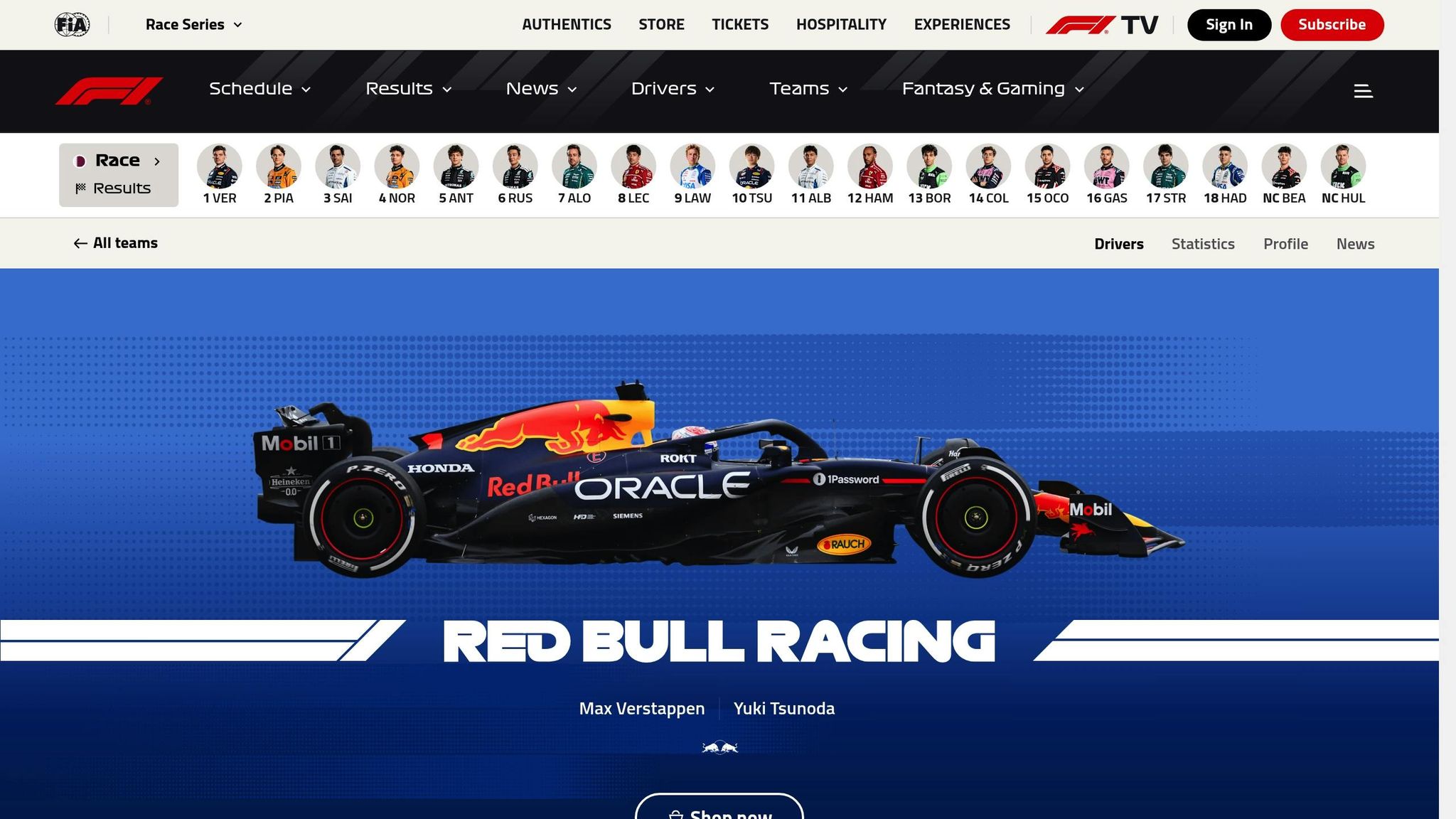
Red Bull's experience with the 2021 budget cap breach provides a telling example of the trade-offs involved. After exceeding the cap, the FIA penalized the team with a $7 million fine and a 10% reduction in aerodynamic testing time for 2023. Despite these penalties, Red Bull dominated the 2023 season, raising questions - particularly from figures like Lewis Hamilton - about whether the punishment was enough to deter overspending. In response, Red Bull made sweeping changes, cutting over 90 jobs and streamlining its operations.
Mercedes, by contrast, took a more conservative approach. To comply with the cost cap, the team reduced its workforce by 40 employees. This cautious strategy reflects the tough choices teams face: balancing short-term performance gains with the need for long-term sustainability, all while managing personnel costs.
The differing strategies of Red Bull and Mercedes show there’s no universal formula for success under the budget cap. Red Bull’s aggressive spending, despite penalties, didn’t stop them from excelling. Meanwhile, Mercedes’ more restrained approach may have cost them some immediate performance. Ultimately, success under these financial constraints comes down to prioritizing investments wisely, making strategic organizational changes, and timing resource allocation effectively.
As the 2026 season approaches, with its higher budget cap and sweeping technical changes, teams will face an even tougher test. Their ability to manage resources and plan strategically will play a key role in determining who rises to the top in this new era of Formula 1.
Effects on Competitive Balance
Performance Gaps Between Teams
The budget cap introduced in 2021 aimed to level the playing field by curbing the massive spending disparities between teams. Before this cap, some of the wealthiest teams were burning through over $400 million a season, creating a predictable and often one-sided championship landscape. On paper, the cap has significantly narrowed these financial gaps.
However, the story on the track is more nuanced. Teams with established infrastructure - state-of-the-art wind tunnels, seasoned aerodynamic experts, and years of accumulated knowledge - still manage to stretch their budgets further. Even though the cap limits spending on research, development, testing, and race operations, these long-standing advantages, such as refined supply chains and institutional expertise, remain outside its direct scope.
Take Red Bull, for example. Despite receiving penalties for a minor overspend in 2021, the team continued to dominate on the track. As Lewis Hamilton pointed out:
"There wasn't really a big punishment last time, so there's no real [deterrent]. There will be people that will probably go for it again and know they're just going to get a slap on the wrist."
While the financial disparities have been addressed, the competitive edge still leans heavily toward teams with deeper resources and a history of efficient operations. This underscores the ongoing challenges in achieving true parity.
How Smaller Teams Benefit
Smaller teams, however, have seen some tangible benefits from the budget cap. By setting a financial ceiling, the cap has narrowed the gap between the top-tier and lower-tier teams. Previously, wealthier teams could outspend their rivals by hundreds of millions, but now all teams must operate within the same financial limits. This forces everyone to focus on efficiency and smarter decision-making. Additionally, the reduced intensity of research and development has eased the pressure on smaller teams that previously struggled to keep up with the relentless upgrade cycles of their wealthier competitors.
That said, challenges remain. Smaller teams often lack access to the experienced personnel, advanced facilities, and streamlined processes that the top teams have honed over decades. Even with a more balanced financial framework, these structural disadvantages make it difficult for them to compete at the same level as the established powerhouses.
Difficulties for New Manufacturers
For new manufacturers, the budget cap presents a different set of hurdles. While they can make significant investments during their preparation phase - spending that falls outside the cap - once they officially join the grid, they must adhere to the same financial constraints as everyone else. For instance, Audi’s upcoming entry into Formula 1 highlights these challenges. The 2026 cost cap will rise to roughly $215 million, partially to account for Audi's higher salary structures. This adjustment reflects the FIA’s acknowledgment that new entrants face unique challenges and require some financial leeway to establish themselves.
Additionally, power unit manufacturers operate under a separate cap: $95 million from 2022 to 2025, increasing to $130 million starting in 2026. This means that newcomers like Audi must not only build competitive engines from scratch but also do so within strict financial boundaries. Developing the necessary infrastructure and expertise to compete against teams with decades of experience is no small feat.
New manufacturers face a steep learning curve, balancing the need to build competitive programs while adhering to the same stringent financial rules that established teams have long since mastered.
How Do F1 Budget Cap Regulations Work? - Pole Position Experts
Limits on Technical Innovation
The budget cap has reshaped how Formula 1 teams approach innovation. With spending capped at $141.2 million for 2025, the era of unlimited funds driving technical advancements is over. Teams now face a new challenge: balancing immediate performance needs with long-term development goals, all while operating within tight financial constraints.
Fewer Upgrades and Reduced R&D
In the past, the wealthiest teams could roll out multiple major upgrade packages throughout the season, constantly pushing the boundaries of technology. Now, the reduced budgets force teams to make tough decisions about which projects to prioritize.
Development cycles have shortened, and manufacturing timelines have tightened, requiring larger teams to scale back their once-ambitious programs. Instead of unveiling new aerodynamic packages every few races, teams now concentrate on one or two significant upgrades per season. The focus has shifted from exploring new concepts to refining and optimizing existing designs.
This shift was evident during the 2021 championship battle, where even minor expenses - previously insignificant - became critical budgetary decisions that could sway the outcome of the title race. With fewer engineers available for development, teams are less able to explore multiple technical pathways at once, slowing the pace of innovation. The result? A more strategic approach to upgrades, prioritizing key areas rather than constant overhauls.
Wind Tunnel and Simulation Restrictions
The budget cap doesn’t just limit spending - it also imposes restrictions on key aerodynamic testing tools. Wind tunnel hours and computational fluid dynamics (CFD) simulation time are allocated based on championship standings. Teams finishing lower in the standings receive more development time, creating a mechanism to help level the playing field.
These restrictions also serve as enforcement tools. For example, when Red Bull exceeded the 2021 budget cap by $1.864 million (1.6%), the team was fined $7 million and faced a 10% reduction in aerodynamic testing time for 2023[2,3]. This means top-performing teams must achieve more with fewer resources, relying heavily on advanced simulation technologies to validate concepts before committing to costly physical tests.
Choosing Between Reliability and Performance
On top of testing limitations, teams face a difficult balancing act between reliability and performance. Every dollar spent on making components more durable is a dollar that can’t be allocated to improving speed. This creates a zero-sum game where teams must carefully decide whether investing in reliability will yield better results than focusing on raw performance.
These trade-offs become particularly challenging as the season progresses and budgets tighten. For instance, a team might identify a potential gain of 0.2 seconds per lap but find that achieving it would require significant resources for development and testing. At the same time, addressing reliability concerns could safeguard critical championship points. Teams with more reliable designs from the outset have an advantage - they can channel more of their budget into performance improvements instead of troubleshooting reliability issues. Simulation tools play a crucial role here, helping teams predict and prevent problems without resorting to resource-draining physical tests.
The upcoming 2026 technical regulations further highlight how financial constraints shape innovation. The decision to phase out the MGU-H (Motor Generator Unit – Heat) system aims to reduce costs but limits advancements in heat energy recovery technology. Instead, teams will focus on the upgraded MGU-K (Motor Generator Unit – Kinetic) system. This change reflects a broader trend: innovation in Formula 1 has become more targeted and incremental. Teams can no longer afford to experiment with multiple development paths; they must commit to a specific direction with greater confidence before investing resources. While small improvements continue to emerge, the days of groundbreaking leaps in technology have slowed under the weight of financial restrictions.
How Different Teams Adapt to Budget Caps
The $140.4 million budget cap for 2025 has reshaped how Formula 1 teams operate, pushing them to make tough choices based on their competitive standing. While the rules apply to every team, the strategies they employ to adapt differ significantly. Top teams focus on maintaining dominance with reduced resources, midfield teams aim to maximize their limited budgets, and backmarker teams see the cap as a chance to close the performance gap.
Top Teams: Maximizing Efficiency
For powerhouse teams like Red Bull and Mercedes, the budget cap has triggered a major operational shift. These teams, which once spent over $400 million annually, have had to downsize their workforces and streamline their processes to meet the new financial limits.
This shift has spurred a focus on efficiency. Leveraging their state-of-the-art facilities, elite engineering talent, and years of expertise, these teams aim to get the most out of every dollar. A telling example is Red Bull's 2021 cap breach: while they faced penalties, their existing advantages helped them maintain a competitive edge.
With tighter budgets, top teams have refined their approach to car development. They prioritize upgrades that deliver the highest performance gains per dollar and rely heavily on advanced simulations to test designs before committing to expensive physical prototypes. Every wind tunnel session is carefully planned to maximize its value. This meticulous approach ensures they stay competitive now while preparing for future regulatory changes.
Midfield teams, however, face a different set of challenges and opportunities.
Midfield Teams: Balancing Limited Resources
Midfield teams operate within the same $140.4 million cap but lack the deep pockets and extensive infrastructure of top-tier squads. This makes every financial decision critical. Instead of pursuing sweeping upgrades, these teams focus on targeted improvements to address specific weaknesses.
The shift to shorter development cycles has also shaped their strategies. Unlike top teams that once explored multiple design directions, all teams now commit to a single path before spending resources. This streamlined approach aligns with the strengths of midfield teams, which are accustomed to working within tight constraints and squeezing maximum value from their budgets.
The biggest challenge for these teams is finding the right balance between short-term performance and long-term growth. A well-judged investment can propel a team up the standings, but a misstep could set them back for years.
Backmarker teams, meanwhile, see the cap as a chance to build a stronger foundation for the future.
Backmarker Teams: Building for the Future
For teams at the back of the grid, the budget cap levels the playing field in ways that were previously unimaginable. With spending disparities reduced, these teams can now plan with greater confidence and focus on long-term goals rather than immediate results.
One of their key strategies is investing in infrastructure. By building up facilities and resources, backmarker teams aim to create a foundation for future competitiveness. They also benefit from additional development time due to their lower standings, which helps offset their existing disadvantages.
Another priority is nurturing young engineering talent. By focusing on personnel development, these teams can cultivate the expertise needed to compete more effectively over time. This patient, long-term approach gradually narrows the gap between them and the front-runners.
Looking ahead, the 2026 regulation changes will raise the budget cap to approximately $215 million to accommodate new technical requirements. While this presents new challenges, it also offers backmarker teams a fresh opportunity to continue their climb toward competitiveness. The budget cap's impact on Formula 1 is clear: it has fundamentally changed how teams operate, forcing them to adapt and innovate in pursuit of success.
The Future of F1 Under Budget Caps
The budget cap system, first introduced in 2021 to level the playing field, is heading into uncharted territory as Formula 1 prepares for the 2026 regulatory overhaul. With this framework in place, the spotlight shifts to how these upcoming changes will reshape team strategies and the sport as a whole.
By 2023, the budget cap dropped to a baseline of $135 million, with adjustments pushing it to approximately $141.2 million by 2025. This tighter cap forced teams to reevaluate everything - from staffing to development priorities - leading to significant operational overhauls across the grid.
The 2026 reset brings a new twist. The cap will rise to $215 million, reflecting the demands of new technical and power unit regulations. But this isn’t just a loosening of restrictions. Categories like capital investments and HR costs, previously exempt, will now fall under the cap. For teams that have spent years trimming their budgets, the challenge will be scaling back up while navigating a pricier market.
Enforcement of the cap remains a hot topic. Past breaches, such as minor overspends that resulted in relatively small penalties, have raised doubts about the system’s effectiveness as a deterrent. The current structure distinguishes between minor violations (under 5%) and major ones (over 5%), with the latter carrying the risk of championship disqualification. However, modest fines - often just a fraction of a team’s annual budget - have led to questions about whether the penalties truly discourage overspending.
While the budget cap has improved competitive balance, it hasn’t completely leveled the field. All 10 teams managed to stay within the cap in 2022, proving that financial discipline is possible. Yet, teams with better infrastructure, established supply chains, and more advanced engineering capabilities continue to extract greater performance from the same budget. With the cap increasing in 2026, wealthier teams may find it easier to absorb transition costs, potentially widening the gap between them and smaller competitors.
The ever-expanding race calendar adds another layer of complexity. Teams receive an additional $1.1 to $1.8 million for each race beyond the standard 21-race schedule. As the calendar grows, this variable income complicates long-term financial planning, often forcing teams to set aside contingency funds - money that could otherwise be used for performance upgrades.
Despite these challenges, innovation remains a priority. Teams are laser-focused on upgrades that offer the best performance gains for their budget, carefully managing wind tunnel time and simulation resources to maximize efficiency. This strategic approach will be even more critical in 2026, when the shift to sustainable fuels and the replacement of the MGU-H with an upgraded MGU-K system will test how effectively teams can innovate under financial constraints.
The cost cap for engines will also rise, jumping from $95 million to $130 million in 2026 to accommodate the new regulations while keeping spending under control. For newcomers like Audi - whose higher salary demands in Switzerland contributed to the cap increase - this adjustment provides some breathing room. But established teams with existing power unit programs and deeper engineering expertise may still hold the upper hand, potentially neutralizing any advantage for new entrants.
As the 2026 changes approach, the FIA faces tough decisions about balancing competitive fairness with the need for innovation. Future measures might include performance-based allowances, stricter penalties, or targeted support for new teams. This delicate balancing act will be put to the test as Formula 1 enters its next regulatory chapter. Will the budget cap succeed in maintaining fair competition while allowing the sport to evolve? Only time will tell.
FAQs
How do F1 budget caps affect the performance gap between top teams and smaller teams?
The introduction of budget caps in Formula 1 has reshaped the sport's competitive dynamics. With spending limited to $135 million per season (as of 2023), even the wealthiest teams must carefully decide how to allocate their resources. This change curbs the ability of top teams to dominate solely through financial muscle, giving smaller teams a better shot at competing.
For smaller teams, the cap opens the door to narrowing the performance gap by emphasizing efficiency and inventive solutions rather than engaging in a costly spending race. That said, larger teams still benefit from their well-established infrastructure and deep expertise, which can help them stretch their budgets further. In the end, the budget cap encourages all teams to adopt a more strategic mindset, balancing immediate results with plans for sustained competitiveness.
How will the 2026 budget cap increase affect F1 team strategies and development plans?
The 2026 budget cap increase is set to reshape how F1 teams manage their resources, forcing them to juggle immediate performance needs with future development goals. With new engine regulations on the horizon, teams face the challenge of splitting their budgets between upgrading their current cars and investing in emerging technologies.
For smaller teams, this adjustment could be a chance to close the performance gap with the sport's powerhouses. Meanwhile, the top teams will likely focus on refining their operations to squeeze maximum value out of every dollar. This shift might also spark fresh ideas, as teams look for smarter ways to stay within the updated financial limits while staying competitive.
How do budget cap rules prevent overspending and promote fair competition in Formula 1?
Budget cap rules in Formula 1 aim to control how much teams can spend on car development and operations, creating a more balanced competition. By limiting budgets, the FIA pushes teams to think carefully about how they use their resources, juggling immediate performance upgrades with planning for future seasons.
The system also comes with tight financial oversight and clear consequences for breaking the rules, like fines or even point deductions. This ensures fairness and keeps wealthier teams from dominating simply by outspending their rivals.