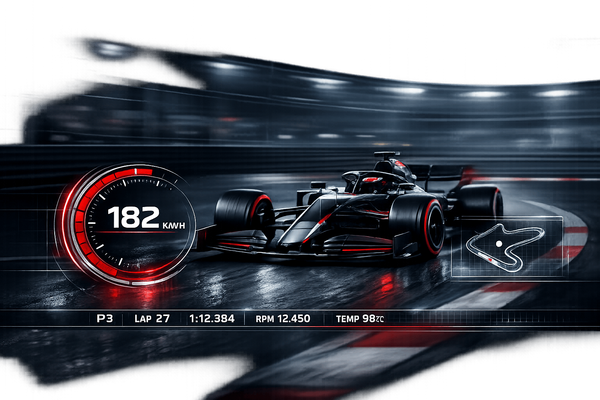
How F1 Drivers Monitor Tire Feedback in Real Time
Explains how TPMS and infrared sensors give F1 teams live pressure, temperature, and wear data to guide pit stops and car setup.
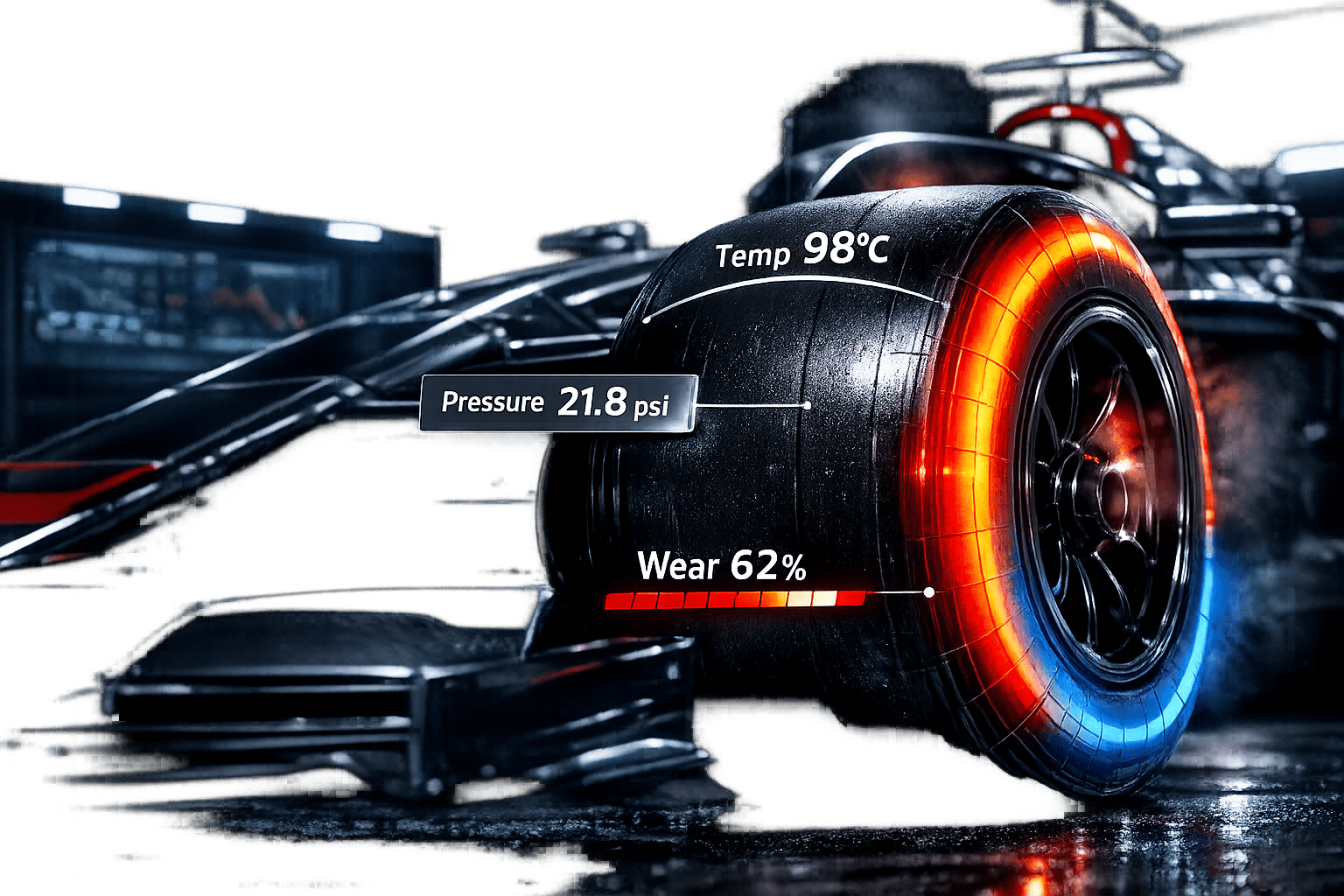
Formula One drivers and teams depend on precise, live tire data to ensure peak performance and safety. Tires are the only connection between the car and the track, making their management critical during a race. Real-time monitoring systems, like Tire Pressure Monitoring Systems (TPMS) and infrared sensors, provide constant updates on tire pressure, temperature, and wear. This data helps teams make quick decisions on pit stops, driver inputs, and car settings to stay competitive. Key insights include:
- Tire pressure and temperature: Essential for maintaining grip and avoiding failures.
- Contact patch and grip levels: Adjusted by pressure and camber for better cornering and braking.
- Slip angle and degradation: Managed through driving techniques to extend tire life.
- Advanced sensors: Provide detailed thermal profiles, ensuring optimal performance and safety.
Starting in 2025, F1 will use live tire pressure monitoring for compliance, giving teams and the FIA instant access to critical data. These advancements will continue shaping race strategies and performance.
Overlay of Internal and External Tire Temperature Distribution - Izze-Racing
Technologies Used for Real-Time Tire Monitoring
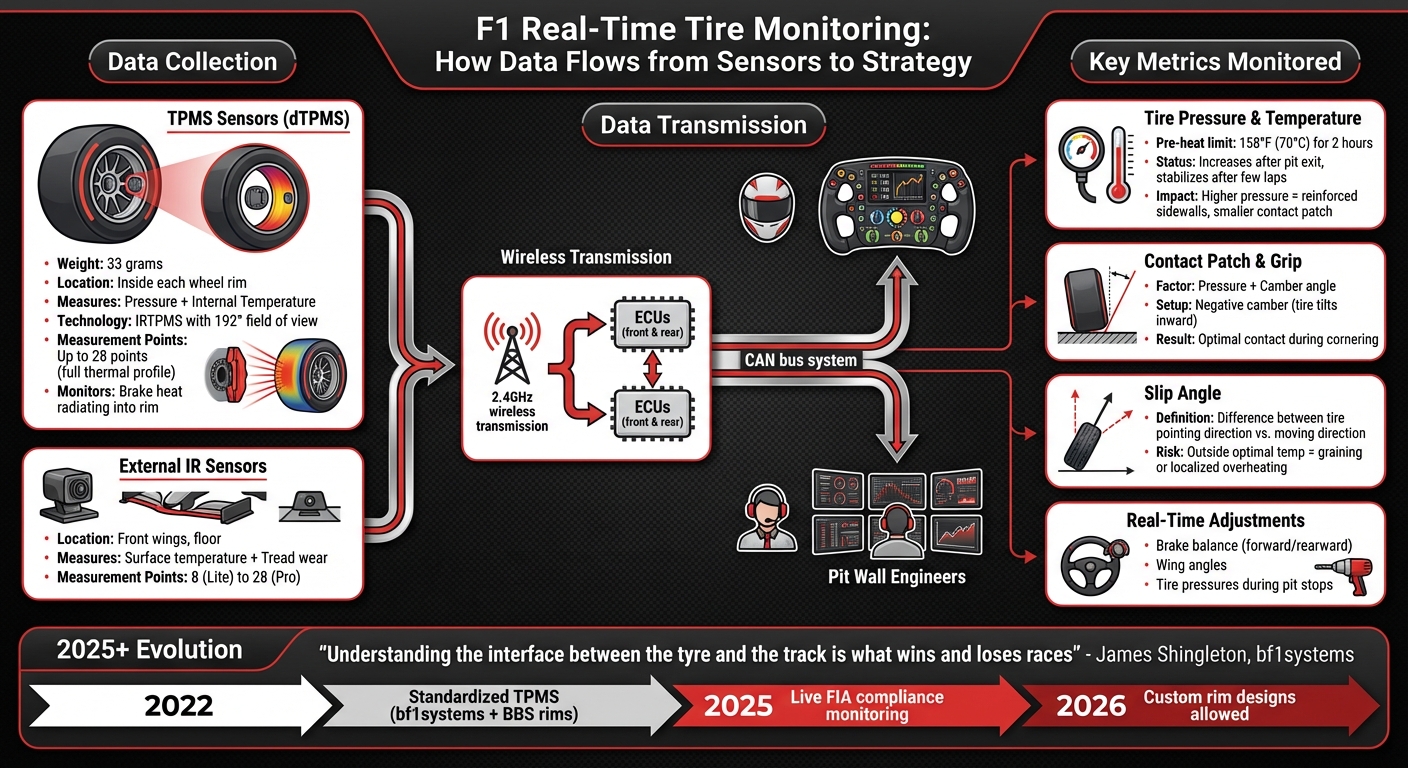
F1 Real-Time Tire Monitoring System: From Sensors to Race Strategy
In Formula 1, teams rely on two primary technologies to monitor tire performance in real time: Tire Pressure Monitoring Systems (TPMS) and multi-channel infrared temperature sensors. Together, they offer a detailed look at both the internal and external conditions of the tires, allowing teams to make quick, informed decisions during a race. This combination supports precise, data-driven strategies that can make all the difference on the track.
Tire Pressure Monitoring Systems (TPMS)
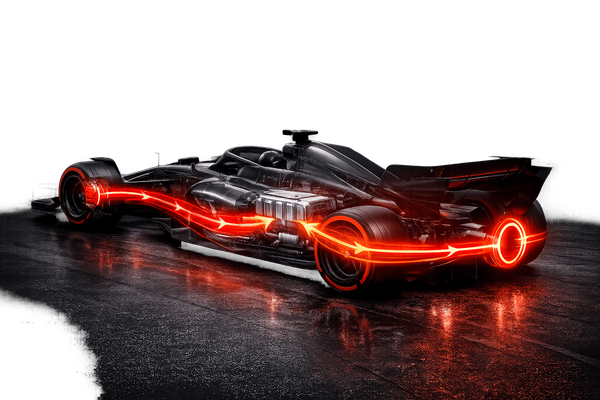
F1 uses direct TPMS (dTPMS) sensors, which are compact, battery-powered units installed inside each wheel rim. These sensors measure both tire pressure and internal temperature continuously, transmitting the data wirelessly through a 2.4GHz connection to electronic control units (ECUs) located at the car's front and rear. The ECUs then decode this information and send it through the car’s CAN bus system, making it accessible to engineers in real time and to drivers via their steering wheel displays.
Since 2022, F1 has standardized TPMS hardware across all teams, partnering with bf1systems and introducing uniform BBS wheel rims. This ensures compliance with regulations and maintains a level playing field. The latest sensors, known as IRTPMS, weigh just 33 grams and combine pressure monitoring with infrared scanning. These advanced sensors provide a full thermal profile of the tire’s inner carcass, as explained by Rob Jarvis from bf1systems:
"Our Pro system provides the full 28 [measurement points], which gives you a full thermal profile of the tire's inner carcass".
Additionally, these sensors feature a 192° field of view, enabling them to monitor brake heat radiating into the wheel rim - a critical factor in overall tire performance.
Multi-Channel Temperature Sensors
To complement the internal data from TPMS, F1 cars are also equipped with external infrared thermal imaging sensors. These are mounted on various parts of the car, such as the front wings or the floor, to track surface temperature and tread wear in real time. Depending on the system, these sensors can measure thermal profiles at multiple points: "Lite" versions offer 8 points, while "Pro" versions can capture up to 28.
Key Tire Metrics Monitored During Races
F1 teams rely on a combination of sensor data and key tire metrics to shape their race strategies. These metrics are essential for understanding tire behavior and ensuring peak performance. Among the most closely observed are tire pressure and temperature, which provide invaluable insights during a race. As Mario Isola, Motorsport Director at Pirelli, explains:
"The pressure of a gas is closely linked to its temperature, meaning tire pressure is not constant. It increases after leaving the pit box and stabilizes after a few laps".
Tire Pressure and Temperature
Tire pressure is monitored both when the car is stationary and after it stabilizes during racing conditions. Higher pressures help reinforce the sidewalls, reducing the risk of structural failure, but they can also shrink the contact patch, affecting grip. On the other hand, lower pressures increase the contact patch and grip but can strain the sidewalls, making them more vulnerable.
Temperature is another critical factor, tracked on two levels: surface temperatures via infrared sensors and internal carcass temperatures through sensors inside the wheel rim. Slick tires can be preheated using blankets, up to 158°F (70°C), for two hours before a session, as allowed by F1 regulations. Keeping tires within their optimal temperature range is essential for maximizing grip and maintaining performance. However, imbalances can pose challenges. For example, in rear-wheel-drive F1 cars, rear tires heat up quicker due to traction loads, while front tires may stay cooler, leading to understeer and graining. Drivers often adjust brake bias - shifting it forward to warm up front tires or rearward to prevent overheating in the rear tires - to manage these differences.
Contact Patch and Grip Levels
The contact patch, or the area of the tire that touches the track, plays a significant role in determining grip. Lower tire pressures increase the contact patch, while camber angles also influence its effectiveness. F1 teams often use negative camber, where the top of the tire tilts inward, ensuring the contact patch remains optimal during cornering.
Grip levels, which measure the friction between the tire and track, depend on factors like the tire compound, temperature, and contact patch size. Rob Jarvis from bf1systems highlights the importance of these metrics:
"The tyre temperature and pressures are key factors in determining the available grip performance, so knowing what these are at any given time is a huge performance benefit".
Slip Angle and Tire Degradation
Tire degradation is closely linked to dynamic behaviors such as slip angle and tire energy. Slip angle refers to the difference between the direction a tire is pointing and the direction it is moving. When tires operate outside their ideal temperature range, sliding can occur, leading to surface tearing (graining) or localized overheating, both of which accelerate wear.
Drivers play a crucial role in managing tire performance during the race. By adjusting steering input, lifting off the throttle, or modifying braking techniques, they can influence tire energy. Hiroshi Imai, Director of Tyres and Brakes Performance at McLaren, explains:
"Tyre energy relates to speed, slip and load. So, by changing the steering input, lifting and coasting or using the brake options, the driver can still influence parameters to try and mitigate the limiting tyre".
Teams also use thermal imaging to monitor surface degradation in real time, updating their tire models during the race. This helps them estimate how many laps a tire set can last and fine-tune pit stop strategies.
Using Data for Real-Time Decisions
Live tire data plays a crucial role in making split-second decisions during a race. Telemetry transforms raw sensor readings into actionable strategies, helping teams fine-tune performance on a lap-by-lap basis. This blend of technical accuracy and driver intuition creates a well-rounded approach to optimizing performance.
Driver Feedback and Telemetry Integration
Drivers rely on a mix of telemetry data and their physical sensations to evaluate tire performance. For example, they compare telemetry data - like braking points and cornering speeds - with what they feel on the track. If a driver notices the front tires losing grip, telemetry can confirm whether the issue stems from a drop in temperature or a pressure change reducing the tire's contact patch. Advanced IRTPMS sensors, offering up to 28 measurement points across the inner carcass of the tire, help engineers detect issues such as slow punctures before they escalate into major problems.
Real-Time Adjustments to Car Settings
By combining driver feedback with live data, teams can make immediate adjustments to car settings. Engineers analyze tire data in real time to tweak elements like tire pressures and wing angles during pit stops, ensuring the car remains competitive and the tires stay within their optimal performance range. If telemetry reveals an axle overheating, engineers might instruct the driver to adjust the brake balance - shifting it forward to heat up cooler front tires or backward to cool down overheated rears. These live updates also refine tire models, helping teams time pit stops with precision.
Conclusion: The Future of Tire Monitoring in F1
Formula One is on the brink of a major transformation in tire monitoring, moving from traditional post-race checks to real-time compliance tracking. Starting in 2025, Pirelli plans to use standard TPMS sensors to monitor tire pressure directly during races. This shift will allow the FIA to detect and address violations instantly. As Mario Isola, Pirelli Motorsport Director, put it:
"We want to move towards direct sensor monitoring, eliminating the need for other checks. It's data that the FIA receives live and can monitor."
These sensors won’t just ensure compliance - they’ll also enhance engineers' understanding of how heat from brakes impacts tire performance. Meanwhile, teams are adopting Garage Monitoring Systems (GMS) with 2.4GHz technology to track tire sets in storage, ensuring they are at the correct temperatures and pressures before being fitted to the cars.
Looking further ahead, the 2026 regulation changes will give teams the freedom to design their own rims, opening the door to tailored tire management strategies. Coupled with the introduction of 2.4GHz communication for hardware compliance, these advancements will enable teams to make quicker, more informed decisions during races. James Shingleton from bf1systems emphasized the importance of this evolution:
"The performance limit moves as the pressure and temperature change. Understanding the interface between the tyre and the track is what wins and loses races."
This proactive approach to tire monitoring will provide drivers and engineers with the precision and data they need to push performance boundaries, lap after lap.
FAQs
How do F1 drivers monitor and use tire data during a race?
F1 drivers rely heavily on real-time telemetry to keep track of key tire metrics like pressure, temperature, and wear. Tiny sensors embedded in the tires and other car components provide immediate feedback, allowing drivers to fine-tune their braking, acceleration, and cornering. This helps maintain the best possible grip and slows down tire wear.
Meanwhile, teams analyze this data during the race to adjust strategies, including pit stop timing and overall tire management. By tracking how tire conditions evolve during a stint, drivers can stay within the tires' optimal performance range, boosting both speed and durability. These insights are crucial for making quick decisions that can directly influence the outcome of a race.
How do TPMS and infrared sensors help F1 drivers monitor their tires?
In Formula 1, Tire Pressure Monitoring Systems (TPMS) play a vital role by tracking real-time tire pressure and internal temperature. This data offers teams critical insights into the condition of the tires during a race. Alongside TPMS, infrared sensors come into play, measuring the surface temperature of the tires by detecting thermal radiation. These sensors help teams understand how evenly the tires are heating across their contact patches.
With this information, teams and drivers can fine-tune their strategies mid-race, ensuring the tires deliver peak performance while avoiding problems like overheating or excessive wear. This constant stream of data is key to maintaining speed, grip, and overall safety on the track.
How will real-time tire pressure monitoring change F1 races in 2025?
Starting in 2025, Formula One will introduce real-time tire pressure monitoring, giving teams and officials instant access to tire pressure data during races. This advancement is set to transform the sport by improving tire management, ensuring compliance with pressure regulations, and boosting driver safety.
With precise, real-time measurements, teams can make smarter decisions about pit stops, tire durability, and performance adjustments. At the same time, officials will be better equipped to enforce pressure limits, promoting a fairer and safer racing experience for everyone involved.