How Media Shapes F1 Rivalries Globally
Regional media fundamentally shape how F1 rivalries are framed, shifting fan perception, team PR and sponsor strategy.
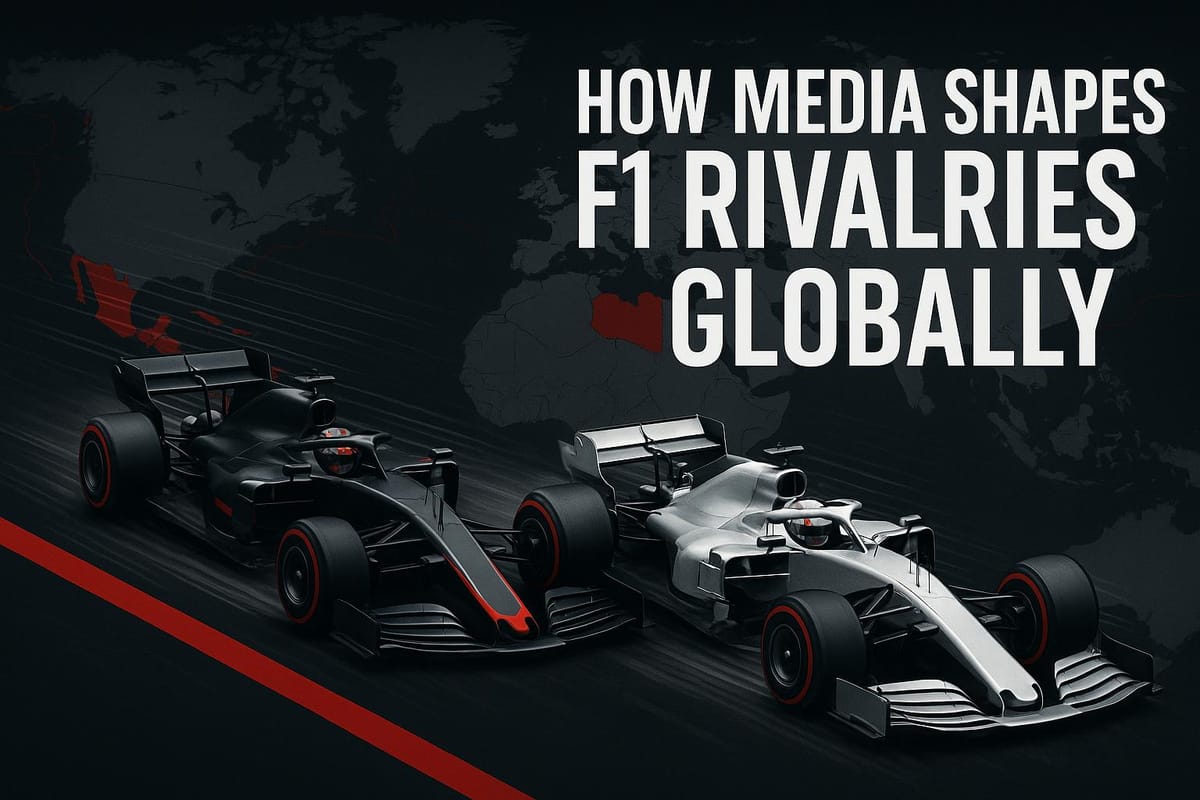
Media plays a huge role in how Formula 1 rivalries are understood worldwide. Different regions tell these stories in unique ways, influencing fan opinions and even the sport's growth. Here's the breakdown:
- Europe and UK: Focus on history and technical analysis but often dramatize rivalries through tabloids.
- United States: Highlights personal drama, creating "heroes vs. villains" narratives, making the sport more appealing to casual fans.
- Asia-Pacific: Keeps the tone respectful, focusing on strategy, local heroes, and professionalism rather than personal conflicts.
These approaches don’t just entertain - they shape how fans see drivers, teams, and the sport itself. However, sensationalism and selective reporting can distort reality, as drivers like Lando Norris have pointed out.
Key takeaway: Understanding these media styles helps fans, teams, and sponsors navigate the narratives and appreciate the sport's complexity beyond headlines.
1. European and UK Media
Narrative Style
European and UK media outlets approach Formula 1 rivalries like an unfolding drama, weaving race events into season-long sagas. Broadcasters such as Sky Sports F1 and Channel 4, along with publications like Autosport, craft stories around drivers, framing battles as "title deciders", "grudge matches", or "youth versus experience" showdowns that keep fans hooked throughout the season. A prime example of this was the 2021 championship battle between Max Verstappen and Lewis Hamilton. Coverage extended far beyond the racing incidents, delving into radio exchanges, dissecting press conference body language, and spotlighting every sharp comment to build a larger narrative.
This approach is distinct from the more technical analysis seen in specialist outlets, which focus on lap times, tire strategies, and telemetry data to explain the sport's intricacies. Instead, mainstream broadcasters prioritize the human drama, often influenced by the sensationalism of UK tabloid culture. Provocative headlines and selective quotes can turn a minor remark into a full-blown controversy. Meanwhile, outlets like the BBC and broadsheets often place incidents within a broader historical or regulatory context, drawing parallels to past rivalries to enrich the storytelling.
The tendency to dramatize even minor incidents isn't without pushback. Lando Norris recently criticized the media for exaggerating tensions between him and George Russell, calling the reports "media nonsense" and "bullshit" [1]. His frustration underscores how repetitive framing can inflate minor disagreements into headline-worthy rivalries, feeding into a cycle where drivers are portrayed as larger-than-life figures.
Driver Portrayal
European and UK media play a significant role in shaping how drivers are perceived, creating personas that persist across seasons. Take Lewis Hamilton, for example. Depending on the narrative, he’s portrayed as either a dominant champion and social activist or, in some cases, as an establishment figure facing challenges from rising stars. Similarly, Max Verstappen is often cast as a fierce competitor, evoking comparisons to past legends and fueling the "aggressor versus underdog" storyline.
British drivers like Lando Norris and George Russell are celebrated as part of a promising new generation, with media coverage scrutinizing their every interaction. When tensions arise between teammates, the spotlight quickly shifts to garage dynamics and perceived favoritism. Historical rivalries also shape modern narratives. For instance, Alain Prost’s observation about Ayrton Senna:
Ayrton didn't want to beat me; he wanted to destroy me
is frequently cited to illustrate one of F1’s most intense rivalries. Similarly, Nelson Piquet’s 1988 remark about Nigel Mansell being:
argumentative, rude
has been repeatedly amplified by the media to cement their rivalry in the public consciousness.
Intra-team clashes, like those between Nico Rosberg and Lewis Hamilton at Mercedes or Fernando Alonso and Hamilton at McLaren in 2007, are often described as "civil wars", with media dissecting every radio exchange and garage-side interaction. These portrayals not only add drama but also deepen fans' emotional connections to the sport.
Fan Engagement
European and UK broadcasters have revolutionized fan engagement by embracing multi-platform storytelling. From detailed pre- and post-race analysis to podcasts, studio debates, and on-board radio replays, fans are given countless ways to relive and analyze every moment. Graphic packages and in-depth features allow even casual viewers to dive into the nuances, turning single incidents into days of discussion.
Social media has amplified this dynamic further. Broadcasters now share clips, conduct live polls, and integrate fan questions into their coverage, creating a feedback loop where media narratives and fan reactions fuel each other. At iconic circuits like Silverstone, Monza, and Spa, the energy of vocal fans reinforces rivalries that have been carefully constructed by the media.
The digital shift has also brought continuous storytelling. Podcasts, long-form articles, and social media snippets ensure rivalries remain front and center even between race weekends. This constant coverage not only keeps rivalries alive but also elevates their global significance. Platforms like F1 Briefing balance this emotional storytelling with data-driven insights, offering fans a comprehensive view that complements the rich narratives crafted by European media.
2. United States Media
Narrative Style
In the U.S., Formula 1 rivalries are often presented through a lens of sports entertainment, emphasizing drama and personal conflict. Media outlets like ESPN, NBC Sports, and The Athletic craft stories that pit drivers against each other in "heroes versus villains" scenarios, creating high-stakes narratives that appeal to casual fans. This style contrasts with European coverage, which leans heavily on technical details, tire strategies, and historical context.
American broadcasters focus on "championship showdowns" and emotional rivalries, using cinematic language to heighten the drama. Post-race interviews, team radio snippets, and driver reactions are given significant airtime, making the coverage feel more personal. While this approach makes the sport more accessible, it often comes at the expense of diving into the technical complexities that hardcore fans might appreciate.
This dramatized storytelling has been particularly effective in drawing new fans, especially with the surge in interest fueled by Netflix's Drive to Survive series and the addition of U.S.-based races in Austin, Miami, and Las Vegas. NBC Sports reported a 40% jump in F1 digital article views in 2024, and Google Trends data from 2024–2025 shows spikes in searches for driver rivalries around major American races.
However, this approach has its downsides. Intricate team dynamics are often simplified into digestible narratives. For instance, the rivalry between Lando Norris and Oscar Piastri is frequently portrayed as a clash of "friendship versus rivalry", with headlines like "McLaren's internal war heats up" or "Can friendship survive the title fight?" While these stories are engaging, they can overshadow the strategic and technical elements of the sport that European outlets typically emphasize. These dramatized narratives not only draw in viewers but also play a role in shaping how fans perceive drivers, as explored further below.
Driver Portrayal
U.S. media tends to portray drivers through clear, relatable archetypes. Max Verstappen is often cast as the "unstoppable force", Lando Norris as the "relatable underdog", and George Russell as the "polished but polarizing rival." Unlike the European focus on technical expertise and racecraft, American coverage simplifies these dynamics into character-driven storylines that resonate with a broader audience.
Take the Norris–Piastri rivalry, for example. U.S. outlets often frame Norris as the "relatable underdog", while Piastri is depicted as the "calm, calculating rookie." This straightforward storytelling makes it easier for fans to connect with the drivers without requiring deep knowledge of the sport.
American figures in F1 also get special attention. Logan Sargeant, the first full-time American F1 driver in years, is frequently spotlighted in "American versus the world" narratives. Meanwhile, team principals like Christian Horner and Toto Wolff are woven into these stories, their decisions framed as pivotal moments in rivalries. This emphasis on personalities and conflicts often amplifies the perception of personal drama, even when the reality is more nuanced.
Fan Engagement
Interactive coverage plays a big role in keeping U.S. fans engaged. By building on these dramatic narratives, broadcasters and platforms encourage active participation. For example, during the Norris–Piastri incident at the Canadian GP, polls and live commentary invited fans to share their opinions, fueling further debates and discussions.
Tools like live-tweeting and real-time polls transform fans into active participants in the unfolding drama. NBC Sports, for instance, labels key moments as "must-see" events, prompting viewers to share clips and create memes that extend the conversation beyond the race itself. This interactivity helps sustain interest between race weekends, making the rivalries feel like ongoing sagas.
Platforms like F1 Briefing provide deeper analysis, offering context on how media narratives can sometimes distort reality. While this helps more informed fans separate fact from fiction, casual viewers may still misinterpret the entertainment-focused coverage as genuine hostility. For example, when the Norris–Russell exchange at the Qatar GP was framed as a "heated rivalry", some fans believed there was significant animosity between the drivers. Analytical outlets work to counterbalance this by offering nuanced takes that clarify the line between media-driven drama and actual on-track tension.
3. Asia-Pacific Media
Narrative Style
Asia-Pacific media bring a unique flavor to Formula 1 coverage, weaving technical analysis with regional storytelling to highlight rivalries. Broadcasters in countries like Japan, Australia, China, and across Southeast Asia focus on respectful competition and the strategic elements of the sport, steering clear of the "personal feud" or "entertainment spectacle" narrative often seen in other regions.
The storytelling approach typically builds suspense over the race weekend. From practice sessions to qualifying and then the main event, rivalries serve as a thread that ties everything together, rather than the main attraction. For instance, Japanese and Australian broadcasters often dive into tire strategies, weather conditions, and pit stop tactics, embedding driver conflicts within the broader technical landscape. This is a stark contrast to the U.S. media's "heroes versus villains" style or the political drama often highlighted in European coverage.
When revisiting iconic rivalries like Senna versus Prost, Asia-Pacific outlets focus on themes like mutual respect, engineering achievements, and the sport's growth, rather than personal animosities. These narratives showcase how such battles helped elevate F1's reputation in the region. Similarly, modern rivalries, like Hamilton versus Verstappen, are framed around decisive race moments, pit strategies, and fan reactions, toning down the polarizing narratives that dominate Western media.
Cultural values play a key role here. Ideas like collective harmony, respect for seniority, and "saving face" influence how driver errors or conflicts are discussed.[1] Heated moments - whether collisions, tense radio exchanges, or curt press conferences - are often framed as the result of high-pressure decisions or misunderstandings, rather than moral failings. Even when drivers criticize media narratives, Asia-Pacific commentators often use these moments to reflect on responsible journalism and the dangers of sensationalism.[1]
This measured tone extends to the language used. Broadcasters avoid scandal-driven reporting unless an incident has already made global headlines.[1] The result is coverage that dives deep into technical details and strategic analysis, all while maintaining respect for the competitors.
This respectful approach naturally influences how drivers are portrayed in the region, a topic explored further in the next section.
Driver Portrayal
Asia-Pacific media build on this respectful narrative by presenting drivers as ambassadors for their country or region, rather than as rivals defined by personal conflict. Whether discussing past legends or current stars, coverage highlights qualities like hard work, resilience, and their contributions to the sport, rather than focusing on controversies. In cases where drivers are involved in rivalries - whether as teammates or underdogs challenging champions - these are framed as opportunities for growth and learning.
Off-track actions also receive significant attention. Media outlets often emphasize drivers' charity work, fan engagement, and efforts to connect with local cultures, such as learning new languages. This creates a positive and aspirational image, standing in contrast to some European tabloids, which may lean into provocative quotes or off-track drama to grab attention.[1]
International stars with large followings in the region are treated with the same balanced approach. Their skill and emotional endurance during intense championships are celebrated, but extreme characterizations are avoided. Where European media might focus on off-track rivalries or political maneuvering, Asia-Pacific outlets emphasize decisive race moments, engineering decisions, and the professionalism displayed by all involved.
Even during controversies, broadcasters keep the focus on context. Quotes are presented within their full press-conference setting, and discussions quickly shift from sensational topics back to technical breakdowns or strategy analysis.[1] The emphasis remains on understanding the sport deeply, rather than creating divisive storylines around individual personalities.
Fan Engagement
While traditional broadcasters maintain a composed tone, Asia-Pacific fans bring their own energy to online spaces. Social media platforms and forums in countries like Japan, India, China, and Southeast Asia are alive with memes, short clips, and fan edits that dramatize overtakes, radio exchanges, and press-room moments. These fan-created narratives often extend the conversation beyond what legacy outlets provide.
Even in these vibrant digital spaces, there's a noticeable norm against direct harassment of drivers. Fans are more likely to engage in debates about team strategies, steward decisions, or race rules than to launch personal attacks. Meanwhile, legacy media continue to shape the broader conversation, offering detailed race reports and analysis, while fan-made content often goes viral, especially around controversial penalties or dramatic last-lap battles.[1]
Interactive elements in broadcasts - like live polls, social media Q&A, and second-screen apps - also play a big role in engaging fans. Streaming platforms and sports networks in Australia and Southeast Asia produce a range of content, from documentary-style mini-series to podcast segments and YouTube explainers. These dive into controversial moments, steward decisions, and race regulations, giving fans a chance to revisit key events with a deeper understanding.
Weekend preview shows also help build excitement by analyzing potential flashpoints between rivals, but they do so within the framework of team dynamics and technical possibilities. This approach aligns with resources like F1 Briefing, which offers in-depth analysis, technical breakdowns, and behind-the-scenes insights that help Asia-Pacific fans interpret rivalries with a nuanced perspective.
Sainz Gives F1 TV Coverage BRUTAL REVIEW After Fan's Fury!
Pros and Cons
Every regional media ecosystem brings its own flavor to F1 rivalry coverage. Understanding these differences helps fans see how local media influences perceptions of driver conflicts - and why the same incident might be interpreted in wildly different ways depending on where you’re tuning in.
European and UK media outlets excel at weaving historical context into their coverage. Platforms like Sky Sports F1, the BBC, and niche publications deliver year-round analysis, often connecting current rivalries to iconic battles like Senna vs. Prost or Hamilton vs. Rosberg. This approach provides rich technical breakdowns and strategic insights into on-track clashes. However, this depth can sometimes be overshadowed by sensationalism. British tabloids and national broadcasters, for instance, may amplify controversies, especially when homegrown drivers are involved.
In the United States, the focus leans heavily toward accessibility and entertainment. ESPN’s F1 coverage and Netflix’s Drive to Survive have introduced millions of new fans to the sport by presenting rivalries as character-driven dramas. This storytelling style simplifies technical battles, making them more relatable to casual viewers through personal, human-interest narratives. On the flip side, this approach can oversimplify multi-season rivalries into black-and-white hero-versus-villain arcs, losing some of the nuance.
In the Asia-Pacific region, coverage tends to emphasize respect and strategy. Broadcasters in countries like Japan, Australia, China, and Southeast Asia often frame rivalries with a focus on technical analysis and strategic discussions, steering clear of the personal drama common in other regions. This measured tone aligns with local values and fosters national pride during marquee events like the Suzuka or Australian Grand Prix. That said, this style can sometimes overlook mid-grid dynamics, focusing instead on local stars or major races.
| Aspect | European & UK Media | United States Media | Asia-Pacific Media |
|---|---|---|---|
| Narrative Style | Analytical and historically rich, with year-round coverage - though occasionally sensational. | Character-driven, with clear story arcs that make rivalries easy to follow. | Event-focused and respectful, highlighting key races and local heroes. |
| Driver Portrayal | Offers in-depth analysis with historical context but may show national bias. | Highlights personalities and behind-the-scenes drama, often simplifying rivalries. | Frames regional competitors as national heroes, emphasizing professionalism. |
| Fan Engagement | Appeals to a dedicated fan base with continuous analysis but can lead to media fatigue. | Draws high engagement via streaming, social media, and docuseries. | Sparks strong local passion during major events but may neglect smaller storylines. |
These regional approaches shape public perception in unique ways. A comment from a driver that might seem like straightforward analysis in one region could be spun into a heated controversy in another. For fans looking to cut through these biases and dive deeper, resources like F1 Briefing provide technical breakdowns and strategic insights that complement mainstream coverage.
Conclusion
Media coverage shapes how millions of fans perceive F1 rivalries, with regional differences offering distinct perspectives. European and UK outlets often frame conflicts within the rich history of the sport, drawing parallels to iconic battles like Senna–Prost or Hamilton–Rosberg, while emphasizing technical insights. U.S. media, on the other hand, leans into character-driven narratives, presenting rivalries as entertainment with a focus on personalities and dramatic storytelling. Meanwhile, Asia-Pacific broadcasters prioritize respect, national pride, and strategic analysis, often toning down personal drama to highlight professional competition.
These regional approaches don't just influence commentary - they change how audiences interpret driver behavior. A heated radio message might be seen as a tactical move in Europe, a major feud in the U.S., or simply downplayed in Japan. When Lando Norris criticized the media after the 2025 Qatar Grand Prix qualifying, calling out "nonsense" and "bullshit" reporting about his comments on George Russell, he underscored a key issue: selective quoting and editorial choices can create unnecessary tension that drivers themselves reject [1].
Recognizing these biases is key for fans. Comparing coverage from platforms like Sky Sports F1, ESPN, or Asian broadcasters reveals how much interpretation shapes the narrative. Resources like F1 Briefing provide technical breakdowns and strategic insights, cutting through sensationalism to focus on the real factors behind on-track battles - like tire strategy, pit stops, and team orders - rather than just soundbites.
This awareness isn't just valuable for fans; it’s crucial for teams and sponsors too. Teams need to understand these regional differences when managing driver images and public relations. A casual, behind-the-scenes video might resonate with U.S. fans who enjoy personality-driven content but could feel out of place for European audiences expecting a more technical approach. Misjudging these nuances can turn minor disagreements into viral controversies, creating challenges for both drivers and their teams.
Similarly, sponsors closely monitor these narratives. The portrayal of rivalries can directly impact brand safety and audience alignment. Edgier drivers may appeal to energy drink or gaming brands in markets where conflict sells, while family-oriented sponsors prefer regions that highlight professionalism and mutual respect. Knowing how rivalries are framed allows sponsors to tailor campaigns to the right storylines - whether it’s a redemption arc, an underdog fight, or a focus on technical achievements - while steering clear of unnecessary drama.
As F1 expands globally, streaming platforms and social media are starting to blur these regional boundaries. U.S. fans now have access to European technical analysis, while Asian audiences can enjoy both local broadcasts and Netflix docuseries. This convergence offers an opportunity for a more well-rounded understanding of the sport. Fans, teams, and brands that embrace these diverse perspectives will gain a clearer view of the dynamics on track, beyond any single region's lens.
FAQs
How do media outlets in Europe, the U.S., and the Asia-Pacific region portray F1 rivalries differently, and how does this shape global fan opinions?
Media coverage of Formula One rivalries shifts noticeably depending on the region, shaped by local tastes and audience priorities. In Europe, where F1 has a long and storied history, the focus often leans toward tradition, team heritage, and the technical brilliance behind the sport. Across the Atlantic in the U.S., the spotlight tends to fall on personal stories and dramatic rivalries, catering to an audience that enjoys a mix of sport and entertainment. Meanwhile, in the Asia-Pacific region, the narrative frequently highlights emerging local talent and the sport's increasing foothold in the area.
These regional differences in storytelling play a big role in how fans interpret F1 rivalries. For instance, a rivalry might be celebrated as a battle between legends in Europe, while the same scenario could be framed as an intense personal feud in the U.S. This regional framing not only shapes fan allegiances but also influences how drivers and teams are marketed globally, underscoring the media's powerful role in defining F1 narratives.
How does sensationalized media coverage influence relationships between F1 drivers and teams?
Sensationalized media coverage has a way of stirring the pot in Formula One, often exaggerating rivalries or controversies between drivers and teams. These overblown narratives can paint a distorted picture, influencing how fans, teams, and even the drivers themselves view their relationships.
This kind of reporting can ramp up tensions and pile extra pressure on drivers, potentially spilling over into team dynamics. In some cases, it might even nudge teams to rethink strategies or impact overall morale. By putting drama in the spotlight instead of sticking to the facts, such coverage risks sidelining the sport's technical brilliance and competitive spirit - elements that truly define Formula One's allure.
How do regional media narratives shape sponsor and team strategies in Formula 1?
Regional media narratives have a powerful influence on how sponsors and teams craft their marketing strategies in Formula 1. The way media highlights driver rivalries, team dynamics, or connections that resonate with specific audiences can shape how brands and teams position themselves in different markets.
For instance, a sponsor may focus on a driver's national identity or a heated rivalry to connect with fans in that driver's home country. Similarly, teams often adjust their messaging and fan engagement strategies to align with how the media portrays their performance or storylines in key regions, ensuring they stay relevant and maintain a strong connection with local audiences.