Top Innovations in F1 Hybrid Power Units for 2026
F1's 2026 power units shift to 50% electric, 100% sustainable fuel, doubled energy recovery, and active aero — reshaping race strategy and road-car tech.
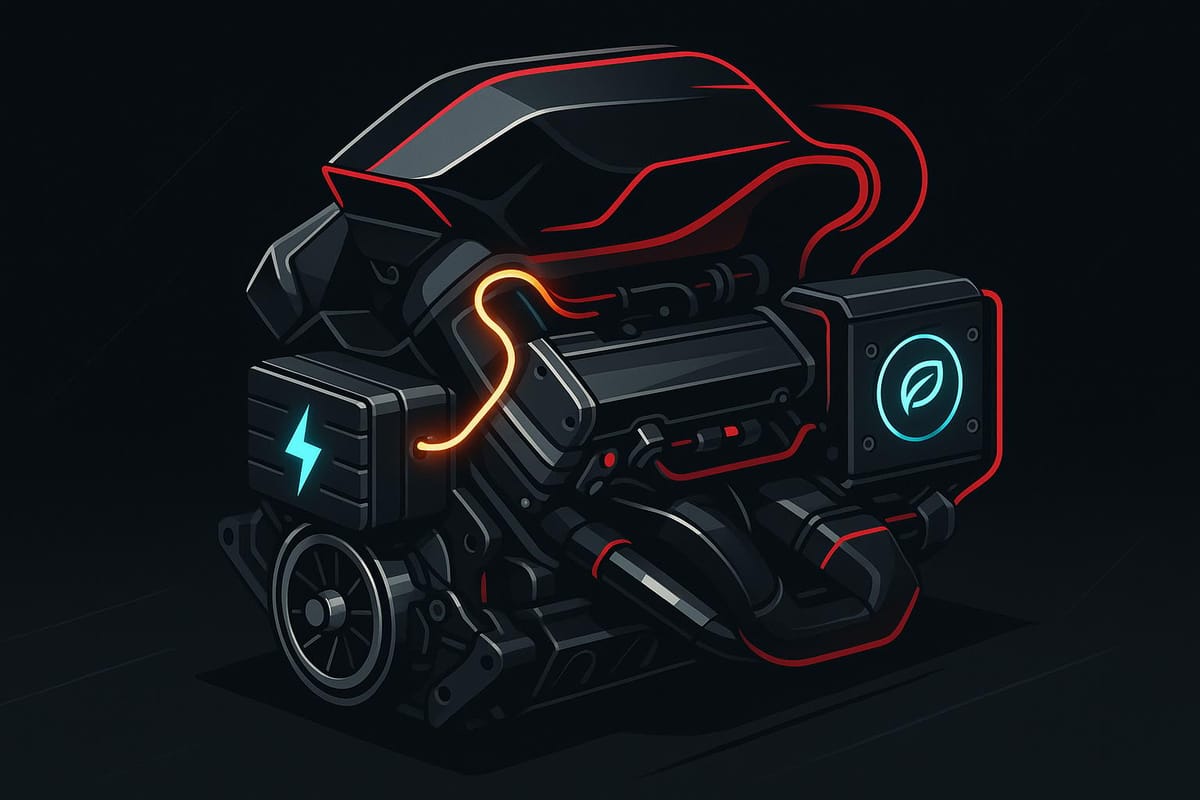
Formula One’s 2026 hybrid power units are set to transform the sport with a stronger focus on electric power, simplified engine designs, and carbon-neutral fuels. Key changes include:
- 50% Electric Power: The MGU-K’s output triples from 120 kW to 350 kW, balancing the power split between combustion (400 kW) and electric energy.
- No MGU-H: Removing this component reduces complexity and costs while increasing the role of braking energy recovery.
- Energy Recovery Boost: Braking energy recovery doubles from 4 MJ to 8.5 MJ per lap, enhancing race strategies.
- Carbon-Neutral Fuel: A switch to 100% sustainable fuel aligns with F1’s 2030 net-zero goals.
- Manual Override Mode: A push-to-pass system adds a 0.5 MJ boost for overtaking.
These advancements not only improve F1 performance but also influence road car technology, particularly in the U.S., where hybrid systems and sustainable fuels are gaining traction. The 2026 regulations promise to bridge motorsport innovation with consumer automotive trends.
1. Redesigned Hybrid Architecture with High Output MGU-K
Performance Impact
The 2026 power unit introduces a revamped MGU‑K that nearly triples its output, jumping from 120 kW (160 hp) to an impressive 350 kW (470 hp). At the same time, the internal combustion engine's power is reduced to a capped 400 kW (536 hp) from its previous range of 550–560 kW (740–750 hp). Together, these changes deliver a combined output of around 750 kW (1,006 hp). This enhanced electric boost provides instant torque, which is especially beneficial for quick corner exits and overtaking maneuvers. However, teams will need to carefully manage energy deployment to ensure the battery doesn’t run out on longer straights. The shift in power distribution demands creative engineering solutions to maintain competitive performance.
Technical Complexity and Integration
Incorporating the more powerful MGU‑K into a lighter chassis brings its own set of challenges, particularly in areas like cooling, weight distribution, and crash safety. With the removal of the MGU‑H, engineers now rely on precise turbo sizing and the MGU‑K's electric "torque fill" to address turbo lag. Another key feature of the 2026 regulations is the introduction of a Manual Override Mode - a push-to-pass system that delivers an additional 0.5 MJ at up to 350 kW when drivers are within one second of a competitor. This system must seamlessly integrate with active aerodynamics, requiring sophisticated control strategies to coordinate aero drag reduction, battery charge levels, MGU‑K deployment, and tire grip. Poor integration could lead to situations where a car is in a low-drag configuration but lacks the electrical energy to maximize straight-line speed. These challenges closely resemble those faced in developing advanced hybrid systems for consumer vehicles.
Relevance to Future Road Cars and U.S. Automotive Trends
The innovations in this redesigned hybrid architecture carry over into road car technology, particularly in the U.S., where high-performance plug-in hybrids are gaining traction. The 50-50 power split, driven by the high-output MGU‑K, aligns with trends in American vehicles like performance SUVs, sports sedans, and trucks. Technologies developed in F1 - such as fast-charging batteries, durable 350 kW-class electric motors, and advanced energy management systems - are directly influencing the design of vehicles that combine quick acceleration with improved efficiency. For U.S. consumers, these advancements offer practical benefits: downsized turbo engines paired with powerful electric motors can deliver the instant torque needed for highway merging and towing, while also meeting strict EPA and CARB emissions standards. This blend of performance and efficiency is shaping the future of American automotive design.
2. Advanced Energy Recovery and Manual Override Mode
Performance Impact
The 2026 F1 regulations bring a major evolution in energy recovery, doubling braking energy recuperation from 4 MJ to 8.5 MJ per lap. With the removal of the MGU-H, the MGU-K now takes on dual responsibilities: managing energy recovery and assisting with turbo spooling. This change forces teams to carefully balance braking efficiency with preserving enough energy for acceleration.
Adding to the strategic depth is the new Manual Override Mode. When a driver closes in within one second of a competitor, they can activate an extra 0.5 MJ energy boost. However, on circuits that demand careful energy management, like Monza, teams may need to adopt "lift-and-coast" strategies to avoid draining their battery reserves too quickly. This adjustment ties into broader technical challenges that teams will face moving forward.
Technical Complexity and Integration
These performance enhancements bring with them a host of technical hurdles. Teams now need highly advanced control algorithms to synchronize energy recovery and deployment with precision. With the MGU-K now responsible for turbo spooling - previously a shared task with the MGU-H - timing becomes critical to prevent corner exit lag. On top of that, teams must fine-tune their braking systems to extract the full 8.5 MJ per lap while safeguarding battery health and maintaining consistent performance.
Relevance to Future Road Cars and U.S. Automotive Trends
Beyond the racetrack, these innovations reflect trends in hybrid and electric vehicle technology, particularly in the U.S. The shift toward a 50/50 power distribution and high-output MGU-K systems offers a glimpse into the future of performance hybrids. These systems provide instant electric torque to complement smaller turbocharged engines, aligning with carbon neutrality goals by 2030. Features like the Manual Override Mode could even find their way into consumer vehicles, offering short bursts of extra power for improved performance and efficiency. This blend of race-proven technology and road-car practicality underscores the growing synergy between F1 advancements and the broader push toward electrification.
3. 100% Sustainable Fuels and Combustion Innovations
Sustainability Advancements
Formula 1 is taking a bold step toward its net-zero carbon goal by 2030 with the introduction of 100% sustainable fuel in 2026. This fuel will power F1's 1.6-liter turbocharged V6 engines, replacing the current E10 blend. What's unique about this fuel? It's entirely carbon-neutral, created from non-fossil carbon sources like captured CO₂, bio-feedstocks, or energy derived from waste. The goal is to ensure that the CO₂ released during races is offset by the amount captured or avoided during production. Additionally, the FIA has mandated that all F1 safety and medical cars also switch to this sustainable fuel. Combined with the advanced hybrid systems already in place, this shift underscores F1's commitment to balancing sustainability with high performance.
Performance Impact
Even with the move to sustainable fuel, F1 engines will still deliver impressive power - around 750 kW - split evenly between combustion and electric energy. The new fuel blends are designed with high knock resistance and rapid combustion in mind, ensuring competitive lap times remain intact. Teams will need to refine fuel formulations and adjust factors like ignition timing and turbocharger configurations to maximize efficiency and performance.
Technical Complexity and Integration
Switching to sustainable fuels isn't without its challenges. Engineers are tackling combustion design hurdles, such as optimizing chamber layouts, injector patterns, and charge motion. Achieving quick and complete combustion is critical, and managing turbocharger performance without the MGU-H adds another layer of complexity. The high knock resistance of the new fuel allows for more aggressive boost and compression ratios, pushing performance boundaries further. Cutting-edge simulation tools and single-cylinder test setups are being used to fine-tune air-fuel mixing and exhaust energy recovery, addressing past issues like combustion instability that have impacted engine reliability.
Relevance to Future Road Cars and U.S. Automotive Trends
This 2026 fuel initiative isn't just about F1; it's a testing ground for sustainable fuel technologies that could reshape the future of road transportation. F1 collaborators, including Honda, see this program as aligning with broader goals for carbon-neutral mobility. These fuels are designed to work with existing internal combustion engines, offering a practical solution for decarbonizing industries like heavy-duty trucking, aviation, marine transport, and motorsports in the United States. Looking ahead, this innovation might even lead to premium pump fuels or additives that cut CO₂ emissions without requiring a complete overhaul of current vehicle infrastructure.
4. ERS Integration with Active Aerodynamics
Performance Impact
The 2026 regulations bring a major shift with the integration of energy recovery systems (ERS) and active aerodynamics. For the first time, F1 cars will feature movable front and rear wings that adjust between high downforce for cornering and low drag for straights. This dynamic aero system works hand-in-hand with an upgraded MGU-K, which delivers increased output. The result? Teams can use low-drag setups on straights while relying on electric power to save fuel and maintain competitive lap times. This combination of active aerodynamics and ERS ensures smarter energy use throughout each lap.
Technical Complexity and Integration
With the removal of the MGU-H, the hybrid system now relies entirely on the MGU-K for turbo spooling, making energy management even more critical. Active aerodynamics play a key role here. By switching to low-drag modes on straights, the system reduces the energy needed to overcome air resistance. This helps conserve battery power, which can then be deployed strategically - like during overtaking maneuvers or critical race moments.
Sustainability Advancements
Active aerodynamics also contribute to F1's sustainability goals. By lowering drag on straights, teams can reduce fuel consumption and lean more heavily on electrical energy. The updated MGU-K now recovers up to 8.5 MJ per lap from braking - double the previous recovery rate - ensuring more kinetic energy is converted into usable power instead of being wasted as heat. This efficiency aligns with F1's Net Zero Carbon 2030 roadmap, as the sport transitions to 100% sustainable fuels. Beyond fuel savings, these advancements in aerodynamic efficiency could inspire broader automotive innovation.
Relevance to Future Road Cars and U.S. Automotive Trends
The technology developed for F1 is already influencing performance-oriented road cars. The integration of high-powered hybrid systems and active drag reduction offers a blueprint for vehicles that combine efficiency with speed. Features like predictive energy management, high-density batteries designed for quick charge and discharge cycles, and active aerodynamic elements - such as adjustable spoilers and grille shutters - are becoming increasingly relevant for U.S. performance EVs and hybrids. Lessons learned from F1’s advanced MGU-K, thermal management, and aero-energy integration could soon shape American-market vehicles, including sports sedans, SUVs, and pickups aiming to meet EPA efficiency standards without sacrificing performance. For U.S. enthusiasts tracking F1's technical innovations, the connection between the track and the road is becoming impossible to ignore.
5. High-Density Energy Storage and Thermal Management
Performance Impact
The 2026 power units demand advanced battery systems to handle a sharp increase in electrical output. With the MGU-K's power rising to 350 kW and energy recovery nearly doubling to 8.5 MJ per lap, the pressure on energy storage systems has never been higher.
Technical Complexity and Integration
Meeting these performance targets comes with significant engineering challenges. Batteries now endure frequent high-energy cycles, while energy recovery depends entirely on the MGU-K. This system also manages turbo spooling and torque fill, adding to its workload. Honda has focused on refining "efficient energy management" within the Energy Store to tackle these demands. Additionally, the high-energy bursts required by the Manual Override Mode necessitate cutting-edge cooling solutions. Engineers are leveraging additive manufacturing to produce radiator cores and ducts that balance thermal efficiency with aerodynamic performance.
Sustainability Advancements
High-density energy storage plays a crucial role in Formula 1's goal of achieving Net Zero by 2030. By shifting nearly 50% of the powertrain's output to electrical energy, reliance on thermal energy is reduced, and recovery efficiency is maximized - especially when combined with 100% sustainable fuels. Enhanced thermal systems also ensure batteries operate at peak performance by reducing energy lost as heat, aligning with the sport's broader carbon-neutral objectives.
Relevance to Future Road Cars and U.S. Automotive Trends
The innovations in thermal management directly address challenges faced by U.S. electric vehicles (EVs) and hybrids, particularly in maintaining performance during prolonged high-power usage. Ford's collaboration with Red Bull Powertrains underscores how F1 cooling technologies can influence road car design, especially for performance hybrids aimed at American consumers. As U.S. automakers navigate stricter EPA efficiency standards, F1's solutions for managing heat in compact, high-power systems offer practical insights. These advancements help improve battery longevity while preserving key performance features like acceleration and towing capacity. Beyond meeting F1's performance needs, these developments pave the way for the next generation of hybrid vehicles in the consumer market.
6. Road Car Applications and U.S. Market Impact
Performance Impact
The technological advancements in Formula 1 are making their way into road cars, directly influencing performance in the U.S. market. The 2026 power units are designed to deliver a combined output of about 750 kW (1,006 hp), with power evenly split between internal combustion and electric systems. The Motor Generator Unit-Kinetic (MGU-K) now produces 350 kW, effectively eliminating turbo lag. For American drivers, this translates into hybrid SUVs and trucks that offer instantaneous acceleration and advanced energy recovery systems capable of capturing 8.5 MJ per lap. A notable example is Ford's collaboration with Red Bull Powertrains, showcasing how F1's cutting-edge hybrid technology is shaping performance vehicles tailored for the U.S. market.
Sustainability Advancements
The shift to 100% sustainable fuels, moving away from the current E10 blends, is a game-changer for reducing carbon emissions without sacrificing performance. Honda has highlighted that these regulations align with its broader goals for achieving carbon neutrality by 2030. These carbon-neutral fuels not only meet U.S. emissions standards but also reflect the growing trend in the U.S. automotive industry toward biofuels and electrification. With stricter EPA standards and changing consumer expectations, these advancements are paving the way for greener, high-performance vehicles.
Technical Complexity and Integration
The new designs demand innovative solutions for cooling systems and compact energy storage, which must endure repeated 8.5 MJ energy cycles without degrading performance - a challenge engineers are tackling for 2026. Additionally, integrating active aerodynamics with the energy recovery system has led to the introduction of a Manual Override Mode, which provides an extra 0.5 MJ boost at speeds up to 209 mph. This adaptive technology demonstrates how energy efficiency can be optimized under dynamic conditions, offering a glimpse into the future of road car development.
Relevance to Future Road Cars and U.S. Automotive Trends
The involvement of six power unit manufacturers for 2026 - the highest ever - highlights Formula 1's increasing influence on consumer vehicle technology in the U.S.. For instance, Mercedes is using its advancements in MGU-K design to develop high-performance hybrid road cars, while Honda is leveraging its 47% electrification share to create next-generation powertrains tailored to American drivers. High-profile F1 events in the U.S. are also helping to drive interest in efficient hybrids and electric vehicles, especially as emissions regulations grow stricter. With its balanced power systems and focus on sustainability, F1 is becoming a key platform for testing innovations that are likely to define the next decade of American automotive design.
The F1 2026 Power Unit Explained in 9 Minutes
2026 vs. Current Power Unit Specifications

F1 Power Unit Specifications: 2022-2025 vs 2026 Comparison
The 2026 regulations bring a major overhaul to F1's hybrid power unit design. While the total output remains around 750 kW (1,006 hp), the balance between internal combustion and electric power shifts dramatically. Currently, power units generate 550–560 kW from the internal combustion engine (ICE) and 120 kW from the MGU‑K. By 2026, this split will change to approximately 400 kW from the ICE and 350 kW from the MGU‑K. This adjustment reshapes how teams approach energy management and system integration during races.
One of the most significant changes is the doubling of energy recovery. At present, cars recover about 4 MJ per lap through braking, with additional energy captured by the MGU‑H from exhaust gases. However, the 2026 rules eliminate the MGU‑H, and braking energy recovery alone will increase to roughly 8.5 MJ per lap. The more powerful MGU‑K will handle all energy recovery duties. While this simplifies the mechanical design, it also demands more advanced battery management, cooling systems, and brake‑by‑wire technology to efficiently handle the increased energy flow.
Fuel regulations also see a fundamental change. Currently, F1 cars use E10 fuel, which consists of 90% fossil fuel and 10% renewable ethanol, optimized for energy density. Starting in 2026, the sport will transition to a 100% sustainable, carbon-neutral fuel with no fossil content, aligning with Formula 1's commitment to achieving Net Zero by 2030. Honda has highlighted that this move aligns with its broader carbon-neutral goals for 2030, positioning F1 as a testing ground for future combustion technologies.
Here's a quick comparison of the current and 2026 power unit specifications:
| Specification | Current (2022–2025) | 2026 |
|---|---|---|
| Total power output | ~750 kW (~1,006 hp) | ~750 kW (~1,006 hp) |
| ICE power | 550–560 kW (~738–751 hp) | ~400 kW (~536 hp) |
| Electric (MGU‑K) power | 120 kW (~161 hp) | 350 kW (~469 hp) |
| ICE/electric split | ~80% ICE / 20% electric | ~50% ICE / 50% electric |
| MGU‑H present? | Yes | No (removed) |
| Energy recovery per lap | ~4 MJ (braking) | ~8.5 MJ (braking) |
| Fuel type | E10 (10% ethanol, 90% fossil) | 100% sustainable, carbon-neutral |
The FIA describes the 2026 power unit as "the world's most efficient hybrid engine", delivering similar performance levels with a greater emphasis on electrification and sustainable fuel. These changes will require teams to rethink energy strategies, from managing turbo lag to optimizing thermal systems, highlighting the importance of seamless hybrid integration on race day.
Conclusion
The 2026 Formula One regulations mark an important step forward in balancing high performance with sustainability. By maintaining an impressive 1,006 horsepower and achieving a near-equal split between combustion and electric power, the new design simplifies hybrid systems by removing the MGU-H while embracing a more electrified powertrain. This approach reflects the growing hybrid trends seen in consumer vehicles.
One of the standout changes is the introduction of 100% sustainable, carbon-neutral fuel - a groundbreaking shift with the potential to decarbonize internal combustion fleets. This is especially relevant in the United States, where long-distance driving and high-performance vehicles remain a cultural staple. Honda has highlighted how Formula One’s 2026 hybrid and fuel challenges are accelerating its research and development efforts toward carbon-neutral production vehicles.
The ripple effects of these advancements on road cars are undeniable. High-output MGU-K systems, improved thermal management, and active aerodynamics being developed for 2026 align closely with the cutting-edge hybrid technologies now featured in performance SUVs and sports cars. Brands like Honda, Ford, and Audi - key players in the upcoming F1 era - are already leveraging these innovations to deliver more efficient and powerful hybrids that combine track-level performance with improved fuel economy. These changes also add a new layer of strategy to racing.
Features like the new Manual Override and active aerodynamics require drivers to master energy management, balancing instant torque with the need for conservation across a race. This dynamic adds a strategic complexity that could redefine in-race tactics.
As the 2026 season approaches, F1 Briefing will continue to provide detailed insights into how teams adapt to these hybrid advancements. From technical strategies to performance trade-offs and their influence on consumer vehicles, the 2026 power units represent a turning point for both motorsport and the automotive industry as a whole.
FAQs
What impact will removing the MGU-H have on F1 cars in 2026?
The elimination of the MGU-H in 2026 is set to streamline power unit design while reducing turbo lag, which could make the cars feel more responsive on the track. On the flip side, this change might decrease energy recovery efficiency, potentially impacting the overall power output.
To counterbalance this, teams are working on new energy management strategies to maintain competitive performance levels. This transition represents a major evolution in F1’s hybrid technology, striving to combine simplicity with forward-thinking innovation.
How will the shift to 100% sustainable fuel impact Formula 1 races?
The shift to using 100% sustainable fuel by 2026 marks a bold move for Formula 1 in its efforts to cut carbon emissions and contribute to global climate action. This step not only demonstrates the sport's commitment to addressing environmental concerns but also reinforces its reputation for pushing technological boundaries.
That said, this transition could bring new challenges for teams. Adjustments to engine performance and fuel management will likely be necessary, potentially reshaping race strategies. Engineers and drivers will need to strike a balance between efficiency, speed, and reliability, introducing an intriguing strategic dimension to the competition.
How will F1’s 2026 hybrid power unit innovations impact everyday car technology?
The 2026 F1 hybrid power units are poised to bring a wave of advancements to road car technology, particularly in areas like energy efficiency, battery capabilities, and the use of renewable energy. With features such as improved energy recovery systems and cleaner powertrains, these innovations could make hybrid and electric vehicles more practical and efficient for everyday drivers.
By refining energy storage systems and regenerative braking, F1’s breakthroughs might speed up the adoption of advanced hybrid technology in consumer cars. These developments underline motorsport’s dedication to greener solutions, potentially steering the future of road vehicles toward lower emissions and better overall performance.