What Does an F1 Team Principal Do?
Breaks down an F1 team principal’s role: leading operations, setting race strategy, managing personnel, handling media and FIA politics to drive team performance.
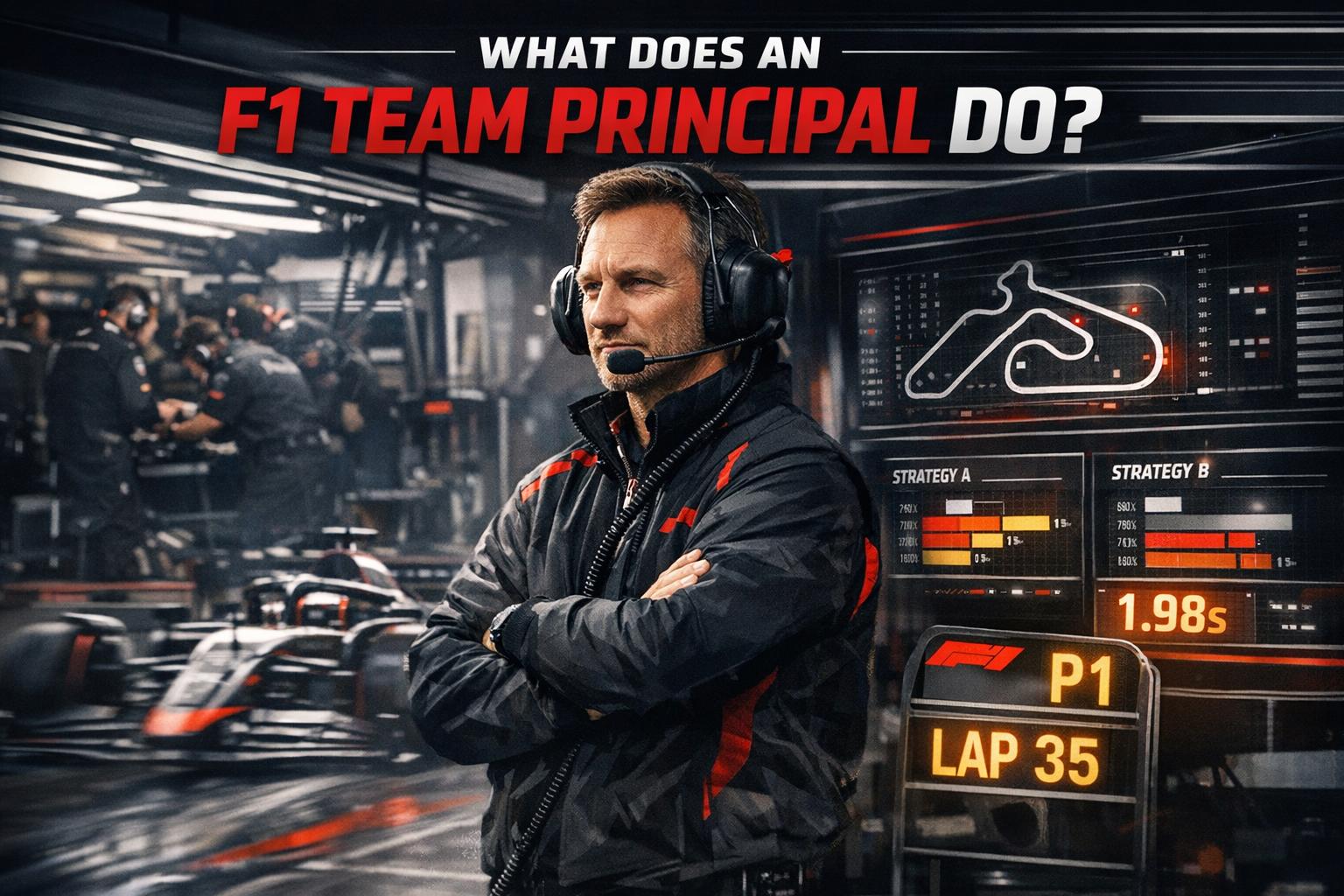
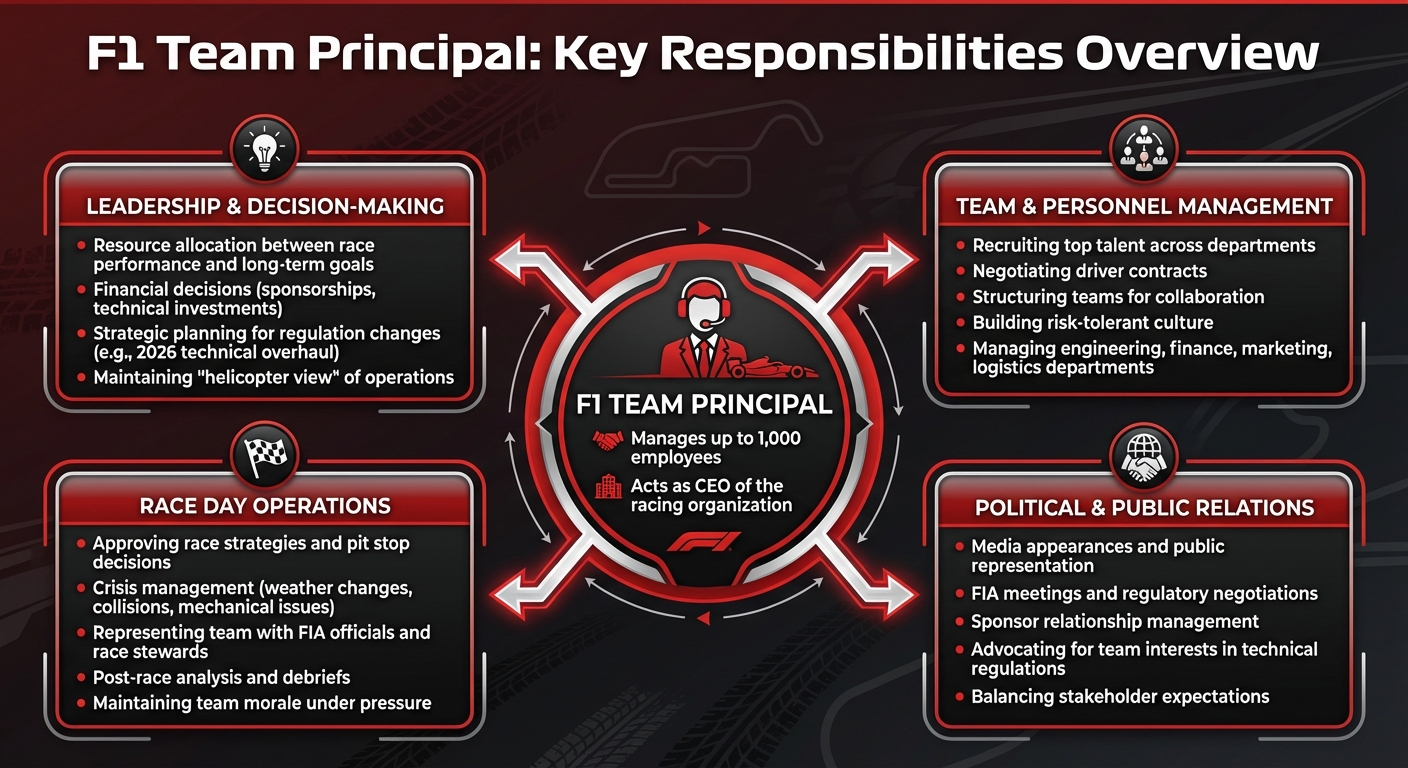
An F1 Team Principal is the leader of a Formula One team, overseeing everything from daily operations to long-term planning. Think of them as the CEO of a small company, managing up to 1,000 employees across departments like engineering, finance, marketing, and logistics. They’re responsible for:
- Making key decisions: Balancing immediate race performance with long-term goals, like adapting to new regulations.
- Managing personnel: Hiring top talent, structuring teams, and negotiating driver contracts.
- Race day leadership: Approving strategies, handling crises, and representing the team in disputes.
- Public and political roles: Acting as the team’s face in media, FIA meetings, and sponsor negotiations.
Their technical knowledge and leadership skills can shape a team’s success, as seen with Andrea Stella leading McLaren to a Constructors' Championship in 2024 or James Vowles improving Williams’ standings in a single season. They juggle high-pressure decisions, media responsibilities, and political challenges to keep their teams competitive.
F1 Team Principal Key Responsibilities and Duties
Main Responsibilities of an F1 Team Principal
Leadership and Decision-Making
An F1 team principal is the ultimate decision-maker, overseeing everything from technical advancements to commercial deals. They juggle input from various departments, deciding how to allocate resources between immediate race-day performance and long-term goals, like adapting to major regulation shifts such as the 2026 technical overhaul.
Financial decisions are a key part of the role. Whether it's investing in cutting-edge IT systems, securing lucrative sponsorships, or channeling funds into aerodynamic improvements, the principal must weigh short-term gains against future success. For example, in April 2025, James Vowles, Team Principal of Williams Racing, revealed the team's plan to focus on the 2026 regulations. This included securing a title sponsorship with Atlassian and signing Carlos Sainz to join Alex Albon - moves designed to build a competitive foundation for the future.
Vowles describes the role as requiring a "helicopter view" of operations. Instead of diving into the nitty-gritty, the principal guides by asking strategic questions. He explains:
"The way I describe it is when you go to a bowling alley with a five-year-old... you put up the bumpers on the sides so the ball can't go in the gutter. And my job is that if I see that we're going towards a gutter, I just ask the right questions and bring it back on target".
Once the big-picture strategy is in place, the principal ensures every team member plays their part in turning that vision into reality.
Managing the Team and Personnel
Managing the people behind the machines is just as crucial as managing the machines themselves. This involves recruiting top talent, negotiating driver contracts, and structuring the team to encourage collaboration and efficiency.
Take McLaren as an example. When Andrea Stella was promoted to Team Principal in January 2023, McLaren's CEO Zak Brown pointed out that Stella's leadership transformed the team. Within a year, McLaren went from struggling at the back of the grid to winning the 2024 Constructors' Championship - their first in 26 years [1,2]. Brown attributed this success to Stella's ability to "get more out of the same people that our previous leadership wasn't able to" [1,2]. It’s a clear demonstration of how leadership and personnel management can drive performance.
Modern F1 team principals also focus on creating a supportive, risk-tolerant culture. This approach encourages innovation and ensures team members feel secure in taking calculated risks. James Vowles highlights the importance of this mindset:
"The team had faith that I had their back should it fail, and we'll win together, and we'll lose together. That changes everything".
Media Relations and Public Representation
Beyond internal leadership, the team principal is also the public face of the team, managing media appearances and representing the organization in FIA meetings and regulatory discussions.
The level of public engagement varies. Some principals, like former Haas boss Guenther Steiner, embrace the spotlight and become media figures in their own right. Others, like Andrea Stella, focus more on internal leadership. As Zak Brown noted:
"Andrea [Stella] is a team principal that focuses on his team, putting his people first".
In addition to media duties, principals play a vital role in political and regulatory matters. They attend FIA meetings and negotiate with race stewards to advocate for their team's interests. These discussions often shape the competitive landscape, making a principal's diplomatic and technical skills just as important as their leadership abilities.
What Are The Responsibilities Of An F1 Team Principal?
What Team Principals Do on Race Day
Race day is where leadership and quick decision-making come alive, showcasing the team principal's ability to guide their crew through high-pressure situations.
Managing Race Strategy
On race day, the team principal steps back from the nitty-gritty details and focuses on the bigger picture. James Vowles describes this as maintaining a "helicopter view" - keeping an eye on the overall operation rather than diving into every data point. This perspective allows the principal to oversee the team's strategy and ensure everything aligns with their goals.
Vowles explains that his job is to monitor the broader strategy, stepping in when necessary to ask key questions that help avoid potential missteps. Decisions like opting for aggressive tire strategies or timing risky pit stops ultimately require the principal's approval, but they trust the experts to handle the finer details.
The principal's role becomes even more crucial under the intense pressure of a Grand Prix. They ensure seamless communication between drivers, engineers, strategists, and mechanics, keeping everyone on the same page. They also represent the team in discussions with FIA officials and race stewards, particularly when addressing incidents or penalties that could impact the race outcome. In this high-stakes environment, the ability to make quick, strategic calls is essential.
Making Decisions Under Pressure
When things take an unexpected turn - like sudden weather changes, collisions, or mechanical issues - the team principal steps into crisis management mode. In these moments, they act as the final decision-maker, ensuring the team responds effectively under pressure. While they don't override the technical experts, they provide the structure and confidence needed to make bold, time-sensitive decisions.
James Vowles highlights the importance of fostering a "no-blame" culture, where team members feel empowered to take calculated risks without fear of repercussions if things don’t go as planned. This mindset has paid off, as seen during the 2023 season when Williams climbed from 10th to 7th in the Constructors' Championship. The team's willingness to take bigger risks with technology and strategy was a key factor in this success.
In addition to making high-pressure decisions, the principal plays a critical role in representing the team during disputes with race officials over penalties or technical regulations. These real-time discussions can have a significant impact on the race’s outcome, making their involvement vital.
Post-Race Analysis and Review
Once the race is over, the focus shifts to reflection and improvement. The team principal leads post-race debriefs to analyze what worked, what didn’t, and how to refine their approach for the next race. This involves evaluating strategic choices, addressing any mistakes, and ensuring the team learns from its experiences rather than dwelling on setbacks.
The principal also takes on the challenging task of reporting results to sponsors and team owners, especially after tough races. Balancing honesty with the need to maintain morale, they support the team through difficult periods while keeping everyone motivated for the long season ahead. By combining emotional intelligence with technical oversight, the principal ensures the team stays competitive across a grueling 24-race calendar.
Working Within F1's Political Environment
Formula One isn't just about what happens on the track - there's a complex political arena behind the scenes. Team principals must juggle relationships with the FIA, rival teams, sponsors, and other key players. This role demands a mix of diplomacy, strategic thinking, and leadership to ensure their team thrives in this high-stakes environment.
Representing Team Interests
Team principals are the face of their teams in meetings with the FIA, race stewards, and other teams. They advocate for their team's position on everything from technical regulations to financial policies, often influencing decisions that can reshape the competitive landscape.
Take James Vowles, for example. As Team Principal of Williams Racing, he spearheaded a campaign in 2023 and 2024 to adjust Formula One's capital expenditure (CapEx) limits. Vowles argued that the existing rules held back teams like Williams, whose infrastructure was outdated compared to the frontrunners. His persistence paid off, securing increased CapEx allowances that allowed Williams to modernize its Grove factory. This included upgrading simulation tools and facilities that were decades behind the competition. Vowles called this a "big early win", as it created the financial flexibility Williams needed to prepare for a stronger showing in 2026.
Beyond formal negotiations, informal communication plays a significant role. Principals often build relationships and share their vision to influence key decision-makers effectively.
Building Relationships with Stakeholders
The political challenges of Formula One don't stop with the FIA or rival teams. Team principals must also manage a wide range of stakeholders, including sponsors, team owners, parent companies, and the media. These relationships are as critical to success as the technical decisions made on race day.
For principals who are hired rather than owning a stake in the team, the task is especially demanding. They report to boards or CEOs while also ensuring sponsors and commercial partners remain confident in the team's direction. Guenther Steiner, former Haas F1 Team Principal, summed it up well:
"It's really like being the CEO of a small company. You're supervising HR, finance, engineering, race activation, logistics, marketing - you need to be quite widespread and have your hand in everything".
While some principals, like Toto Wolff, have more autonomy due to their ownership stakes (Wolff owns 33% of Mercedes), most operate as hired managers. These roles have grown significantly, with team operations now involving around 1,000 employees. Managing this scale requires emotional intelligence and the ability to balance competing priorities while keeping the team focused on shared goals.
Vowles has highlighted the importance of transparency and what he describes as "blunt honesty" to build trust with both stakeholders and rivals. His ability to maintain a strategic "helicopter view" - focusing on the big picture rather than getting bogged down in details - has been key to his success in navigating Formula One's political maze.
How the Team Principal Role Has Changed Over Time
The role of an F1 team principal has come a long way from its origins. What started as a position often filled by racing enthusiasts - who were sometimes the very founders, designers, or even drivers of their cars - has evolved into a high-stakes corporate leadership role. This shift mirrors the broader transformation of Formula One itself, where success now demands a blend of technical mastery and sharp managerial skills.
From Owner-Drivers to Professional Managers
In Formula One’s early years, team principals were often the heart and soul of their teams. Icons like Bruce McLaren, Jack Brabham, and Colin Chapman weren’t just running the show - they were designing cars and, in many cases, driving them. This hands-on approach defined the sport’s formative decades. Take Frank Williams, for instance, who helmed his team for an incredible 43 years - a testament to the personal connection these leaders had with their teams.
Fast forward to today, and the picture looks very different. Modern team principals are typically hired professionals who answer to boards or corporate stakeholders, with little or no ownership in the teams they manage. Their time at the helm is also shorter, with the longest-serving current team principal holding the role for about 12 years. The sheer scale of operations has also grown dramatically. Teams like Williams and McLaren now employ around 1,000 people each, shifting the role from hands-on involvement to overseeing vast and complex organizations. The job is no longer about tinkering in the garage - it’s about steering the ship at a strategic level.
The Modern Team Principal: Leadership and Technical Knowledge
As Formula One has grown, the demands on team principals have expanded as well. Success in this role now requires a unique mix of leadership, technical expertise, and strategic vision. Increasingly, teams are turning to leaders with strong engineering or strategic backgrounds to bridge the gap between the technical and corporate sides of the sport. A great example of this is James Vowles, who moved from his role as Motorsport Strategy Director at Mercedes to become Team Principal at Williams Racing in January 2023. Under his leadership, Williams climbed from 10th to 7th in the Constructors' Championship in just one season.
Modern team principals use their technical know-how to drive transformative changes, but their responsibilities don’t stop there. They must also handle intense media scrutiny and juggle commercial pressures. With the rise of platforms like Netflix’s Drive to Survive, F1 team principals have become public figures, making communication and public relations as vital as their technical and managerial duties. Despite these added pressures, the core mission remains the same: creating a cohesive team of hundreds - sometimes thousands - of specialists, all working together to achieve victory on race day.
Conclusion
An F1 team principal operates in a high-pressure environment, steering a complex organization with responsibilities that go far beyond making race-day calls. They shape the team's identity, define long-term strategies, and represent the organization during both victories and setbacks. Their role is a blend of technical insight, people management, and navigating the intricate politics of the sport.
As discussed earlier, their success depends on balancing technical knowledge with strong interpersonal skills. Much like a CEO, they oversee operations strategically, ensuring specialists have the freedom to innovate while maintaining a clear vision. By empowering their team and avoiding micromanagement, they create an environment where creativity and performance can flourish.
Decisive leadership from a team principal can be transformative, taking a team from the back of the grid to championship contention in remarkably short periods. The results speak for themselves: the right leadership can turn a struggling team into a competitive force within a single season.
In the unforgiving world of Formula One, where accountability ultimately rests with the team principal, they must juggle media scrutiny, negotiations with the FIA, and the relentless demand for results. Their ability to unify technical expertise, strategic planning, and teamwork is what drives success in this fiercely competitive sport.
FAQs
What is the role of an F1 Team Principal in balancing race-day performance and long-term goals?
An F1 Team Principal wears many hats, juggling the intense demands of race-day action with the big-picture goals of the team. During race weekends, their focus sharpens on split-second decisions - fine-tuning race strategies, coordinating flawless pit stops, and ensuring every team member works in sync to deliver top-notch results.
Beyond the track, their role expands to shaping the team's future. They set strategic goals, negotiate driver contracts, secure crucial sponsorships, and steer technological progress. This delicate balancing act ensures they can handle the high-stakes drama of each Grand Prix while laying the groundwork for the team's long-term success in the fast-paced world of Formula One.
What key skills does an F1 Team Principal need to lead a team successfully?
An F1 Team Principal wears many hats, requiring a broad set of skills to guide a large, fast-paced team. Leadership and decision-making sit at the core of the role, as they’re responsible for shaping team strategies, making split-second race-day calls, and staying composed under intense pressure. On top of that, strong communication skills are a must - they need to collaborate seamlessly with drivers, engineers, sponsors, and regulators, all while serving as the public face of the team in media and press events.
Beyond leadership, organizational and management abilities are key to keeping everything running smoothly. From engineering to logistics to marketing, they’re tasked with aligning hundreds of staff across various departments. In a sport where technology advances at lightning speed and unexpected hurdles can pop up mid-race, being able to think strategically and pivot quickly is non-negotiable. Ultimately, a successful Team Principal blends technical know-how, vision, and leadership to keep their team competitive on and off the track.
What role does an F1 team principal play in shaping the sport’s rules and decisions?
F1 team principals play a crucial role in shaping the landscape of Formula One. They act as the voice of their teams in discussions with the FIA, race officials, and other key stakeholders, helping to influence regulations, settle disputes, and address penalties. Their leadership ensures their team's interests are well-represented as the sport continues to evolve.
But their responsibilities go well beyond just regulatory matters. Team principals are also deeply involved in high-stakes negotiations, whether it's securing sponsorship deals or pushing for adjustments to technical or financial rules. Their ability to navigate the intricate politics of the sport doesn't just affect their own team’s performance - it can also steer the future direction of Formula One itself.