F1 Driver Diets: Then vs Now
F1 diets shifted from weight-cutting to performance fueling — planned meals, hydration, heat training, and focused recovery.
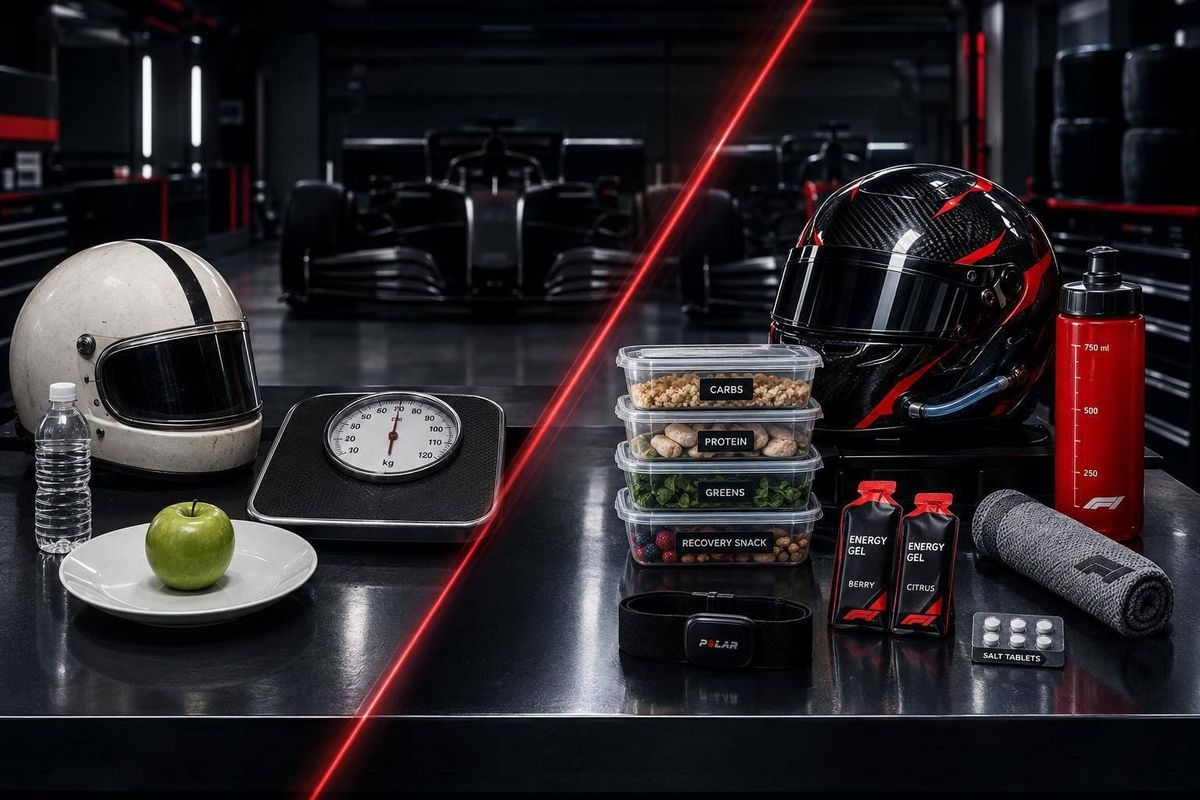
F1 driver diets have shifted from staying light to fueling performance. I’d sum up the change this way: meals, fluids, and recovery now follow each driver’s workload - not just a weight target.
Drivers can lose 4.4–8.8 pounds of fluid during a Grand Prix, so eating well is only part of the job. Teams also plan for heat, fluid replacement, and recovery.
Quick Comparison
| Area | Then | Now |
|---|---|---|
| Meals | More reliance on personal habits | Portions and timing matched to training and racing |
| Weight | More pressure to cut calories | Minimum-weight rules ease pressure to stay light |
| Hydration | Less measurement; drink access varied | Sweat testing, weigh-ins, and planned fluid and sodium intake |
| Heat | More reliance on general fitness | Heat training and pre-race cooling |
| Recovery | Support varied by driver and team | Food, fluids, sleep, and physical treatment planned together |
My takeaway: <u>less weight doesn’t automatically mean better performance</u>. The aim is enough fuel to stay focused and recover - while accounting for heat, travel, digestion, and sleep.
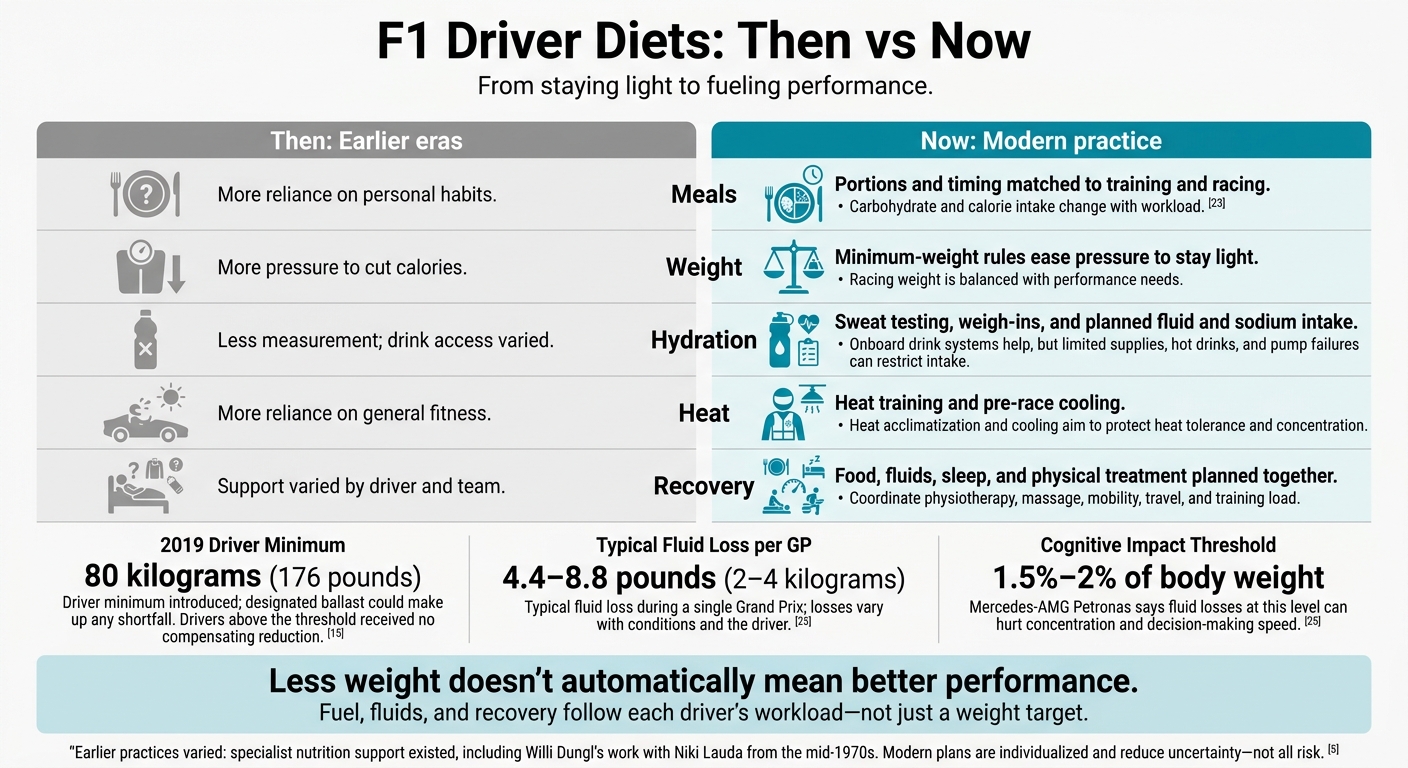
F1 Driver Diets: Then vs Now
Tasting Victory: The Life and Diet of Formula1 Racer George Russell | Longer Tables with José Andrés
sbb-itb-7c68254
Then vs Now: Meals and Weight Control
The clearest change is how drivers plan their meals, not just what they eat.
| Category | Earlier eras | Modern practice |
|---|---|---|
| Meal planning | Drivers often planned their own meals. | Personal plans match meals to training, racing, and recovery. |
| Energy intake | Weight loss often took priority over steady fueling. | Carbohydrate and calorie intake change with workload. |
| Weight targets | Lower body mass mattered more when driver weight counted toward the total limit. | Racing weight is balanced with performance needs. |
| Monitoring | Drivers relied mostly on judgment, weigh-ins, and coach experience. | Blood testing and data guide dietary changes. |
| Limitations | Uneven support increased the risk of under-fueling. | Travel, appetite, and digestion still disrupt meal timing. |
Earlier Eras: Eating Habits and Nutrition Support
McLaren’s account of Niki Lauda and Willi Dungl shows that specialist nutrition support existed earlier: Dungl began working with Lauda in the mid-1970s. This example does not establish a paddock-wide standard.
Older weight rules pushed drivers to trade body mass for fuel stores and training capacity. Eating less could reduce stored carbohydrate and muscle mass, leaving drivers more prone to fatigue and poor concentration. Formula 1 said the 2019 rule change reduced the need to cut calories and the health risks that came with it. This trade-off also shaped how drivers managed fluids and heat.
Modern Practice: Personal Meal Plans and Weight Rules
Modern meal plans adjust fuel to the workload rather than treating every day the same. Drivers can eat more carbohydrate during demanding training and race periods, then less when activity drops. Protein helps repair muscle, while fat supplies energy. Portions and meal timing also need to fit digestion and travel schedules.
A 2022 profile of Daniel Ricciardo and Lando Norris described individualized approaches, including blood testing to identify vitamin deficiencies and dietary changes to address them. Norris’s balanced carbohydrate, protein, and fat intake reflected his metabolism and training demands, not a universal driver diet.
The driver minimum introduced in 2019 was 80 kilograms (176 pounds). Designated ballast could make up any shortfall, but drivers above that threshold received no compensating reduction. The same data-led approach to meal planning also guides hydration and recovery.
Then vs Now: Hydration and Heat Preparation
In earlier eras, teams tracked hydration loosely. Drivers often had no onboard drink system, so they depended on pre-race fluids and limited heat support. That increased the risk of exhaustion and fainting in hot races.
Modern teams take a different approach: measure hydration needs rather than guess them.
| Practice | Earlier eras | Modern practice | Intended performance effect | Risks or limitations |
|---|---|---|---|---|
| Fluid replacement | Pre-race fluids; onboard drinks weren't always available. | Fluid and sodium targets based on sweat loss, plus in-car drink systems. | Maintain blood volume and concentration. | Limited supplies, drinks that heat up in the cockpit, and pump failures can restrict intake. |
| Monitoring | Hydration was rarely measured. | Weigh-ins and sweat testing. | Estimate each driver's replacement needs. | Weight change alone doesn't measure total sweat loss. |
| Heat preparation | Less documented, with more reliance on general fitness. | Heat acclimatization and pre-race cooling. | Improve heat tolerance and delay overheating. | Poorly managed heat training can add fatigue. |
Measuring Sweat Loss and Replacing Fluids
Teams weigh drivers before and after sessions and use sweat patches to work out replacement needs. They also account for fluids consumed during the session. The patches measure sweat sodium concentration.
Formula 1 drivers typically lose 4.4–8.8 pounds (2–4 kilograms) of fluid during a single Grand Prix.
Losses depend on race conditions and how much each driver sweats. An onboard supply of about 51 fluid ounces (1.5 liters) may not cover those losses. But more water isn't always better: drinking too much can dilute blood sodium and cause hyponatremia.
Measuring fluid loss is one part of the job. Teams also need to keep heat from wearing down a driver's focus.
Preparing for Heat and Protecting Concentration
BWT Alpine F1 Team prepares for humid races such as Singapore with heat-chamber or sauna sessions that build heat tolerance and increase plasma volume.
These changes help drivers maintain reaction time during hot races.
Mercedes-AMG Petronas says fluid losses of just 1.5%–2% of body weight can hurt concentration and decision-making speed.
Cooling vests and other pre-race cooling methods aim to delay the increase in core body temperature. Heat acclimatization helps drivers tolerate hot conditions. Both approaches still need a drinking plan tailored to each driver.
Then vs Now: Post-Race Recovery
After the race, recovery turns to heat stress and fluid loss. Earlier routines varied widely by driver and team. Today, teams plan around refueling, rehydration, massage, sleep, and training load.
| Recovery area | Earlier-era pattern | Modern approach |
|---|---|---|
| Post-session food | Meals were less documented and less visibly standardized. | Schedule carbohydrate and protein around workload and recovery time. |
| Rehydration | Individual replacement routines were less documented. | Plan fluid and sodium replenishment after sessions. |
| Physical recovery | Rest and treatment depended on available support. | Coordinate physiotherapy, massage, mobility, and stretching. |
| Planning between races | Detailed routines were less documented. | Coordinate sleep, travel, treatment, and training load. |
The first step is to replace fuel and fluids promptly so drivers are ready for the next session.
Refueling and Rehydrating After Sessions
Glycogen is the fuel stored in muscles. When athletes need to recover fast, general guidance recommends 0.45–0.54 grams of carbohydrate per pound of body weight per hour during the first four hours, equivalent to 1.0–1.2 grams per kilogram.
Ferrari’s September 2024 driver-fitness guidance describes replacing fluids lost during training and consuming protein in a carbohydrate drink with milk or yogurt after each session.
Post-race rehydration depends on how much fluid the driver lost. General guidance for fast rehydration recommends replacing 125%–150% of exercise fluid losses, with sodium helping the body retain fluid. That works out to roughly 18–23 fluid ounces per pound of body weight lost, or 1.2–1.5 liters per kilogram. Drivers should spread that intake through recovery rather than drink it all at once.
When demanding sessions are less than 24 hours apart, carbohydrate, protein, and fluids take priority right away. Sodium also matters after heavy sweating.
Sleep and Physical Recovery Between Races
Once food and fluids are covered, the focus shifts to tissue repair and sleep.
Ferrari describes massage focused on the neck and lower back, followed by mobility and stretching, alongside physiotherapy and sufficient nighttime sleep. It pairs this with low-impact training such as swimming or cycling.
Massage may help drivers relax and feel less sore, while treatment addresses their individual physical needs. Travel and tight schedules leave less time to recover, so protecting sleep and managing training load matter before the next session.
Poor sleep or lingering soreness may call for less training rather than another hard workout. Staff track body mass, sleep, soreness, meals, travel, and workload to adjust the plan.
Conclusion: From Staying Light to Fueling Performance
Low weight is no longer the goal. Drivers need enough energy to maintain endurance and concentration. Teams now manage that balance with tracked plans tailored to each driver, rather than relying mainly on personal habits.
The shift affects meals, hydration, and recovery, while rule changes have eased the pressure to stay light.
| Area | Then | Now |
|---|---|---|
| Meals | Based on personal habits. | Fueling is tailored to each driver. |
| Weight rules | Pressure to stay light. | Rule changes reduced pressure to chase extreme lightness. |
| Hydration and heat | Drinking routines varied. | Hydration is tracked, not guessed. |
| Recovery | Support was less standardized. | Recovery is planned between sessions. |
F1 nutrition has moved from managing weight to supporting performance. But modern methods reduce uncertainty - not all risk. The onboard drink system helps, yet it doesn’t guarantee enough fluid intake in every situation.
Under-fueling, overheating, stomach discomfort, and disrupted sleep still need attention for each driver. Plans must account for those needs through fueling and recovery, rather than simply eating less.
FAQs
What do F1 drivers eat before a race?
F1 drivers don’t depend on one “race-day meal.” Teams use data to build nutrition and hydration plans for each driver, accounting for their workload, physiology, and race conditions. These plans usually include scheduled fluid intake and electrolyte checks, especially in hot weather, to help prevent dehydration and keep drivers focused. Planned recovery routines between sessions support these plans.
How do teams distinguish fluid loss from weight loss?
Teams pair regular electrolyte checks and scheduled fluid monitoring with personalized nutrition plans to tell fluid loss apart from fat loss. Drivers can lose up to 6.6 pounds during a race, with cockpit temperatures reaching 140°F. Physiotherapists and performance coaches track these markers to spot dehydration - not changes in body composition - and guide each driver’s hydration and recovery.
How does jet lag affect driver nutrition?
Jet lag throws off a driver’s body clock, making it harder to perform at their best. Teams tailor nutrition and hydration plans to each driver’s physiology and the conditions around them. Scheduled fluid intake and regular electrolyte checks help fight dehydration, which travel-related fatigue can make worse.
Recovery routines combine structured sleep, controlled light exposure, and sometimes melatonin supplements to help drivers stay physically and mentally sharp throughout race weekends.