Flexi-Wing Compliance Checklist for Teams
Checklist for meeting F1's 2025 flexi-wing rules: Article 3.15 limits, 75 kg rear‑wing and 30 N slot‑gap tests, FEA, static/wind‑tunnel validation and race monitoring.
Formula 1’s 2025 flexi-wing regulations are stricter than ever, aiming to curb aerodynamic loopholes that give teams an edge. These rules focus on load-deflection limits and stricter testing to ensure fair competition. Here’s what you need to know:
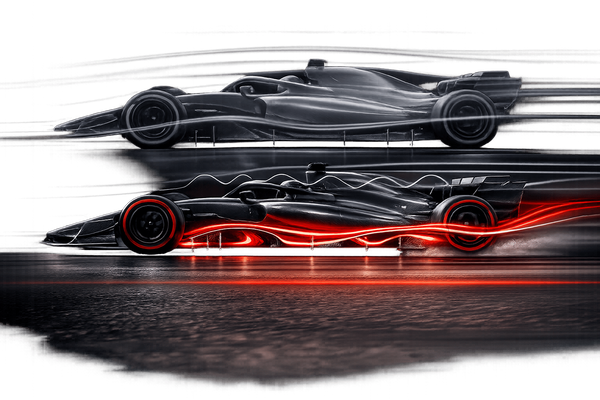
- Flexi-wings are designed to pass static FIA tests but flex during races to reduce drag and enhance speed.
- Updated regulations now include tougher tests, like a 75 kg vertical load on rear wings and increased slot-gap force from 10 N to 30 N.
- Teams must align designs with Article 3.15 of the FIA Technical Regulations and prepare for enhanced video monitoring during races.
- Key steps for compliance: Use advanced simulations, static rig tests, and wind tunnel experiments to ensure designs stay within limits. Maintain detailed compliance records and collaborate with FIA scrutineers during race weekends.
The focus is on balancing performance with rule adherence. By integrating rigorous testing and documentation into every phase, teams can avoid penalties and maintain competitiveness under the 2025 rules.

F1 2025 Flexi-Wing Compliance Process: From Design to Race Weekend
F1 2025 - New Flexi Wing Test EXPLAINED (CATIA)
Understanding Regulatory Requirements
To ensure compliance with the 2025 Formula 1 Technical Regulations, teams must begin by reviewing the latest FIA documentation. A key focus is Article 3.15, titled "Bodywork Flexibility", which outlines the allowable deflection limits for wings. Specifically, sub-articles 3.15.4 and 3.15.5 address the deflection of front wing bodywork and flaps, while Article 3.15.17 specifies that a vertical load of 75 kg (165 lb) must be applied at either end of the rear wing. Additionally, Article 3.15.1 grants the FIA the authority to introduce new or stricter tests during the season if any irregularities are suspected. These regulations form the basis for both design and compliance testing efforts [6].
Teams also need to stay updated on the latest Technical Directives issued by the FIA Single-Seater Department. These directives provide clarification on how onboard cameras, video analysis, and additional scrutineering measures will be used to monitor flexible bodywork and emerging "mini-DRS" concepts. A regulatory coordinator or performance engineer should review these updates weekly, log any changes, and ensure that aerodynamic, structural, and race-engineering teams are briefed before design freezes or major upgrades.
Required FIA Documents and Technical Directives
It’s essential to maintain an internal regulation pack containing the most recent FIA technical regulations, all Technical Directives related to flexi-wings, and any clarifications circulated through event notes. The chief designer or head of vehicle performance should oversee version control and maintain revision logs. Teams must also monitor updates to the 2025 Technical Regulations, such as Issue 03, dated April 7, 2025, as these updates may revise load-deflection values or testing methodologies. Additionally, Race Directors’ event notes and scrutineering guidance often introduce temporary test protocols or camera-based monitoring for specific races.
Deflection Test Parameters and Limits
For 2025, the FIA has introduced stricter flexibility limits to curb "mini-DRS" designs that exploit wing deflection to minimize drag. Rear wing slot-gap deflection tests now apply a load of 30 N (6.7 lbf), an increase from the previous 10 N (2.2 lbf), to ensure consistent performance. Article 3.15.17 mandates that the rear wing withstand a vertical load of 75 kg (165 lb, approximately 735 N) at each end, with precise limits on deflection and gap variation. To account for material variances and temperature effects, teams typically design for slot-gap movement to remain 20–30% below FIA limits. For clarity, deflection limits are often converted from millimeters to inches (e.g., 8–10 mm translates to approximately 0.31–0.39 in), and loads are adjusted to customary units where necessary.
Aligning Internal Standards with FIA Requirements
To meet FIA standards, teams should replicate the official test setup by constructing jigs that match the FIA’s fixture geometry, load application points, and measurement locations. Using calibrated actuators and load cells, teams can apply loads with tolerances of ±1–2%. The limits defined in Article 3.15 should be translated into specific design rules, such as minimum laminate thickness, core material specifications, hinge stiffness, and hardware requirements. These constraints should then be incorporated into CAD checklists and sign-off forms. To ensure compliance, internal criteria should be set 1–2 mm tighter than FIA limits, accounting for manufacturing tolerances and ensuring repeatable test outcomes.
Designing for Compliance
After understanding the regulatory framework, the next step is turning those rules into actual wing designs that not only pass FIA tests but also meet performance goals. This involves a careful mix of material choices, structural layouts, and simulation-based fine-tuning. The challenge? Balancing stiffness in areas critical for compliance while allowing some flexibility elsewhere.
This process transforms FIA's regulations into real-world engineering solutions.
Front Wing Design Requirements
Front wings rely heavily on high-modulus carbon fiber/epoxy laminates with carefully planned stacking sequences to achieve the stiffness required by FIA standards. Designers align unidirectional plies with primary load paths to boost bending stiffness, while ±45° and 0°/90° ply orientations manage torsional flexibility in high-stress areas like flap regions. To keep weight low while maintaining strength, sandwich constructions using high-stiffness foam or honeycomb cores are common, especially near FIA load application points. Titanium or high-strength aluminum inserts are added at test locations and key attachment points to prevent crushing and ensure consistent deflection measurements during FIA inspections.
Torsional stiffness is another critical focus. This is controlled through spar layouts, box-section designs, and ply orientations. A closed-section design for the front wing's mainplane or flap box - extending from the nose to the outboard edge - offers much greater torsional rigidity compared to open C-sections. Increasing section depth near load application points can significantly enhance bending stiffness without adding much weight, thanks to the cubic relationship between section depth and stiffness. Internal ribs and shear webs further reduce twisting in multi-element flaps, particularly in areas that bear the brunt of asymmetric loads during FIA tests. To limit measured deflection, designers ensure that test pads are positioned over strong internal structures, directing applied loads into stiff load paths rather than more flexible skin areas.
These principles also carry over to the rear wing and slot-gap configurations.
Rear Wing and Slot-Gap Design
With stricter slot-gap rules - where the applied load increased from 10 N (2.2 lbf) to 30 N (6.7 lbf) - teams have reinforced the slot-gap opening region by thickening flap hinges, using higher-modulus carbon skins, and adding ribs to limit backward rotation of the upper element under load. Designers also adjust hinge lines and pivot mechanics to ensure the gap remains consistent under aerodynamic forces, minimizing the risk of unintended DRS activation. To further stiffen load paths, teams extend internal spars or incorporate closed-section torque boxes, ensuring that relative motion between elements stays well within the FIA's limits.
In the open DRS position, aerodynamic efficiency is maximized by tweaking camber, angle, and endplate cut-outs to recover drag-reduction benefits lost due to stricter rules on elastic deformation at high speeds. Reinforcements at the junctions between the endplates and wingtips ensure compliance with new deflection limits for the upper rear wing, which restricts separation under the 75 kg (165 lb, approximately 735 N) vertical load specified in Article 3.15.17.
Striking the right balance between stiffness and flexibility is a constant optimization challenge. Too stiff, and the wing becomes unnecessarily heavy and less effective at flattening during high-speed runs. Too flexible, and it risks failing FIA tests or attracting scrutiny during races. Engineers rely on parametric CAD/FEA loops and statistical tolerance analyses to fine-tune laminate thickness, core densities, and spar geometries, ensuring deflections stay safely within FIA thresholds.
Once the structural design is set, simulations help refine safety margins for all components.
Using Simulations to Define Safety Margins
To replicate FIA test conditions, FEA models must match the exact load magnitudes, directions, application footprints, and support conditions outlined in the regulations. For accuracy, boundary conditions mimic real-world interfaces - such as the nosecone for front wings or pylon/endplate mounts for rear wings - instead of relying on idealized fixed edges. A fine mesh is critical around test pads, hinges, and high-stress areas. For composite materials, teams often use layered shell elements with ply-by-ply definitions, while solid elements capture the behavior of cores and inserts.
Once the FEA model is validated against physical rig tests, teams establish internal design targets that stay well below legal limits. For example, engineers might aim for 0.24–0.28 inches (6–7 mm) of simulated deflection on a front wing test, compared to the FIA's maximum allowance of 0.39 inches (10 mm). To account for uncertainties like manufacturing variability, temperature changes, and material aging, an additional 10–20% stiffness "buffer" is often included. This simulation-driven approach ensures that designs remain compliant throughout development, even as conditions change.
Testing and Validation Processes
Once the wing design is finalized in CAD and simulations, the next step is to ensure it meets FIA scrutineering standards. This is typically done through a three-step validation process: virtual analysis using finite element analysis (FEA), static rig tests that simulate FIA test conditions, and wind tunnel testing to evaluate aerodynamic performance under real-world loads. Virtual analysis lays the groundwork for physical testing.
Finite Element Analysis and Data Correlation
FEA is the first step in the validation process. Engineers simulate FIA test conditions by applying specific loads, such as vertical loads of 75 kg (165 lb) on rear wing endplates or 30 N (6.7 lbf) for slot-gap tests. To ensure accuracy, the boundary conditions in these models must mimic the actual mounting points on the car, like the nosecone for front wings or pylon mounts for rear wings, rather than relying on overly simplified fixed edges that could skew results.
Sensitivity studies are conducted to explore how changes in ply thickness, fiber orientation, and stiffness affect deflection. Design targets are typically set to 60–80% of FIA deflection limits to account for real-world variability. For instance, if the FIA allows a front-wing deflection of up to 0.39 inches (10 mm), simulations might aim for a range of 0.24–0.31 inches (6–8 mm). Accurate correlation is key - engineers use tools like strain gauges, displacement transducers (LVDTs), or digital image correlation (DIC) during bench tests to measure deflections and compare them to FEA predictions. Material properties, such as modulus, damping, and joint stiffness, are refined based on test feedback, with iterations continuing until correlation errors are reduced to 5–10% for critical deflections.
After virtual verification, the focus shifts to physical testing to confirm these results.
Wind Tunnel and Static Rig Testing
Static rig tests are used to verify compliance with FIA standards. These tests replicate the car's mounting points and apply calibrated loads at FIA-specified positions. Engineers step loads up and down to check for linearity and hysteresis, and multiple tests on wings from different production batches help account for manufacturing variability. The measured deflections are compared against both FIA limits and FEA predictions.
Wind tunnel tests, on the other hand, evaluate the wing's dynamic aero-elastic behavior. During these campaigns, instrumented wing assemblies are exposed to pressures that simulate or slightly exceed FIA test loads. Advanced optical systems, such as photogrammetry and laser displacement tools, measure critical deflections in areas like front-wing flap edges, rear-wing elements, and slot-gap regions. Engineers then use structural models to map these dynamic measurements back to static test conditions. If deflections approach internal safety limits, adjustments are made - either by reinforcing the geometry or modifying operating parameters like wing angles or DRS usage - before the design is finalized for race deployment.
Maintaining Compliance Records
A comprehensive compliance record is essential for addressing FIA inquiries or adapting to new technical directives. Teams maintain a detailed compliance dossier that includes approved drawings and CAD revisions, FIA regulations and Technical Directives (with version and effective dates), FEA reports outlining assumptions and safety margins, material specifications and certificates, manufacturing records with non-destructive testing (NDT) results, and test reports from static rig, wind tunnel, and on-car measurements.
Key documents, such as load–deflection curves and correlation plots, are stored in a searchable database. Any changes to geometry, layup, or repairs are logged along with re-test evidence in a change-control system. This meticulous record-keeping ensures teams can quickly demonstrate compliance if questioned by FIA scrutineers during a race weekend or in a remote review. These thorough testing and documentation practices are critical for delivering consistent, race-ready performance.
For updates on regulation changes and insights into flexi-wing compliance, engineers can turn to resources like F1 Briefing, which offers technical analyses and expert commentary on the latest developments in this area.
Race Weekend Preparation and Scrutineering
After months of meticulous design and validation, race weekend is where teams must prove their cars meet the strict 2025 flexi-wing regulations. Once the wings arrive at the circuit, it's all about ensuring every component complies. This phase requires sharp preparation, real-time monitoring, and seamless communication with FIA officials.
Pre-Event Verification
Before the cars hit the track for practice, teams perform a thorough compliance check on all race and spare wings. Each wing assembly is cross-checked against the latest FIA-approved CAD designs, verifying part numbers and specification codes. Quick-load tests are conducted in the garage to confirm deflections remain within safe limits.
Each wing is labeled with its scrutineering status, and a detailed compliance dossier is prepared. This dossier, available in both digital and printed formats, summarizes key test data and updates, making it easy for scrutineers to review. Having this information ready ensures a smooth handoff to on-track monitoring during the sessions.
On-Track Wing Monitoring
Once the cars are on track, teams use real-time monitoring to ensure compliance under racing conditions. During practice and qualifying, high-speed cameras are positioned in the pit lane and at the end of straights to capture footage of rear-wing upper elements and front-wing flaps at high speeds, especially during DRS activation. Engineers analyze this footage frame-by-frame, comparing angular changes and slot-gap variations to internal models.
Onboard sensors, such as strain gauges on wing pillars and displacement sensors on flap mechanisms, provide live telemetry data. This allows engineers to estimate deflections at key speeds and flag any unusual behavior. If sensor readings approach regulatory limits, drivers may be instructed to adjust their driving style until the component can be inspected. After incidents like curb strikes or debris hits, mechanics conduct visual checks and stiffness tests to assess damage. If needed, the wing is replaced, and all findings are logged to demonstrate proactive monitoring to the FIA.
Working with FIA Scrutineers
Teams assign technical representatives who are well-versed in the regulations and the team's compliance strategy. These representatives undergo specialized training to explain complex aero-elastic concepts, such as how the car adheres to the 2025 load-deflection criteria. For instance, they can detail the 75 kg (165 lb) vertical load test for rear wings or the 30 N (6.7 lbf) slot-gap test load, along with the internal safety margins that provide extra assurance.
When the FIA raises concerns - perhaps prompted by suspicious TV footage - teams must respond quickly. This involves providing detailed evidence such as CAD section views, finite element analysis plots showing deformation predictions, and static test data tied to specific dates and hardware IDs. These records, maintained from the design stage, ensure scrutineers can verify compliance. Traceability is key: every wing's serial number, manufacturing batch, and repair history are documented, allowing scrutineers to match questioned parts to their test records easily.
All interactions with FIA officials are meticulously documented, including times, participants, and agreed actions. This information is shared internally to ensure everyone follows the same protocols. By maintaining this level of transparency and consistency, teams can build trust and effectively handle the increased scrutiny of the 2025 flexi-wing regulations.
Conclusion and Key Takeaways
Navigating the FIA's 2025 flexi-wing regulations requires a detailed, step-by-step approach - from the initial design stages to post-race evaluations. This checklist offers teams a clear framework to handle the stricter load-deflection tests, including the updated standards introduced by the FIA. By embedding compliance checks into every phase - design, validation, and race operations - teams can maintain performance while avoiding protests or disqualifications.
The phased introduction of rear and front wing standards highlights the importance of planning ahead. Teams that establish internal safety margins, ensure traceability, and actively monitor wing performance will be better equipped to adapt. The FIA has emphasized its commitment to eliminating bodywork flexibility concerns by 2025, stating it aims to ensure "bodywork flexibility is no longer a point of contention for the 2025 season". This reinforces the need for designs that perform consistently under both static and dynamic conditions.
Once design and testing are validated, managing compliance becomes the final, critical step. Effective compliance management ensures fair competition and preserves aerodynamic advantages through precise engineering. Collaboration among aerodynamics, design, and race engineering teams is essential to meet these standards. Keeping detailed records - such as test setups, deflection data, and version histories - enables teams to respond quickly when questions arise from scrutineers. Additionally, maintaining open communication with FIA officials helps resolve ambiguities early, reducing the risk of mid-season disruptions.
For U.S.-based technical centers, maintaining a digital log of FIA communications that accounts for time zone differences is crucial. Promptly reviewing overnight updates ensures no critical information is missed. Using consistent SI units for all load and deflection data minimizes errors and ensures seamless coordination between office and trackside teams.
FAQs
What are the updated flexi-wing testing rules for 2025?
As of now, the FIA has not released any official details about the updated flexi-wing testing rules set for 2025. Both Formula One teams and fans are closely watching for announcements to see how these regulations might change. Keep an eye out for updates as new information emerges.
What steps should F1 teams take to ensure their wings meet FIA regulations?
F1 teams can stay within FIA regulations for their wings by conducting thorough design evaluations and leveraging cutting-edge measurement tools to analyze flexibility and aerodynamic behavior. Sticking to the FIA's technical rules and passing their rigorous tests is non-negotiable to avoid penalties.
Frequent simulations and internal audits play a big role too. These steps allow teams to spot and fix potential problems early, making sure their designs align with the FIA's strict requirements.
How do simulations help F1 teams comply with flexi-wing regulations?
Simulations are essential for F1 teams to ensure their cars meet flexi-wing compliance standards. These virtual tools give engineers the ability to assess both aerodynamic performance and structural flexibility before moving on to physical testing.
With simulations, teams can spot potential problems early, refine designs, and confirm their cars align with regulations - all without the immediate need for costly physical prototypes. This not only saves time and money but also helps teams stay competitive in the high-stakes world of Formula 1.