Why Ricciardo Struggled with Car Adaptation
Why Ricciardo failed to sync with McLaren's cars: driving-style mismatch, limited testing, ground-effect rules and setup limits that cost lap time.
Daniel Ricciardo’s time at McLaren revealed a harsh truth: even experienced drivers can face challenges when their driving style doesn’t align with a car’s design. His struggles stemmed from a mismatch between his natural cornering technique - smooth, early braking with high mid-corner speed - and McLaren’s car, which required aggressive, late braking for sharp rotation. This misalignment led to slower lap times, mental fatigue, and a significant performance gap compared to teammate Lando Norris.
Key reasons behind Ricciardo’s difficulties included:
- Car Design Conflicts: McLaren’s MCL35M and MCL36 required a driving style Ricciardo wasn’t accustomed to, particularly in braking and cornering techniques.
- Limited Practice Time: Only 1.5 days of pre-season testing in 2021 left little room to adjust before racing began.
- Ground-Effect Regulations: The 2022 rule changes retained many of McLaren’s design traits, compounding Ricciardo’s issues.
- External Challenges: Sprint weekends and restricted testing further limited opportunities to refine his approach.
Ultimately, Ricciardo’s natural instincts, honed at Red Bull, clashed with McLaren’s car demands, leaving him unable to consistently deliver strong results. His case highlights the importance of aligning car design with a driver’s style or providing ample time and resources for adjustment.
Why Ricciardo’s Driving Style Isn’t Working
How Ricciardo's Driving Style Clashed with McLaren's Car Design

Ricciardo's Driving Style vs McLaren Car Requirements Comparison
Daniel Ricciardo's smooth and flowing cornering style was fundamentally at odds with McLaren's car, which demanded a more aggressive, late-braking approach.
Ricciardo's Preferred Technique: Late Braking and Smooth Cornering
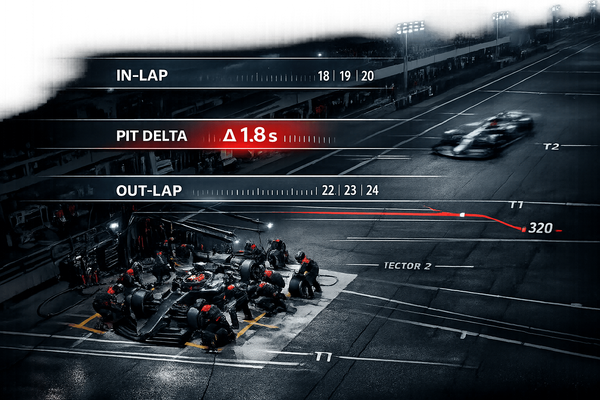
Ricciardo’s driving relied on a "U-shaped" line, where he braked earlier to carry more speed through the corners. In contrast, McLaren’s MCL35M required a sharp "V-shaped" style - braking late and hard to create quick rotation at the apex. This forced Ricciardo to adjust his natural instincts, often with frustrating results. For example, at the 2021 Styrian Grand Prix, he lost 0.5 seconds in Sector 2, highlighting the mismatch. Over the first 11 races of the season, this struggle translated into a points gap of 50 to 113 against his teammate. McLaren's Executive Director of Racing, Andrea Stella, summed it up:
"He's a driver who likes to roll the speed in the corner and not necessarily attack the braking as much as our car requires."
The challenge wasn’t just about style - it was compounded by the car's technical limitations.
Technical Problems with the McLaren MCL35M
McLaren's design presented unique technical hurdles that made Ricciardo's adaptation even harder. The car’s aerodynamic center of pressure needed to shift forward, which only happened under heavy, late braking. Ricciardo’s smoother, earlier braking style left the aerodynamic pressure too far rearward, causing under-rotation and limiting traction during corner exits.
The car’s front axle also lacked responsiveness, making it difficult to manage simultaneous braking and turning. This often led to understeer unless the car was driven with pinpoint precision. While the MCL35M excelled in high-speed, flowing corners, it struggled in slower, medium-speed turns that demanded sharp rotation - an area critical to Ricciardo's preferred driving method. McLaren’s Technical Director, James Key, explained:
"How the aerodynamics work and support the car in certain conditions... is it strong in a straight line, which is what we've always been, or a little bit weaker if you're trying to carry the brakes into a corner... That's where you really get the differences creeping up."
| Feature | Ricciardo's Natural Style | McLaren MCL35M Requirement |
|---|---|---|
| Braking Point | Earlier and progressive | Late and aggressive "on the anchors" |
| Corner Shape | "U-shaped" (smooth, rolling arc) | "V-shaped" (sharp rotation at apex) |
| Front-End Feel | Strong, responsive feedback | Weak and less communicative |
| Rotation Phase | Mid-corner rotation | Entry-phase rotation via braking |
These mismatches between Ricciardo’s style and McLaren’s car design highlight how even the most talented drivers can struggle when their natural approach doesn’t align with the car. Small technical and stylistic differences can have a big impact on lap times, which became a defining feature of Ricciardo's time with McLaren.
External Factors That Made Adaptation Harder
Several external challenges added to Ricciardo's struggle to adapt. The current F1 calendar leaves little room for experimentation compared to earlier eras, and significant regulation changes introduced additional hurdles.
Limited Testing and Practice Time
When Ricciardo joined McLaren in 2021, he faced a harsh reality: only 1.5 days of pre-season testing before his first race weekend. This gave him minimal time to develop the muscle memory needed to handle the car's unique characteristics. Andrea Stella highlighted the importance of practice outside race weekends, where drivers can focus on building the subconscious responses that are critical for performance.
Instead, Ricciardo had to rely on a more conscious, forced adaptation process due to restricted practice opportunities. Sprint weekends, for example, slashed practice time to just one hour, leaving little room for experimentation. At the 2023 Austin Sprint weekend, these constraints forced Ricciardo to adopt teammate Yuki Tsunoda's setup instead of exploring adjustments tailored to his own driving style. Team Principal Andreas Seidl explained the difficulty:
"In order to drive our car fast at the moment, you need a special driving style which is not natural for Daniel. That's why it's not easy for him to get the laps in and extract the performance."
These limitations became even more challenging under the newly introduced ground-effect regulations.
The 2022 Ground Effect Rules and Their Impact
The 2022 technical regulations brought in ground-effect aerodynamics, fundamentally altering how cars behaved on track. While this overhaul could have provided Ricciardo with a clean slate, it instead compounded his struggles. Despite the significant changes, the McLaren MCL36 retained much of the "peculiar" DNA of its predecessor. The car remained strong in high-speed corners but continued to falter in medium-speed sections. Ricciardo expressed his frustration:
"The regulations make the car feel different, but the DNA of the car is still very similar. Some of the things from last year which I struggled with, they are still in this car."
The new ground-effect cars also introduced unpredictable behaviors that Ricciardo found difficult to interpret. He experienced unexpected front-wheel lock-ups and erratic reactions that didn’t align with his inputs. For a driver who thrives on feel and confidence, this unpredictability made consistency almost impossible. The numbers told the story: after 13 races in 2021, Ricciardo had scored 56 points. Under the 2022 regulations, that figure plummeted to just 19 points over the same period. The performance gap to his teammate occasionally reached 0.8 seconds - a margin Ricciardo considered unusually large for drivers at the top level of F1.
What Ricciardo and McLaren Did to Fix the Problem
Ahead of the 2021 season, McLaren made significant efforts to integrate Daniel Ricciardo into the team. He spent a month at the Woking factory, familiarizing himself with the car's systems. The engineering team also analyzed his team radio recordings from his time at Renault to streamline communication from the start. Despite this thorough preparation, a key issue emerged: the MCL35M’s aerodynamic design didn’t align with Ricciardo’s natural driving style.
Using Simulators and Driver Coaching
McLaren's simulator sessions revealed a critical mismatch: Ricciardo’s preferred roll speed didn’t suit the car’s demand for late, aggressive braking. Racing Director Andrea Stella noted that the simulator allowed the team to pinpoint these issues and identify what needed to change. To address this, race engineer Tom Stallard provided intensive coaching to help Ricciardo unlearn old habits and adopt new techniques.
However, as Stella explained, understanding a problem in theory doesn’t guarantee immediate results on the track. He likened the process to learning a musical instrument, saying improvement requires "hours and hours" of practice. The struggle was evident in the numbers: during the first 11 races of 2021, Ricciardo scored just 50 points, while teammate Lando Norris racked up 113. These efforts laid the groundwork for a pivotal decision: should McLaren adapt the car to Ricciardo or push him to adapt to the car?
Changing the Car vs. Changing the Driver
McLaren faced a tough choice: adjust the car to better suit Ricciardo, or require him to adapt to the car’s characteristics. Technical Director James Key revealed that the team made tweaks like refining engine mapping, brake pedal feel, and mechanical setup to make the car more accommodating. However, as Stella pointed out, these adjustments were minor and carefully balanced to avoid undermining the car’s aerodynamic efficiency. The car’s core performance relied heavily on its aerodynamic design - something too fundamental to change without significant time and risk to overall competitiveness. With the 2021 homologation rules limiting mechanical changes, the burden of adaptation fell squarely on Ricciardo.
Team Principal Andreas Seidl acknowledged the limitations of this approach:
"We put a lot of effort team side to see what we can do car side to help him. He put a lot of effort as well. But we still didn't manage to unlock these percentages that were missing."
Ricciardo, meanwhile, chose to run setups nearly identical to Norris’s rather than pursue drastic changes. He explained:
"I was less focused on set‑up, more just about me executing the way I know this car should be driven."
Even McLaren’s major upgrade package at the 2022 Spanish Grand Prix - which involved changes to the front and rear wings, suspension, floor, sidepods, engine cover, and diffuser - failed to bridge the performance gap. When Ricciardo returned to Red Bull in 2023, Team Principal Christian Horner observed:
"It was clear when he came back, that he picked up some habits that we didn't recognise as the Daniel that had left us years earlier."
What Drivers and Teams Can Learn from This Case
Ricciardo's struggles at McLaren highlight a key issue: when a driver's natural style clashes with a car's design, performance can take a hit. Teams must quickly identify these mismatches and decide whether to tweak the car or help the driver adapt. This dynamic plays a crucial role in how teams approach car setups and refine driver techniques.
How to Master Ground Effect Cars
Driving ground-effect cars demands precision in controlling ride height, yaw, and roll. This driving style often favors a late-braking, "V-shaped" cornering approach, which can be at odds with drivers who excel with a smoother, "U-shaped" line.
A great example unfolded during the Mexican Grand Prix in October 2023. AlphaTauri's Chief Race Engineer Jonathan Eddolls chose not to push Ricciardo into adopting teammate Yuki Tsunoda's late-braking technique. Instead, the team adjusted the car's setup to better align with Ricciardo's natural driving style. By enhancing front-end rotation while compromising some rear stability, Ricciardo managed to qualify 4th and finish 7th. This case shows how fine-tuning the balance between aerodynamic grip and mechanical feedback can unlock a driver’s potential.
Rebuilding Confidence Through Focused Practice
Car adjustments alone aren’t enough - focused practice is equally important for restoring a driver’s confidence. When a car doesn’t suit a driver’s style, their technique can suffer, leading to bad habits. This is where simulator work becomes invaluable. It’s not just about learning tracks; it’s about breaking those counterproductive habits.
Ricciardo’s return to the simulator in early 2023 revealed lingering effects of McLaren-specific techniques. But after a winter break and dedicated simulator sessions, Red Bull Team Principal Christian Horner noted Ricciardo was “hitting the ground running” and providing data that reflected the driver they had known before.
Simulator sessions function much like practicing an instrument - rebuilding neural pathways takes time and repetition. Additional testing days or introducing a new chassis, as seen at the Chinese Grand Prix and Miami Sprint, can also speed up this process. Andrea Stella summed it up perfectly:
"You can tell [a musician] how to play the guitar, you can use a lot of theory but at some stage he will have to spend quite a lot of time with the guitar and make quite a lot of exercises".
Conclusion: Main Factors Behind Ricciardo's Adaptation Problems
Daniel Ricciardo's challenges at McLaren came down to a combination of technical hurdles, limited preparation time, and team-specific factors. At its core, the issue was a mismatch between Ricciardo's natural driving style - focused on early braking and maintaining speed through corners - and McLaren's car design, which depended on late, aggressive braking to rotate effectively. Years of honing his technique at Red Bull made adjusting to such a different approach incredibly difficult.
The technical characteristics of the MCL35M and MCL36 only made things worse. These cars had a front axle that provided minimal feedback, which clashed with Ricciardo's preferred U-shaped cornering style. This mismatch meant the car's aerodynamic balance didn't shift forward as needed, leaving him struggling with under-rotation on corner exits. The results were clear: after 13 races, his points tally dropped dramatically from 56 to just 19.
External factors compounded these issues. Ricciardo had only 1.5 days of pre-season testing in 2021, leaving him to learn the car's quirks during race weekends. Hopes for a reset with the 2022 ground-effect regulation changes were dashed as McLaren retained many of the same design traits. Sprint race weekends further reduced practice time, forcing the team to prioritize "safe" setups over ones tailored to Ricciardo's driving preferences.
These challenges highlight a broader issue in Formula 1: achieving harmony between a driver's style and a car's design. Homologation rules prevented McLaren from making significant mid-season changes to the car's floor structures, leaving Ricciardo with the heavy burden of adapting. McLaren Team Principal Andreas Seidl summed it up:
"In order to drive our car fast at the moment, you need a special driving style which is not natural for Daniel."
When a car's aerodynamic design clashes with a driver's ingrained techniques, compromises are inevitable. Even the most talented drivers can struggle when forced to operate outside their comfort zones.
FAQs
Why did Daniel Ricciardo struggle to adapt to McLaren’s car design?
McLaren’s MCL35M was designed to excel with an "overlap" driving style - a method where braking and turning are smoothly combined. This approach optimizes tire grip but demands a gradual, controlled technique that didn’t align with Ricciardo’s natural driving instincts. Known for his aggressive late-braking style, Ricciardo struggled to adapt. When he applied his usual approach, the car’s front end would lose stability, making corner entries unpredictable and undermining his confidence.
Both Ricciardo and McLaren recognized the car’s unique demands, which clashed with his preferred driving rhythm. While engineers worked closely with him to modify his braking style, the adjustments were substantial and disrupted his ability to unlock the car’s full performance. This fundamental disconnect between the car’s design and Ricciardo’s technique made it challenging for him to consistently deliver top-tier results.
How did limited practice time affect Ricciardo’s ability to adapt to McLaren’s car?
In 2021, Daniel Ricciardo faced a tough challenge adapting to McLaren’s MCL35M, largely due to limited practice time. The FIA had cut free practice sessions to just three hours per race weekend - a 25% reduction in track time. This change significantly impacted Ricciardo’s ability to get comfortable with the car’s distinct handling, aerodynamics, and braking system.
With fewer laps to test and refine his approach, Ricciardo had less opportunity to gather data or adjust his driving style. The shortened practice sessions also left little room for experimentation, making it harder for him to fully tap into the car’s potential throughout the season.
Why did Daniel Ricciardo struggle to adapt to McLaren's car under the 2022 ground-effect regulations?
The 2022 ground-effect regulations brought a major shift in how F1 cars generate downforce, moving the aerodynamic load closer to the ground. This change made the cars much more sensitive to driver inputs, especially during cornering. For Daniel Ricciardo, known for his aggressive, high-speed cornering style, the McLaren's handling felt anything but natural. The car demanded a more precise brake-to-turn-in technique, which forced Ricciardo to adapt his approach - a process he openly described as "painful."
McLaren's handling quirks, including reduced downforce and a different balance, clashed with Ricciardo's natural driving instincts. The result? Frequent bouts of understeer, slower qualifying laps, and a visible dip in confidence as the season progressed. Many analysts believe the regulation changes only magnified this mismatch, making it tough for Ricciardo to recapture the form that had brought him so much success during his Red Bull years.