Where F1 Teams Stay During Race Weekends
How motorhomes, circuit and city hotels, and residential rentals affect proximity, cost and recovery for F1 teams on 2026 Sprint weekends.
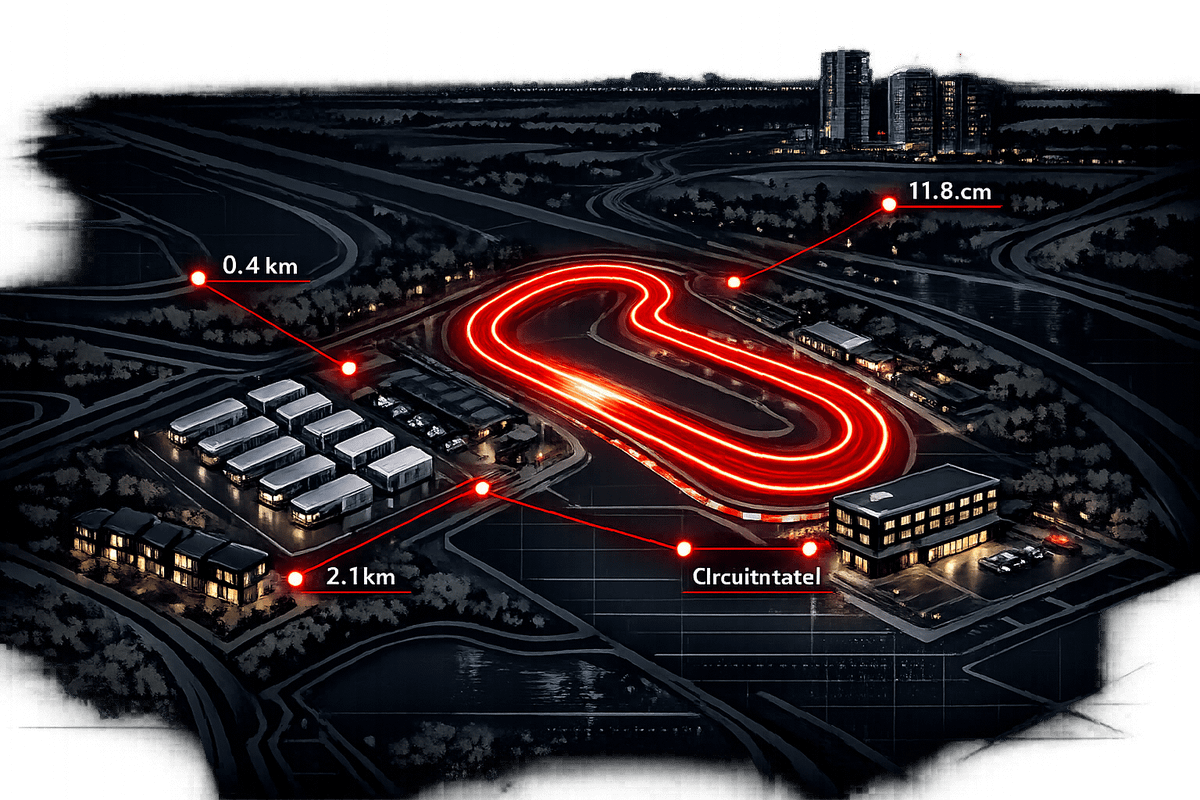
When F1 teams travel for race weekends, choosing the right accommodation is crucial. It impacts logistics, preparation time, and driver recovery. Teams typically select from four options, each with its own pros and cons:
- Trackside Motorhomes: Located directly in the paddock, these offer unmatched proximity to the garage, saving time and ensuring privacy. However, they are costly and require significant setup effort.
- Circuit-Adjacent Hotels: Close to the track, these reduce travel time and logistical challenges but can be expensive and lack the privacy of motorhomes.
- City-Center Luxury Hotels: Provide top-tier amenities for recovery and comfort, but traffic delays and longer commutes can affect preparation.
- Residential Stays: Offer custom setups and a quieter environment but require teams to handle transport and catering independently.
In 2026, Sprint weekends with limited practice sessions make proximity a priority. However, balancing convenience, comfort, and cost remains key to maximizing performance during these packed weekends.
What's Inside An F1 Team Motorhome?!
sbb-itb-7c68254
1. Trackside Motorhomes and Hospitality Units
For most Formula 1 teams, the paddock motorhome serves as the nerve center during race weekends. Positioned directly behind the pit garages, these units keep drivers and engineers just seconds away from the cars - a setup that’s essential when every moment counts. This close proximity not only saves time but also ensures smoother communication during the high-pressure environment of a race weekend.
Proximity to Circuit
Being just steps from the garage is a game-changer, especially under the 2026 Sprint weekend format, where a single Free Practice session leaves teams with little room for error. McLaren's trackside expert Henry Fidler summed up the intensity:
"We'll start practice with what we think is the optimal car, try to maximise the drivers' time on track, avoid time in the garage, giving them as many laps as we can, because there isn't time to do lots of iteration."
This streamlined setup helps teams stay agile, making quick adjustments to maximize performance.
Comfort and Amenities
Modern motorhomes aren’t just functional - they’re designed to support both performance and recovery. These units include driver rest areas, catering facilities, and engineering workspaces, creating a self-contained hub for the team. With cockpit temperatures in 2026 cars reaching up to 140°F (60°C), having on-site recovery spaces is more than a luxury - it’s a critical factor in maintaining driver performance.
However, while these facilities offer undeniable advantages, they also bring significant logistical challenges.
Logistics and Cost
Setting up these motorhomes is no small feat. Each unit must be dismantled, transported, and reassembled at every circuit, requiring a skilled logistics team to handle the process. On top of that, circuits often require specific infrastructure modifications, adding another layer of complexity. These logistical demands can have a direct impact on a team’s overall weekend performance.
Privacy and Security
The paddock is a highly restricted area, offering teams the privacy they need to test experimental components and strategies. For instance, during March 2026 at Suzuka, McLaren used their trackside engineering base to coordinate detailed tests, including front-wheel wake rakes for Lando Norris’s car and exhaust rakes for Oscar Piastri’s during FP1. Discussions about sensitive topics, such as energy deployment and aerodynamic tweaks related to the new "Straight Mode" and "Corner Mode" systems introduced under the 2026 regulations, are kept confidential within these secure units. This level of privacy is vital for teams to confidently explore innovative strategies without risking exposure to competitors.
2. Trackside or Circuit-Adjacent Hotels
When motorhomes aren't feasible or team sizes exceed available space, hotels near the circuit become a practical option. These accommodations strike a balance: they’re close enough to minimize travel time while sidestepping the logistical challenges of motorhome setups.
Proximity to Circuit
At certain circuits, staying nearby isn’t just handy - it’s almost a necessity. Take the Circuit Gilles-Villeneuve in Montreal, for example. Located on Notre Dame Island, it’s notorious for transit bottlenecks. During a 2026 Sprint weekend, even a 20–30 minute delay could eat into critical practice sessions. Hotels near the circuit help teams avoid these delays, giving them back precious track time.
Logistics and Cost
Hotels eliminate the logistical headaches of setting up motorhomes, reducing operational demands. This efficiency saves time and money, especially during the packed 2026 Sprint weekends in China, Miami, and Canada. That said, rooms near high-demand circuits come with a hefty price tag. Teams often need to book large blocks of rooms to accommodate staff working late into the night on car setups and debriefs.
Privacy and Security
One downside of circuit-adjacent hotels is the reduced privacy compared to the controlled paddock environment. Instead of relying on physical access restrictions, teams conduct private debriefs in secured meeting rooms under NDAs. This is a critical adjustment in 2026, where sweeping changes to chassis, power units, and tires have made technical data more sensitive than ever. McLaren Team Principal Andrea Stella highlighted the enormity of this challenge:
"The work that has gone into the design, the realisation and the build of the 2026 cars is, from what I can remember, almost unprecedented... probably the biggest new car project that I have ever been part of."
Balancing convenience with confidentiality remains a key factor in shaping teams' accommodation strategies.
3. City-Center Luxury Hotels
Shifting from hotels near the circuit, some teams choose city-center luxury accommodations to combine convenience with upscale features. For many, the allure of a five-star experience in the heart of a bustling city outweighs the benefits of staying closer to the track. This is especially appealing at circuits located in vibrant urban areas, where the city itself becomes part of the excitement during race weekends.
Proximity to Circuit
City-center hotels make the most sense when the track is easily reachable from downtown. Take Melbourne, for instance - Albert Park Grand Prix Circuit is just a few miles from the central business district, making travel manageable even during the busy race weekend hustle. On the other hand, Montreal poses a bigger challenge. The Circuit Gilles-Villeneuve, located on Notre Dame Island, requires teams to navigate bridge crossings that can lead to traffic bottlenecks. Striking the right balance between accessibility and urban perks is key, especially when factoring in the top-tier recovery facilities these hotels offer.
Comfort and Amenities
Luxury city hotels deliver recovery options that far outclass simpler alternatives. From full-service spas to state-of-the-art fitness centers and high-quality dining, these amenities are essential for drivers and engineers to recharge between sessions. This becomes even more critical during 2026 sprint weekends in cities like Miami and Montreal, where teams face the intense schedule of just one Free Practice session before qualifying.
Logistics and Cost
While offering unmatched comfort, these accommodations come with a hefty price tag, especially during Grand Prix weekends. Teams often book entire floors to house drivers, engineers, and support staff, significantly increasing costs. The added expense, however, is often justified by the benefits these hotels provide.
Privacy and Security
The advanced technology driving the 2026 season has heightened the need for protecting sensitive technical details. High-profile figures, including drivers like Lando Norris and Oscar Piastri, as well as team principals and technical staff, require strict privacy measures. Luxury hotels cater to these needs with features like private entrances, exclusive floors, and coordinated security, ensuring both discretion and safety.
4. Residential Stays and Local Properties
Residential accommodations are becoming a practical alternative to traditional hotel stays during race weekends. Options like local homes and nearby apartments offer teams logistical benefits, including closer proximity to the track and the ability to customize amenities to suit their specific needs. These factors can make a big difference in ensuring teams operate smoothly and efficiently.
Proximity to Circuit
Choosing accommodations near the circuit can significantly cut down on transit times. This is especially important in a packed season where teams are juggling simultaneous changes in chassis, power units, and tires. The introduction of Sprint weekends, which allow for only one practice session to fine-tune car setups, makes every minute saved on travel even more crucial.
Comfort and Amenities
Residential rentals also bring the advantage of tailored amenities, which are essential for driver recovery and overall performance. In 2026, cockpit temperatures have been reported to soar as high as 140°F (60°C) due to changes in car designs and regulations. With such extreme conditions, teams are prioritizing accommodations that offer superior climate control and extra space to help drivers recover effectively.
Pros and Cons
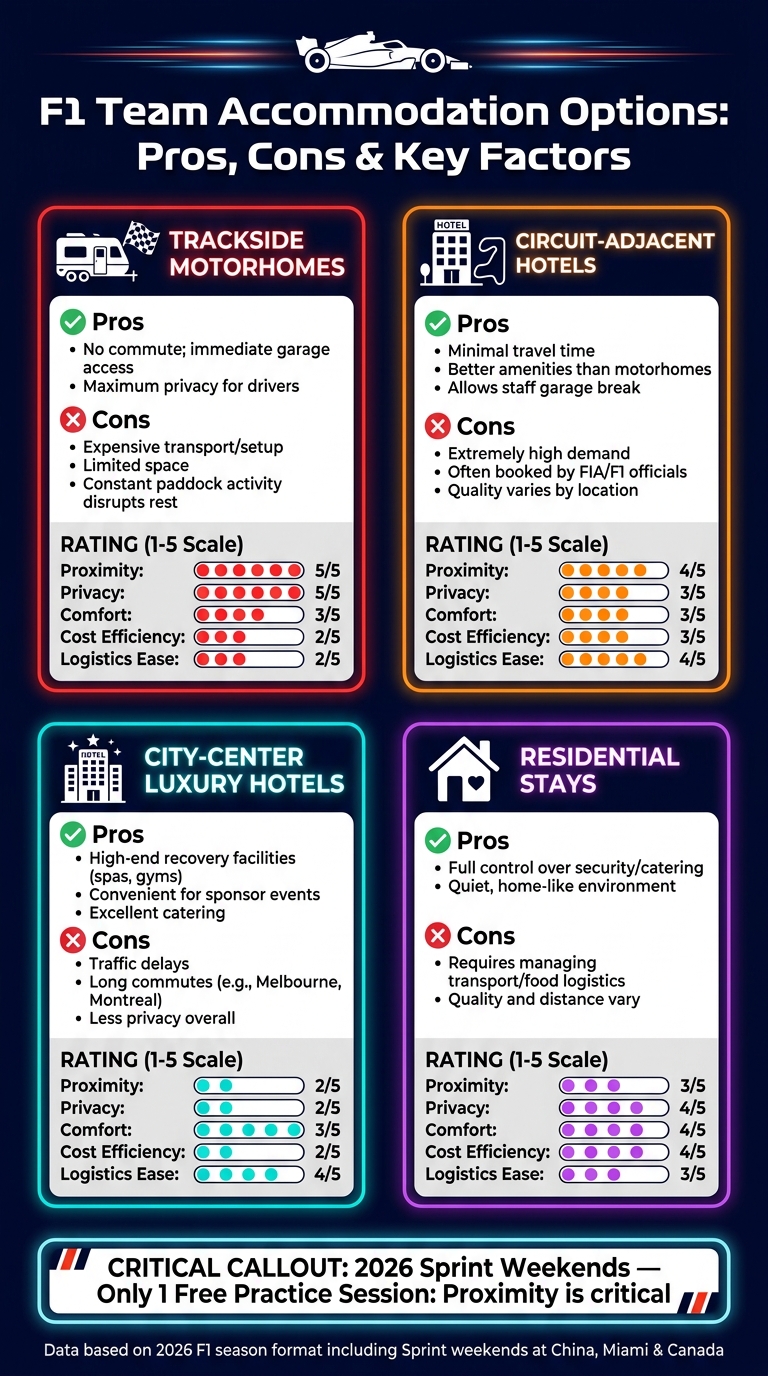
F1 Team Accommodation Options: Pros, Cons & Key Factors
When it comes to choosing accommodations during an F1 race weekend, every option has a unique impact on team logistics and performance. The right decision depends on factors like the circuit layout, schedule, and the team’s specific needs.
| Accommodation Type | Pros | Cons |
|---|---|---|
| Trackside Motorhomes | No commute; immediate access to the garage for late-night work; maximum privacy for drivers | Expensive to transport and set up; limited space; constant paddock activity can disrupt rest |
| Circuit-Adjacent Hotels | Minimal travel time; better amenities than motorhomes; allows staff to step away from the garage | Extremely high demand; often booked by FIA and F1 officials; quality varies depending on the location |
| City-Center Luxury Hotels | High-end recovery facilities (spas, gyms); convenient for sponsor events; excellent catering | Traffic delays; long commutes at circuits like Melbourne or Montreal; less privacy overall |
| Residential Stays | Full control over security and catering; quiet, home-like environment | Requires managing transport and food logistics independently; quality and distance vary |
Each of these options comes with trade-offs, and teams must balance comfort with operational efficiency during race weekends.
Longer commutes, particularly with city-center or residential stays, are a major risk. This becomes even more critical in 2026 with Sprint formats at tracks like China, Miami, and Canada. With only one Free Practice session before qualifying, transit delays could leave teams scrambling to fine-tune their cars.
On the flip side, trackside motorhomes solve the commute issue but bring their own challenges. Transporting and assembling these units across a packed 24-race calendar is expensive, and the constant activity in the paddock can interfere with driver recovery - especially when cockpit temperatures soar to 140°F (60°C).
The stakes are even higher with the 2026 regulatory overhaul, which introduces simultaneous changes to chassis, power units, and tires. These rules make engineering proximity a priority, giving trackside motorhomes and circuit-adjacent accommodations a clear advantage for weekends packed with technical demands. However, city-center hotels still stand out for their superior recovery amenities, which can be a critical factor for driver performance.
Conclusion
An F1 team's choice of lodging during race weekends goes far beyond ensuring comfort - it's a calculated decision that influences commute efficiency, engineering coordination, driver recovery, and overall budget management.
The stakes for these decisions are rising as the 2026 season approaches. Sprint weekends at circuits like China, Miami, and Canada will shrink preparation time to just one Free Practice session, making every moment away from the paddock count. McLaren's trackside expert Henry Fidler emphasized this point:
"We'll start practice with what we think is the optimal car... because there isn't time to do lots of iteration towards what we think is the right solution."
Proximity to the paddock can translate directly into better performance, from tighter logistical timing to faster technical adjustments. Meanwhile, the unique challenges of 2026 - like reduced downforce and the 50:50 power split - make driver recovery even more critical.
There’s no one-size-fits-all solution when it comes to accommodations. The most successful teams understand that lodging is a crucial part of their race weekend strategy, not just an afterthought. For a closer look at how F1 teams approach the operational side of the sport, visit F1 Briefing for detailed insights into the strategies that fuel on-track success.
FAQs
Do all F1 teams use trackside motorhomes?
No, not every Formula 1 team uses trackside motorhomes. These setups are typically found at European circuits, serving as hubs for support staff and various operations. However, their presence depends on the specific venue and the team's logistical decisions. Teams carefully plan resource allocation for each race, all while staying within the FIA's financial and operational guidelines. These decisions play a role in their overall strategy to maximize performance throughout the race weekend.
Why do Sprint weekends change where teams stay?
The information doesn't dive into why Formula 1 teams tweak their accommodation plans during Sprint weekends. However, F1 Briefing is dedicated to breaking down the ever-changing aspects of the sport. This includes shedding light on how logistical and operational factors shape team strategies within the framework of today's regulations.
What matters more: recovery amenities or being close to the garage?
During a Formula 1 race weekend, being close to the circuit is absolutely essential. With only a few practice sessions available, teams need to squeeze every second out of their track time to gather data and fine-tune their setups. While driver recovery matters, the focus leans heavily on staying near the garage to streamline operations and avoid losing precious time on logistics.