Future of F1 Streaming: Trends to Watch in 2026
Streaming-first F1 in 2026 turns live racing into an immersive, data-rich ecosystem while fragmenting global access.
Formula 1 streaming has entered a new phase in 2026, with Apple TV becoming the exclusive U.S. broadcast partner. This shift from cable (previously ESPN) to digital streaming reflects changing viewer habits, as 83% of U.S. adults now rely on streaming platforms. Here's what you need to know:
- Apple's $750M deal: A five-year partnership makes Apple TV the home for all U.S. F1 content, including races, qualifying, and practice sessions.
- Enhanced viewing: Subscribers enjoy 4K Dolby Vision, live telemetry, multiview options, and in-car camera feeds. Apple device users get additional features like Lock Screen updates and 3D circuit maps.
- Free access options: Select races and practices are available for free, widening access for casual fans.
- Apple + Netflix collaboration: Netflix airs the 2026 Canadian Grand Prix live, while Apple streams Drive to Survive Season 8.
- Global impact: While U.S. fans benefit from this model, international viewers rely on regional broadcasters, creating a fragmented experience.
The move signals a major change in how F1 engages fans, blending live action with interactive and year-round content. Keep reading for a deeper dive into these trends.
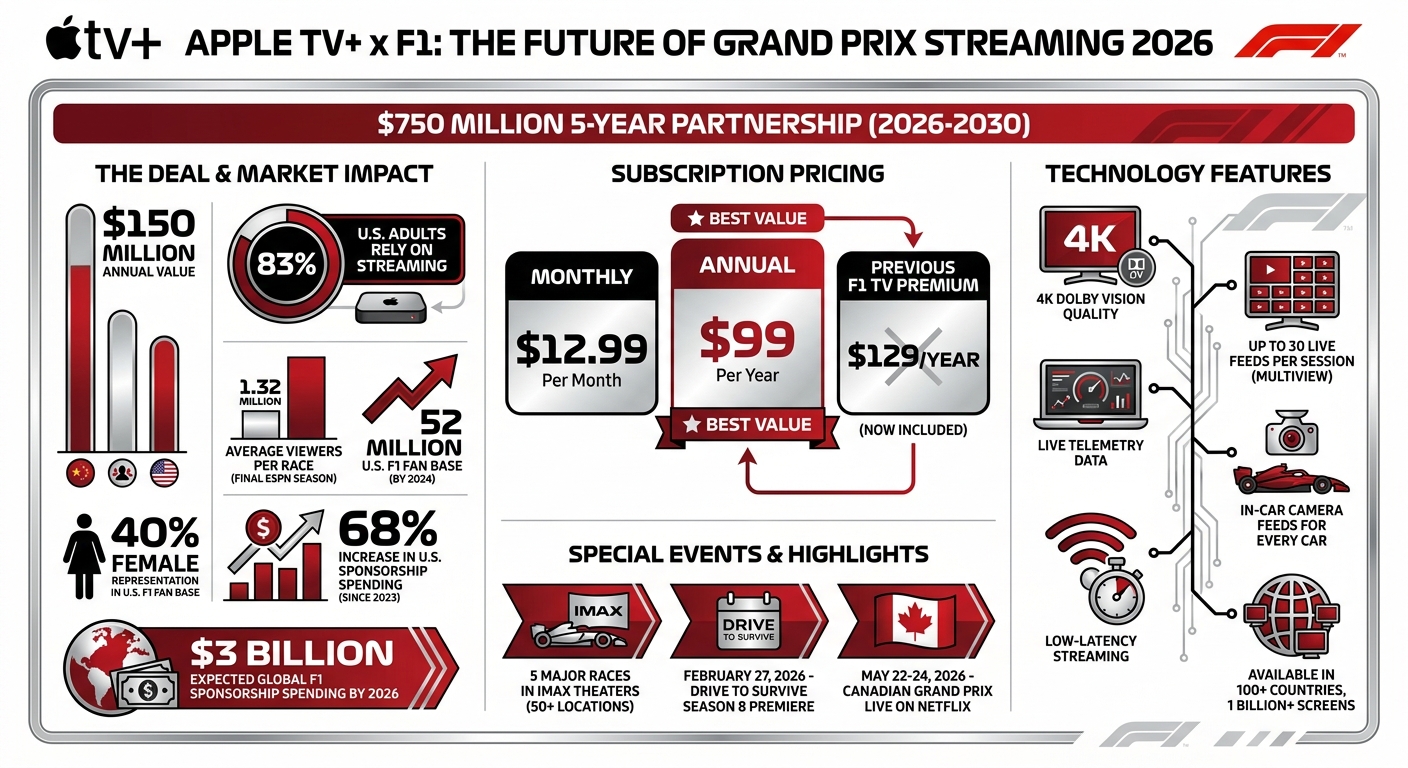
Apple TV F1 Streaming Deal: Key Statistics and Features 2026
Apple TV Just Made F1 Way Better Race Times + Drive to Survive Now Live!
sbb-itb-7c68254
Apple TV's Exclusive F1 Streaming Deal
Apple has secured a five-year partnership worth about $150 million annually, totaling $750 million through 2030. This agreement changes how American fans watch Formula 1 (F1), granting Apple exclusive U.S. streaming rights to all practice sessions, qualifying rounds, Sprints, and Grand Prix races. With this move, ESPN's traditional cable coverage is replaced, making streaming the primary way to experience F1 in the United States.
What makes this deal stand out is how Apple integrates its ecosystem into the F1 experience. Through the Apple Sports app, fans can see real-time leaderboards and driver standings right on their iPhone Lock Screens using Live Activities. Apple Maps enhances the experience further with detailed 3D race circuit views, including turn numbers and grandstand locations.
The subscription model offers two options. For $12.99 per month or $99 annually, fans get full access to all sessions, including F1 TV Premium, which was previously a separate $129-per-year service. For casual viewers, practice sessions and select races are available for free via the Apple TV app. This tiered approach caters to both die-hard fans and newcomers, all while strengthening Apple's ecosystem for a more seamless viewing experience.
Apple hardware users enjoy advanced features, while others get a more standard experience. For example, those using Apple TV 4K, iPad, or Vision Pro can access Multiview, which supports up to 30 live feeds per session, 4K Dolby Vision quality, and in-car camera angles. On the other hand, viewers using Roku, Fire Stick, or web browsers receive standard HD feeds with just one camera view. This setup highlights Apple's focus on delivering a richer experience to its own hardware users.
New Features for Fans on Apple TV
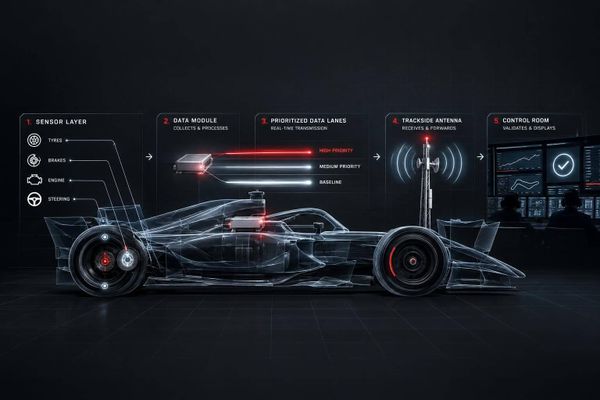
Apple TV introduces features that go beyond what traditional broadcasts can offer. Subscribers with F1 TV Premium gain access to live telemetry data, onboard cameras for every car, and an extensive archive of past races. This transforms watching F1 from a passive activity into something far more engaging.
With the Multiview feature, fans can create their own customized broadcasts. Instead of relying on a single camera feed chosen by a director, viewers can simultaneously watch the main feed, multiple driver cameras, timing screens, and team radio channels - all at once, across up to 30 streams.
Apple Maps also plays a role in enhancing the fan experience. Beyond race weekends, it offers 3D visualizations of every circuit, highlighting key details. During race weeks, hyperlocal city guides point fans to nearby restaurants, hotels, and fan zones, bridging the gap between digital viewing and attending in person.
To engage younger viewers, Apple TV offers "Kids" versions of Sprint and Race broadcasts. These include educational "Explainers" that break down complex F1 concepts, like lap data analysis and rear wing configurations, in a way that appeals to both beginners and seasoned fans.
The collaboration between Apple and Netflix is another notable aspect. Starting February 27, 2026, U.S. viewers can watch Season 8 of Drive to Survive on Apple TV. Meanwhile, Netflix will stream the Canadian Grand Prix live from May 22–24, 2026. This cross-platform arrangement combines storytelling with live action to grow F1's American audience.
How This Deal Affects Global Access
While U.S. fans benefit from this integrated, feature-rich model, the situation is different globally. Although Apple TV is available in over 100 countries on more than 1 billion screens, the exclusive F1 broadcast rights are limited to the United States. International viewers will continue to rely on their existing regional broadcasters or streaming platforms.
This creates a fragmented global experience. In the U.S., fans enjoy bundled F1 TV Premium and a fully integrated Apple ecosystem. Meanwhile, international audiences must navigate separate services. The U.S. market is essentially a testing ground for this digital-first model, as F1 leadership views it as a more mature streaming market compared to Europe.
"I do believe that the reach that we're going to have through the streaming platform, through Apple, will be even bigger in the future", said Stefano Domenicali, F1's President and CEO.
For international fans visiting or temporarily living in the U.S., accessing F1 content can be tricky. VPN restrictions and geographic licensing often mean they'll need to subscribe to Apple TV or stick with the limited free content tier.
The deal also creates new cross-border viewing opportunities. Five major races - the Crypto.com Miami Grand Prix, Louis Vuitton Monaco Grand Prix, Pirelli British Grand Prix, Pirelli Italian Grand Prix, and MSC Cruises United States Grand Prix - will be shown live in at least 50 IMAX theaters across the U.S.. This theatrical option offers a communal viewing experience that goes beyond traditional streaming at home.
Additionally, Apple has partnered with alternative platforms like Tubi and Yahoo Sports to make F1 more accessible. Tubi offers free alternative broadcasts, while Yahoo Sports provides free access to practice and qualifying sessions. These partnerships expand F1's reach beyond the core Apple TV subscription model.
Netflix's Drive to Survive and Fan Growth
Netflix's Drive to Survive has played a huge role in turning Formula 1 (F1) into a mainstream sensation in the United States. By focusing on unscripted drama and simplifying the sport's technical aspects, the series has made F1 more accessible to a broader audience. For example, during its final season on ESPN, F1 averaged a record 1.32 million viewers per race. Even more striking, 40% of the U.S. fan base is now female, marking a significant demographic shift. This approach has kept fans engaged with F1 content not just during race weekends but throughout the year.
Given that around 83% of U.S. adults now consume content through streaming services, Drive to Survive has become the perfect way for a new generation of fans to discover the sport. This growing fan engagement has paved the way for a groundbreaking partnership that combines storytelling with live race coverage.
Netflix and Apple TV Collaboration
In a major move for 2026, Netflix and Apple TV have joined forces in a cross-platform partnership that blends documentary storytelling with live racing. Season 8 of Drive to Survive, which premiered on February 27, 2026, is now available on both platforms. This marks the first time the series has been distributed across multiple streaming services, significantly expanding its reach.
What's more, Netflix has taken its first step into live F1 broadcasting through this collaboration, giving fans of the documentary a direct connection to live race experiences.
"Netflix, I think, has played a pivotal role in growing F1 since the launch of Drive to Survive, and we're thrilled to make F1 content more broadly available to new and existing U.S. fans on both Netflix and Apple TV".
By combining their resources, the two platforms are not only making F1 content more accessible but also reinforcing the sport's growing popularity in the U.S.
How Storytelling Brings New Fans to F1
What makes Drive to Survive so effective is its focus on storytelling. Instead of diving into technical details like aerodynamics or tire strategies, the series highlights personal rivalries, team dynamics, and the intense drama that unfolds behind the scenes. This approach has completely transformed how Americans view F1. What was once considered "an exotic sport for a small international elite" is now seen as "a global cultural franchise".
This storytelling-first strategy doesn’t just attract casual viewers - it turns them into loyal fans. Many who start with the documentary go on to watch live races, subscribe to streaming platforms, and even dive into advanced features like real-time telemetry and multi-view options. Apple has built on this momentum by using the series as a gateway into its broader F1 ecosystem, which spans Music, News, Maps, and Podcasts.
The result? F1 has become a year-round experience. No longer just a collection of race weekends, the sport now exists as a lifestyle, constantly engaging fans through various media channels. By 2026, fans who first discovered F1 through Netflix can seamlessly transition to Apple TV’s live coverage, creating a loop of continuous engagement that benefits fans, platforms, and the sport itself.
Technology Advances in F1 Streaming
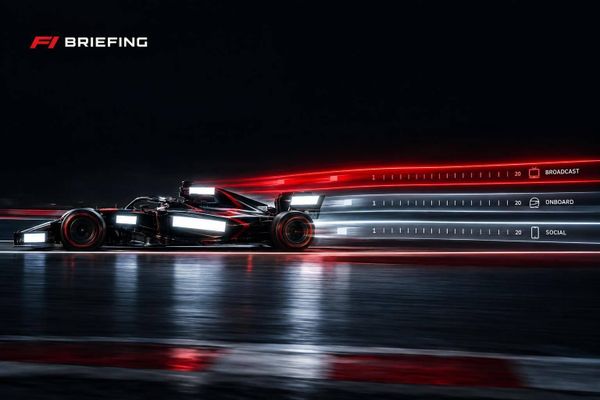
The move from traditional TV to digital streaming has opened up a whole new world of possibilities for Formula 1 fans. As of 2026, F1 streaming platforms are offering features that transform how races are enjoyed. For example, Apple TV subscribers in the U.S. now get access to F1TV Premium features, which include live in-car camera feeds and real-time telemetry data, seamlessly integrated into the broadcast. These additions aim to make fans feel like they’re right there on the track.
Streams come in 4K resolution with Dolby Vision, paired with low-latency technology to ensure minimal delay between on-track action and what viewers see at home. Carmelo Roob, a sales executive and tech commentator, highlighted the impact of these advancements:
"Multiview and driver-cam perspectives, 4K with Dolby Vision, and low-latency streams aren't mere gimmicks; they're claims about broadcast intimacy".
This idea of "broadcast intimacy" reflects a shift in focus - from merely showing the race to creating an immersive, engaging experience for fans.
Interactive Features and Multi-Screen Support
Beyond high-quality visuals, interactivity is now a major part of the F1 viewing experience. In 2026, the introduction of Multiview lets fans watch multiple camera angles at the same time, including driver-specific perspectives. High-fidelity overlays and real-time telemetry allow viewers to customize their experience, choosing the data points and visuals that interest them most.
Apple has also extended F1 content across its ecosystem, integrating it into Apple Maps, News, and Music. Eddy Cue, Apple’s Senior Vice President of Services, explained the vision behind this collaboration:
"We look at F1 and Apple TV as a true partnership where we're going to amplify this sport across all of our Apple services".
This integration keeps fans engaged year-round, not just on race days, making F1 a constant presence in their digital lives.
AR and VR Possibilities for F1 Streaming
Although augmented reality (AR) and virtual reality (VR) haven’t fully made their way into F1 streaming by 2026, the groundwork is clearly being laid. Features like low-latency streams, real-time telemetry, and multi-angle camera feeds are creating the technical foundation for these immersive technologies.
Collaborations with companies like T-Mobile are exploring 5G-powered innovations to improve connectivity and streaming quality on race days. The emphasis on low latency and high resolution in 2026 suggests that F1 is preparing for a future where AR and VR could play a central role. While these technologies aren’t fully realized yet, the advancements being made today are setting the stage for a whole new level of immersion in the near future.
For more insights into these developments, visit F1 Briefing.
Media Rights and Regulatory Changes
The move from traditional TV broadcasters to digital streaming platforms marks a major turning point in Formula 1's history. In October 2025, Apple inked a five-year, $700 million deal, becoming the exclusive U.S. broadcast home for Formula 1 starting in March 2026. This partnership ends ESPN's tenure as the sport's linear broadcaster and goes beyond a simple rights transfer by integrating F1 content across Apple's ecosystem. These changes reflect the digital-first strategies that are reshaping how fans experience the sport.
Moving from TV Broadcasters to Digital Platforms
The shift from ESPN to Apple TV highlights a major change in how F1 content reaches its U.S. audience. With the U.S. being a mature streaming market, F1 leadership sees it as the perfect testing ground for a digital-first approach before expanding this model to more traditional markets like Europe. Stefano Domenicali, F1's CEO, explained the strategy:
"I do believe that the reach that we're going to have through the streaming platform, through Apple, will be even bigger in the future, and it is what we want to test in a [U.S.] market that is more mature than the others."
This partnership takes a fresh approach to broadcasting. Rather than focusing solely on live race coverage, the Apple deal integrates F1 into a larger digital ecosystem, creating opportunities for year-round fan engagement. For example, Apple TV subscribers in the U.S. now get F1 TV Premium features at no extra cost, including live in-car camera feeds and real-time telemetry data. This bundling strategy aims to transform casual viewers into more engaged fans.
Still, exclusive streaming comes with risks. Some fans, who previously accessed races through cable packages, may face subscription fatigue. To address this, F1 and Apple have adopted a hybrid distribution model. Starting in February 2026, they partnered with DirecTV and commercial distributors like EverPass Media to ensure that F1 remains accessible in bars, hotels, and other public venues.
The gamble appears justified by F1's rapid growth in the U.S. market. By 2024, the fan base had reached 52 million, and sponsorship spending from U.S.-based companies had jumped 68% since 2023. Globally, F1 sponsorship spending is expected to top $3 billion by 2026, driven largely by interest from tech and AI firms.
Effects on International Broadcasting Agreements
The Apple TV deal in the U.S. is already influencing F1's approach to broadcasting in other regions. The exclusivity of the agreement has raised concerns about fragmenting the global audience, prompting F1 to explore ways to balance exclusivity with accessibility. This recalibration reflects the broader shift toward streaming and its impact on fan engagement.
To attract younger, digitally savvy audiences, F1 is experimenting with alternative content channels. For instance, partnerships with free platforms like Tubi offer "altcasts" featuring social media creators, who provide commentary and analysis tailored to Gen Z viewers. This layered approach ensures F1 can offer premium experiences while still reaching new fans who may not subscribe to paid services.
Beyond content distribution, the move to digital platforms gives F1 access to detailed audience data and real-time engagement metrics. Unlike traditional Nielsen ratings, these analytics offer deeper insights into viewing habits across markets. However, this also poses challenges in regions where streaming infrastructure is underdeveloped or where traditional TV remains dominant.
The U.S. deal is being closely watched as a potential model for other regions. If the Apple partnership succeeds in growing the American audience and boosting engagement, similar deals could follow in other markets. On the flip side, if the transition alienates existing fans or fails to deliver on its promises, F1 may need to rethink its approach to media rights in the streaming era.
Conclusion: What's Next for F1 Streaming
By 2026, F1's transition from traditional broadcasts to fully integrated digital platforms has redefined how fans engage with the sport. Apple's substantial multi-year commitment showcases how streaming services now position F1 as more than just live racing - it's a full-fledged lifestyle experience. This integration spans across Apple services like Music, Maps, News, and Podcasts, creating what experts call a "perpetual media moment." The result? Fans stay connected to the action even between race weekends, thanks to exclusive behind-the-scenes content and interactive features.
Advancements in technology have also transformed how fans watch and interact with F1. Enhanced viewing options, such as 4K Dolby Vision, low-latency streaming, multiview capabilities, and real-time telemetry, provide a level of immersion that traditional TV simply can't match. Taking this even further, Apple and IMAX have partnered to bring five marquee races - including Miami, Monaco, and the British Grand Prix - to select theaters in 2026. This bold move combines streaming with cinematic experiences, paving the way for more creative cross-platform collaborations.
Interestingly, even competitors in the streaming space are joining forces, signaling a shift toward collaboration in this evolving landscape.
"This really goes beyond a rights deal, and we look at F1 and Apple TV as a true partnership where we're going to amplify this sport across all of our Apple services".
It's clear that F1's streaming future is not just about watching races - it's about living the sport in entirely new ways.
FAQs
Do I need Apple hardware to get the best F1 features?
Apple’s collaboration with F1 is centered around streaming and digital content through Apple TV, but you won’t need Apple devices to enjoy it. Fans can access these features on a range of devices, including smart TVs, computers, and smartphones. The focus is on providing top-tier content and interactive experiences that work seamlessly across multiple platforms, making it widely accessible without requiring Apple-specific hardware.
Will there be any way to watch F1 for free in the U.S.?
In 2026, fans in the U.S. will have the chance to watch Formula 1 for free through platforms like the U.S. version of Apple TV. This will include access to F1 TV Premium at no extra cost for subscribers. Stay tuned for updates on streaming options and details.
How will U.S.-only rights affect fans traveling or living abroad?
The decision to grant U.S.-only streaming rights for F1 in 2026 could make it harder for international fans to watch the races. Since official streaming will be limited to the U.S., fans outside the country may have to rely on alternatives like VPNs to access their usual platforms. However, these methods can be unreliable and may not always work as intended. This move seems aimed at boosting engagement with U.S. audiences but could leave international fans, who are used to more universal streaming access, facing new hurdles.