2026 rules push more standard F1 parts: what changes
How 2026 F1 rules shift performance gains from bespoke parts to packaging, cooling, suspension and power‑unit integration.
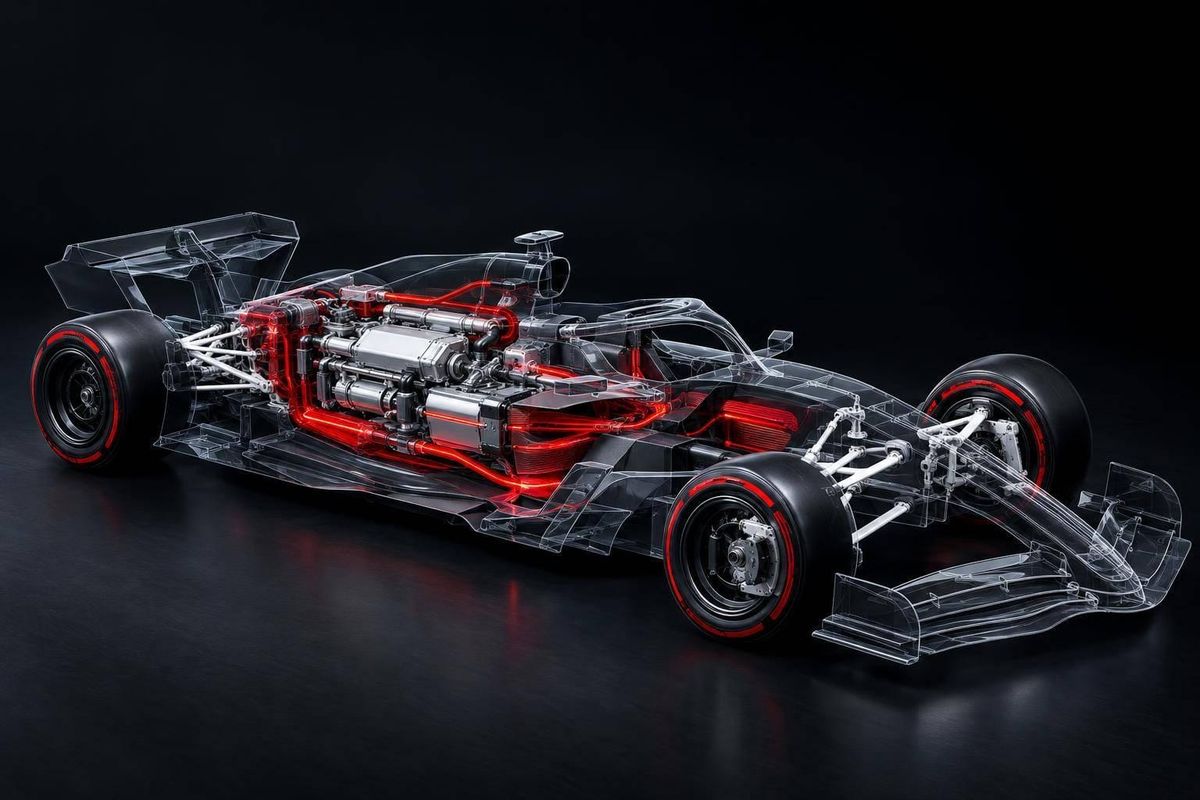
My takeaway: F1’s 2026 rules change where teams can find lap time - not just which parts they can design. Compared with 2025, tighter limits put more focus on cooling, packaging, power-unit installation, and active aero. But tighter control alone does not prove that more parts use a single supplier.
Here’s how I’d read the changes:
- Parts: A required supplier and an FIA-set design are different. One controls who supplies the hardware; the other controls its shape.
- Design freedom: Teams still develop chassis, suspension, and aero surfaces. Active aero does not mean identical wings.
- Integration: Customer teams retain power-unit supply access, but fitting, cooling, and testing that hardware remain their job.
- Costs and competition: Less repeated parts development may shift spending toward installation and testing. Supplier delays can add costs, and identical hardware can still produce different lap times.
<u>I’d judge the results by spending and lap-time gaps</u> - not assume that stricter rules make racing cheaper or closer.
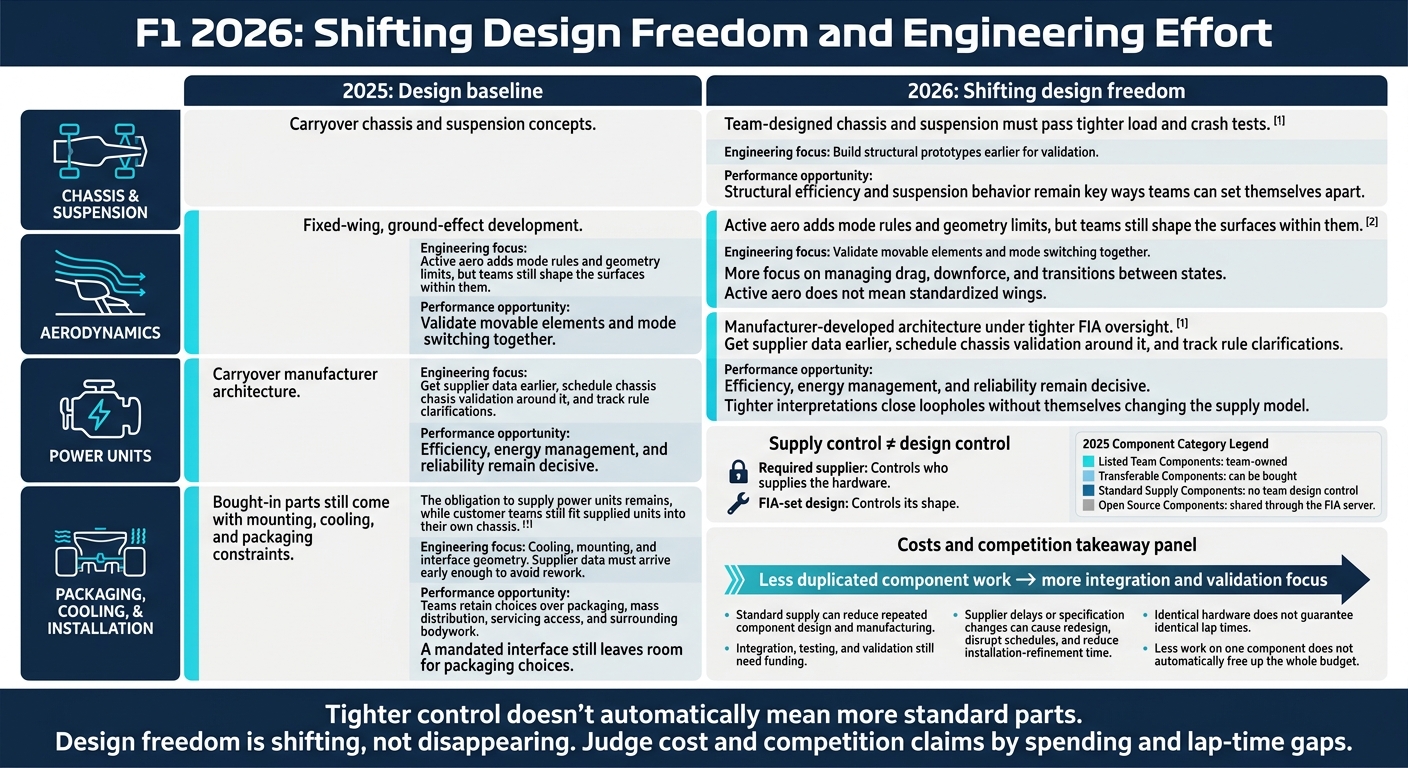
F1 2025 vs 2026: Where Design Freedom Shifts
1. 2025 rules: the design baseline
Component design control
In 2025, teams still controlled most performance-critical design work - even when they bought parts from elsewhere. Teams owned Listed Team Components and could buy Transferable Components. They had no design control over Standard Supply Components, while Open Source Components were shared through the FIA server.
Integration and development workflow
Buying a part doesn't remove the work of fitting it into the car. Bought-in parts still come with mounting, cooling, and packaging constraints.
Cost and competitive differentiation
Buying transferable hardware cuts duplicated R&D. Keeping aerodynamic designs exclusive, meanwhile, gives teams a way to set their cars apart on performance.
Under the cost cap, teams must decide which parts justify in-house development. That balance gets tighter again in 2026.
sbb-itb-7c68254
2. 2026 rules: changes to design control
Component design control
In 2026, more parts shift from team-designed hardware to FIA-controlled supply or fixed specifications, leaving teams less room for custom designs. The FIA is also tightening its interpretations of power-unit rules to close loopholes, without changing the supply model.
Integration and development workflow
These changes matter most where the power unit meets the chassis. Even with a fixed power unit, teams must make it work with their cooling systems and packaging choices.
The obligation to supply power units remains, so customer teams retain access to hardware. But they still have to fit that supplied unit into their own chassis. The design work therefore shifts toward cooling, mounting, and interface geometry.
Cost and competitive differentiation
Under the spending cap, teams still have to divide resources between carryover cars and 2026 development. Performance gains now center on chassis design, suspension, cooling, and power-unit integration. Rather than duplicating hardware, teams will look for their next gains in how they package and cool it.
The Ultimate Guide To The 2026 F1 Cars
How engineering work shifts
These changes don’t remove design work. They shift it toward interfaces, validation, and packaging. Teams still have design freedom, but the areas where it matters most are changing.
| Engineering area | 2025 design and integration scope | 2026 design and integration scope | Workflow changes | Performance effects |
|---|---|---|---|---|
| Chassis and suspension | Carryover chassis and suspension concepts. | Team-designed chassis and suspension must pass tighter load and crash tests. | Build structural prototypes earlier for validation. | Structural efficiency and suspension behavior remain key ways teams can set themselves apart. |
| Aerodynamics | Fixed-wing, ground-effect development. | Active aero adds mode rules and geometry limits, but teams still shape the surfaces within them. | Validate movable elements and mode switching together. | More focus on managing drag, downforce, and transitions between states. |
| Power units | Carryover manufacturer architecture. | Manufacturer-developed architecture under tighter FIA oversight. | Get supplier data earlier, schedule chassis validation around it, and track rule clarifications. | Efficiency, energy management, and reliability remain decisive. |
The biggest day-to-day changes involve packaging, aero mode switching, and power-unit boundaries.
Packaging, cooling, and supplier interfaces
Packaging and cooling are the first places teams will feel this shift. A mandated interface still leaves room for packaging choices. Teams decide how to fit the power unit around the chassis, including mass distribution and access for servicing. Those decisions shape the surrounding bodywork and the validation schedule that follows. In 2026, supplier data needs to arrive early enough to avoid rework, tying chassis and supplier milestones more closely together.
Active aerodynamics: rules and design freedom
Active aero does not mean standardized wings. The 2026 rules introduce active aerodynamics, while leaving teams to design the surfaces and supports within the limits. Moving between operating states becomes as important as peak downforce or drag figures. Both modes - and the switch between them - need to work well together.
Power units: hardware ownership and development limits
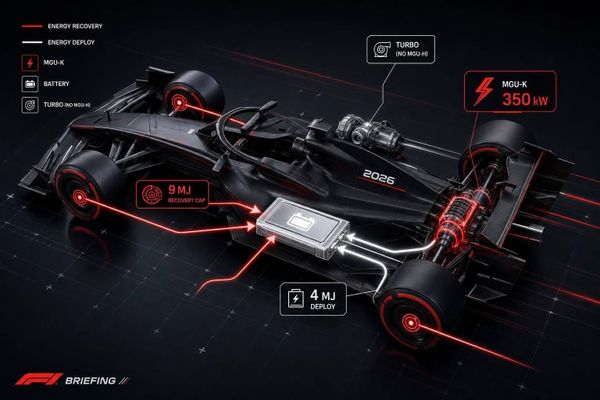
The 2026 power-unit rules tighten FIA control over boundaries and close loopholes. Manufacturers still control combustion, energy deployment, reliability, and software within those limits. Customer teams keep their installation choices, but they don’t own the manufacturer’s architecture or control its development.
Costs and competition: gains and trade-offs
The design shift changes where teams spend: less duplicated component work, more integration risk.
| Trade-off | 2025 framework | 2026 framework | Effect on teams and power-unit manufacturers |
|---|---|---|---|
| Optimization versus duplicated work | Mature designs reward custom improvements, but teams still repeat similar development work. | Standard supply can reduce repeated component design and manufacturing. | Teams can move resources toward integration and validation. |
| Supply access versus dependence | Factory and customer relationships support familiar development schedules. | Customer teams rely more on supplier specifications and delivery milestones. | Access improves, but teams have less control over development. |
| Packaging versus flexibility | Established installations allow small refinements. | New hardware brings new installation constraints. | Installation changes can add redesign and validation costs. |
| Spending priorities | Teams spend within a stable ruleset. | Spending shifts to the chassis and power-unit reset. | Less work on one component does not automatically free up the whole budget. |
This does not mean less work overall. It means replacing duplicated part development with integration work that depends on suppliers.
Less duplication, different spend
2026 changes budget allocation, pushing teams toward chassis integration and power-unit packaging rather than repeated component redesign. Integration, testing, and validation still need funding.
As suppliers control more of the hardware development path, teams gain an edge by adjusting to the package faster.
Supplier risks and performance differences
Supplier delays or specification changes can disrupt development schedules and leave teams less room to refine the installation.
Identical hardware does not guarantee identical lap times. Chassis layout, cooling, and how the power unit fits into the car affect its performance. The same hardware can therefore deliver different lap times in different cars.
Conclusion: where teams retain design freedom
Tighter control doesn’t automatically mean more standard parts. It mainly restricts components designed by teams. The evidence points more clearly to tighter control than to a longer list of standard parts.
Teams still have design freedom in packaging, cooling, interfaces, and active-aero integration. That freedom is shifting, not disappearing. The challenge is to find lap time within fixed limits.
Claims of closer competition and lower costs still need proof. Judge them by lap-time gaps and spending data - not supplier changes or the intent behind the rules alone.
FAQs
How can I tell which 2026 parts are truly standardized?
Check the official FIA technical regulations and the later Technical Directives from the FIA Single-Seater Department. These documents set component requirements and performance limits for 2026.
Teams track compliance with an internal regulation pack that includes the latest rules, directives, and event notes. To check a specific part, compare the team's CAD designs and serial numbers against FIA-approved specifications and version-controlled documentation.
Could tighter rules widen the factory–customer team gap?
They could. Works teams coordinate power unit and chassis development within larger technical departments. Leaner customer teams rely on external engine suppliers and focus on chassis integration and aerodynamics.
All teams operate under the same FIA cost cap. But the 2026 rules’ 50/50 power split makes engine–chassis coordination especially important, which may give works teams’ integrated approach an edge.
What data would show whether standardization cuts costs?
Analysts track manufacturing, testing, and development costs, comparing total investment in standardized parts with spending on bespoke designs across the grid [3].
They also assess savings from removing complex components such as the MGU-H. These savings include simpler supply chains and lower financial barriers for new power unit suppliers. Looking at these costs alongside how cost caps shape team resource allocation helps analysts gauge whether standardization limits spending.