Budget cap vs freight spikes in F1
How F1 teams balance freight spikes with the FIA cost cap—shipping choices, cash reserves and trade-offs for upgrades and race readiness.
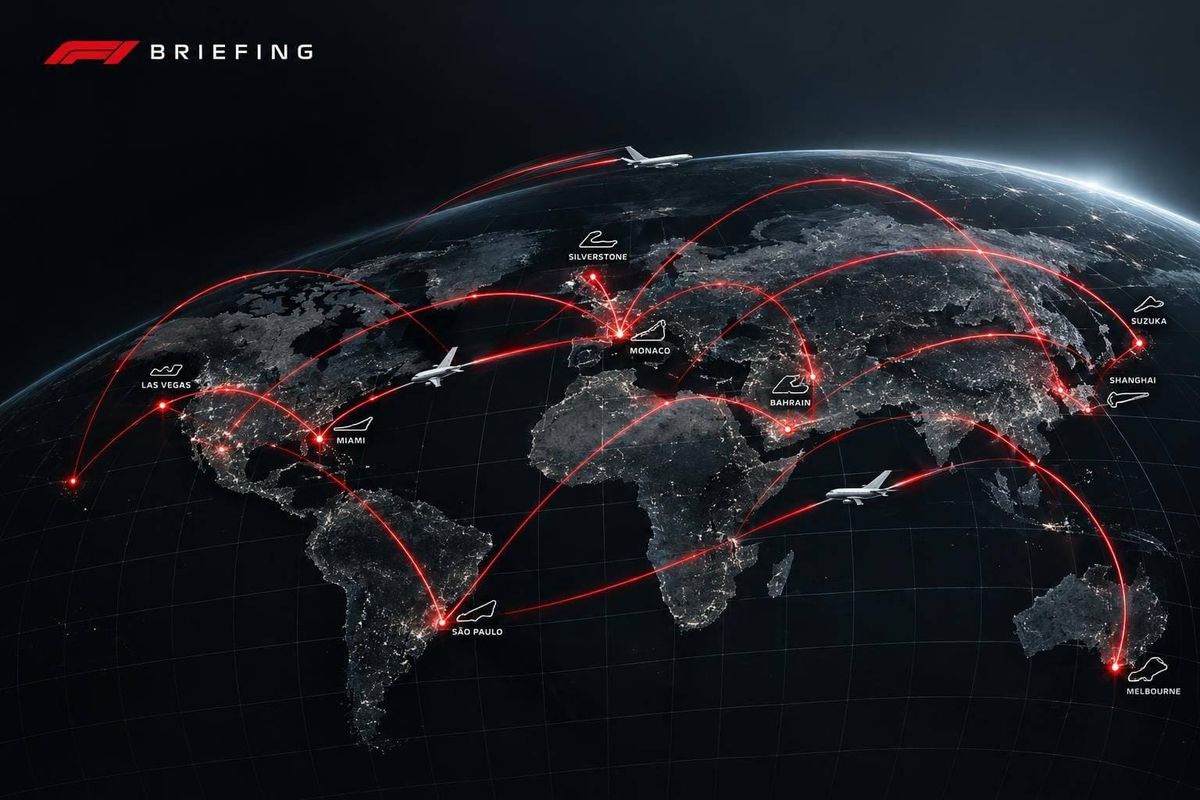
A freight price spike can squeeze an F1 team’s cash - and its upgrade budget if the bill counts toward the cost cap. Teams need to check which costs fall under FIA rules before deciding what to ship or where to cut spending.
The trade-off comes down to three choices:
- Plan sea freight early to limit costs, or pay for air freight when deadlines leave no other option.
- Protect spares and race preparation, even if that leaves less room for upgrades.
- Keep cash and cap room separate: extra money can cover a bill, but it cannot remove the spending limit.
Fuel charges, rerouting, and late parts can all upset shipping plans. Teams must compare the full delivery cost against the deadline - and keep both cars ready to race.
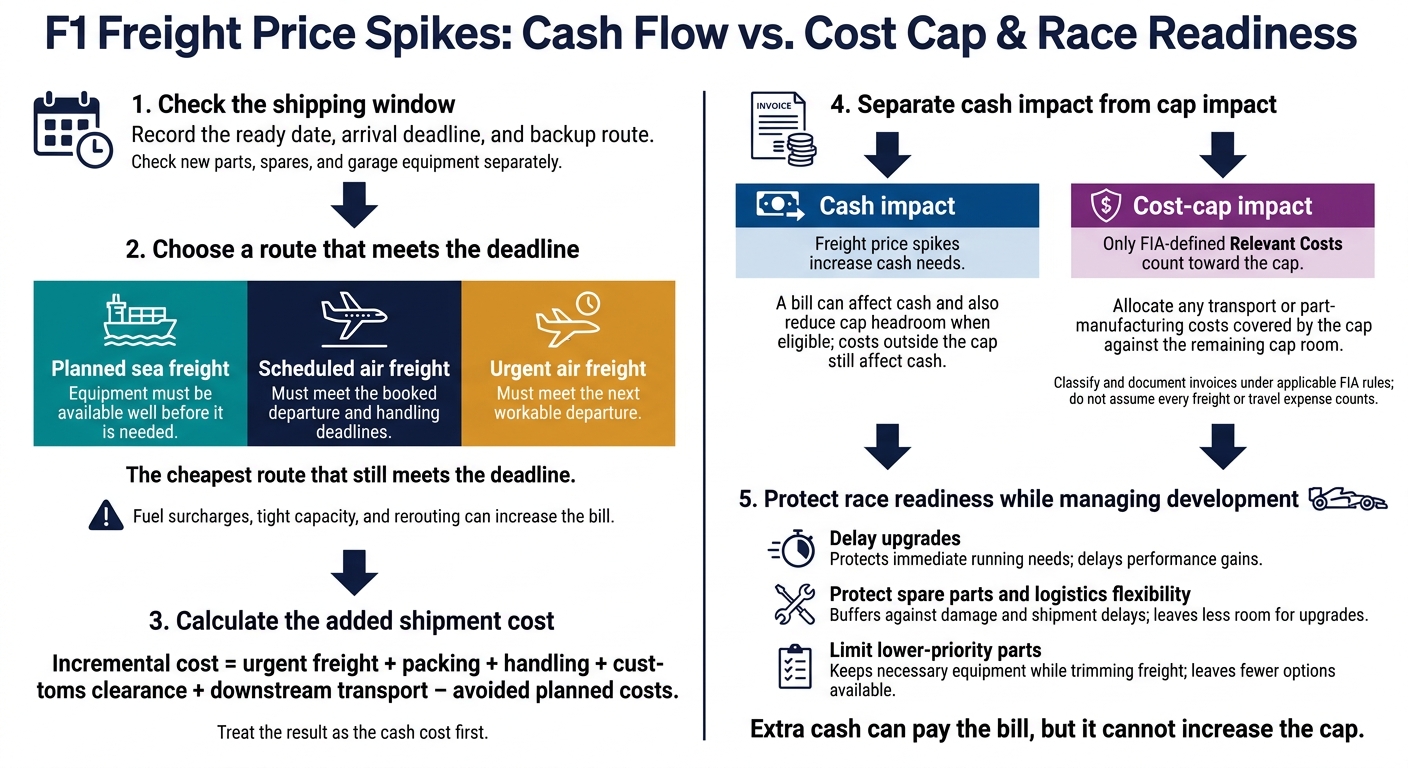
F1 Freight Spikes: Cash vs Cost Cap
FIA Cost Cap vs Changing Freight Costs
Teams can choose when to ship and which transport mode to use. But fuel surcharges, capacity shortages, and rerouting can still change the final bill. Some freight and travel costs fall outside the cap, yet teams track them because they affect cash flow. Logistics overruns that count toward the cap can leave less room for development. The distinction determines whether a freight spike eats into cap room or cash.
The table below separates fixed cap rules from changing freight costs.
| Factor | Cost-cap framework | Freight budget |
|---|---|---|
| Predictability | Fixed annual limit set by FIA regulations. | Varies with fuel surcharges, capacity shortages, and rerouting. |
| Financial control | Strict monitoring through mandatory reporting and FIA audits. | Market conditions and third-party providers determine the final bill. |
| Flexibility | Hard ceiling with limited regulatory adjustments. | Teams can choose slower sea freight or faster air freight. |
| Risk | Non-compliance can bring regulatory consequences. | Emergency shipments can drain cash and disrupt preparation. |
| Response to price increases | FIA may adjust the total cap for inflation. | Teams may delay upgrades or reduce spare parts. |
That distinction leads to the next question: which invoices count?
Which Freight and Travel Costs Count Toward the Cap?
Teams classify each invoice by its purpose. Freight tied to team personnel and race equipment usually counts toward the cap. Marketing travel, non-F1 activities, and some driver costs do not.
Teams then document each item for FIA cost-cap reporting.
Why Freight Bills Exceed Forecasts
Long-haul flyaways put more pressure on freight budgets. Routes are set earlier, and changes cost more. Fuel surcharges, tight capacity, or customs delays that force rerouting can push bills above forecasts.
Emergency air freight typically costs much more than planned sea or rail transport. Late aerodynamic updates or damaged parts can trigger those shipments, leaving teams to absorb the overrun or cut spending elsewhere.
sbb-itb-7c68254
Planned Freight vs Emergency Air Shipments
After a freight cost spike, price is only part of the problem. The shipment still has to arrive on time. Freight can also reduce cap room when transport and part-making costs count toward the limit.
Once a shipment becomes urgent, the goal changes: find the cheapest route that still meets the deadline, not simply the cheapest route.
| Shipping option | Minimum lead time | Flexibility | Cost exposure to check | Decision test |
|---|---|---|---|---|
| Planned sea freight | Equipment must be available well before it is needed | Depends on sailing schedules and booking terms | Storage, port handling, and cancellation charges | Can the team operate without this equipment while it travels? |
| Scheduled air freight | Must meet the booked departure and handling deadlines | Depends on available space and change terms | Fuel charges, booking changes, and downstream transport | Does the equipment need a shorter transit window? |
| Urgent air freight | Must meet the next workable departure | Limited by capacity, clearance, and delivery requirements | Short-notice quote plus additional handling | Would missing the deadline compromise race preparation? |
The decision comes down to build timing, what the quote includes, and the cost of missing the cutoff.
How Equipment Deadlines Shape Shipping Choices
Parts must be built before they can ship. During the season, updates can leave little time between production and dispatch. Record the ready date, arrival deadline, and backup route for each shipment. Check new parts, spares, and garage equipment separately.
Even with those dates set, shipping quotes can change.
Fuel Prices, Long-Haul Races, and Currency Risk
Compare quotes by separating the base freight charge, fuel surcharge, handling, billing currency, and quote expiration. Long-haul races add fuel and exchange-rate risk, while packing, clearance, delivery, and setup all use up part of the shipping window.
Calculating the Added Cost of an Emergency Shipment
Use incremental cost = urgent freight + packing + handling + customs clearance + downstream transport − avoided planned costs.
Treat the result as the cash cost first. Then allocate any transport or part-manufacturing costs covered by the cap against the remaining cap room.
Team Choices: Race Readiness vs Development Spending
When freight costs spike, teams must split their remaining cap room between upgrades and race preparation. Extra cash can pay the bill, but it cannot increase the cap when those costs count toward it. Teams typically face three choices.
| Strategy | Impact on Cap Headroom | Drawback | Effect on Race Readiness |
|---|---|---|---|
| Delay upgrades | Pushes development spending back | Delays performance gains | Protects immediate running needs |
| Protect spare parts and logistics flexibility | Reserves room for replacement parts and eligible urgent freight | Leaves less room for upgrades | Buffers against damage and shipment delays |
| Limit lower-priority parts | Cuts manufacturing and shipping costs where covered by the cap | Leaves fewer options available | Keeps necessary equipment while trimming freight |
Cash Reserves vs Fewer Spare Parts
Cash reserves help a team cover a freight spike without cutting planned parts - but only if enough cap room remains. Spare inventory serves a different purpose: it protects against missed shipments, damaged parts, and late changes. Carrying fewer spares cuts inventory and freight costs, but makes teams more dependent on urgent deliveries.
Reducing Freight Without Cutting Preparation
Teams can ship must-have spares and confirmed upgrades first, while holding back lower-priority parts. This cuts shipping volume without reducing preparation across the board or leaving either car short of the equipment it needs. The aim isn't to eliminate freight risk. It's to keep enough flexibility to stay race-ready while leaving room for development.
Conclusion: Managing Freight Risk Under the Cost Cap
Freight price spikes increase cash needs, but only FIA-defined Relevant Costs count toward the cap.
Targeted Cost Relief vs Calendar Changes
F1 has two options: targeted cost relief for unusually large freight shocks or calendar changes that reduce long-haul freight pressure.
Key Takeaways for Spending and Competition
Teams must protect cash flow and leave room under the cap while keeping both cars race-ready.
FAQs
Can teams get cost-cap relief for freight spikes?
Current Formula 1 regulations offer no cost-cap relief specifically for sudden spikes in freight or logistics prices. Teams must cover those costs - including urgent air shipments and fuel - within their annual budget.
To handle these price swings, teams typically set aside 10% to 25% of their total budget as a flexible reserve.
How could regional race scheduling reduce freight costs?
Grouping races by region helps teams cut freight costs by combining shipments and relying less on expensive, carbon-intensive air freight. It also gives teams more scope to use sea freight and road transport powered by biofuels.
Across the 24-race calendar, this approach reduces costly, last-minute shipments. Teams can keep freight moving efficiently while staying within fixed budgets and meeting strict financial regulations.
Do freight spikes hurt smaller teams more?
Yes. Smaller teams have tighter margins and less room in their budgets, so sudden freight price spikes hit them harder under the $135 million cost cap. The cap sets the same spending limit for every team but doesn’t account for unpredictable costs, such as urgent air shipments and fuel surcharges.
Those expenses take up a larger share of smaller teams’ available budgets. That forces them to choose between necessary transportation and development projects, including aerodynamic improvements and performance upgrades.