F1 Pit Lane Safety: Lighting Innovations
Mirror-mounted lateral lights and digital pit-box displays improve visibility and cut unsafe pit releases in low-visibility conditions.
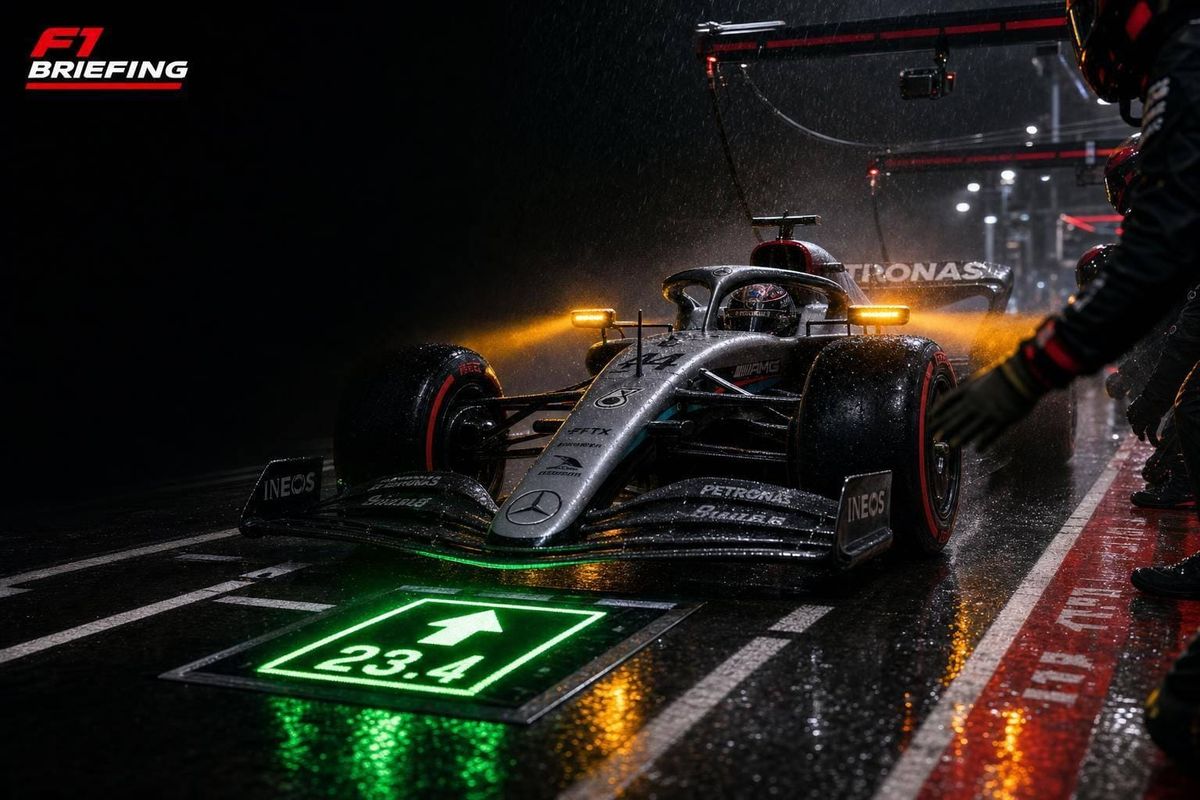
The short answer: the biggest safety gains come from mirror-mounted lateral lights on the car and digital release displays in the pit box. One helps drivers see a stopped or sideways car in spray, rain, or darkness. The other helps teams avoid unsafe releases into traffic.
If I boil the full article down, here’s what matters most:
- Pit entry/exit lighting helps cars join and leave the lane with less doubt in low visibility.
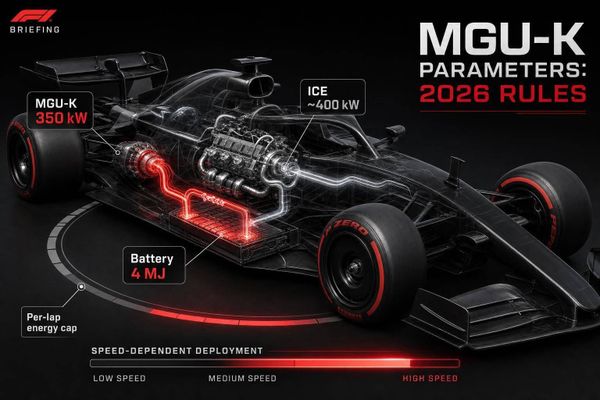
- Garage and pit box lighting helps crews read car status fast, especially around a live 350 kW hybrid system.
- Car-mounted lights now cover more angles, not just the rear.
- Digital release panels cut mixed signals during pit stops, but they still depend on timing and display systems working as they should.
The big 2026 shift is simple: F1 moved from rear-only warnings to a more complete setup. Cars now use amber mirror lights, a lighter RIS rear light, and rear wing endplate repeaters. That gives drivers, marshals, and crews more than one place to look when seconds matter.
Key facts at a glance:
- Mirror lights switch on below 12.4 mph (20 kph)
- ERS risk involves a live 350 kW hybrid system
- The 2026 RIS unit is about 180 g lighter
- Endplate lights copy the rear light pattern for backup
- Monaco 2026 showed that digital pit systems can still fail if timing data is off
First Look At F1’s New Safety Lights! 🚨
sbb-itb-7c68254
Quick Comparison
| System | Main job | Best in | Main risk |
|---|---|---|---|
| Pit entry/exit lights | Guide cars in and out of the lane | Rain, spray, night running | Depends on timing and signal accuracy |
| Garage/pit box lighting | Help crews read status around the car | Tight pit stops, side-on views | Crew still needs training on flash codes |
| Car-mounted safety lights | Warn drivers, marshals, and mechanics | Spins, stalls, poor side visibility | Sync faults can blur the message |
| Digital release displays | Show release or hold | Busy pit windows | Hardware or timing errors can cause bad calls |
So if you want the clearest takeaway, it’s this: the safest setup pairs car-mounted warning lights with pit-box release control. One helps people see danger. The other helps stop a team from sending a car into it.
1. Pit Entry and Exit Light Systems
Visibility Performance
Pit entry and exit lights matter most when a car is coming in or rejoining in poor visibility. In those moments, drivers need clear visual signals fast. If they don’t get them, hesitation and overlap can turn into trouble.
The 2026 rules tackled that problem by adding amber lateral safety lights on the wing mirrors. These lights switch on automatically when a car stops or drops below 12.4 mph (20 kph). Rear wing endplate lights also copy the central Rear Impact Structure (RIS) pattern, which helps other drivers spot the car from behind in spray or at night.
Signal Integration
Seeing the car is only part of the job. Pit-lane lighting also needs to tell drivers what’s happening in the race and when a car is about to move.
The 2026 RIS light links straight to FIA race control. It can show Safety Car periods, Virtual Safety Car status, and double-waved yellow sectors on the car itself. The mirror lights add one more cue during pit stops and race starts: they turn on when the car is in neutral, then go out the instant the driver selects first gear. That said, the system still relies on race-control timing being right.
Human-Factor Safety Impact
The biggest gain here is simple: the system works on its own. If a car spins or stops suddenly, the lights react through telemetry without the driver needing to press anything.
FIA Single Seater Director Nikolas Tombazis explained:
"They were an idea by the drivers... if a car has spun around in the wet conditions and is sat laterally, you cannot see the rear light, because you're on the side."
A clear case showed up during pre-season testing at Circuit de Barcelona-Catalunya in January 2026. After a crash, Isack Hadjar's Red Bull triggered its amber hazard lights automatically, warning approaching drivers about the car’s sideways position.
Reliability and Deployment
This system also builds in backup. The endplate lights mirror the RIS pattern, so if one light is blocked or stops working, the message can still be seen.
That backup matters because faults do happen. In January 2026, a rear wing endplate light on a Williams car failed to flash in sync with the central light pattern. For a moment, that cast doubt on the signal and showed why sync checks and failure alerts need to happen before race day. That’s the line between lighting that helps in a tense moment and lighting that just looks good.
2. Team Garage and Pit Box Illumination
Visibility Performance
Once the car rolls into the box, the job of the lights changes. It’s no longer about helping the driver find the marks. It’s about helping the crew work around a live car without missing a warning.
Inside the pit box, people don’t just need to see the car. They need to know its status at a glance. The 2026 lighting rules deal with a weak point in the old setup: the rear-mounted RIS light could be tough to spot from the side, especially when crew members, tire guns, and other gear got in the way during a stop. The new mirror-mounted amber lights give teams a much clearer side view, so mechanics near the front of the car or around the wheels can check status without depending on one rear-facing signal. That matters in a pit box, where space is tight and mistakes happen fast.
Signal Integration
The system uses different flash patterns to show electrical states, which matters when the crew is working around a 350kW hybrid power unit. In the pit box, these are the signals that matter most:
| Light Signal | Meaning | Crew Action |
|---|---|---|
| Single red flash (RIS) | MGU-K output reduced | Performance monitoring |
| Double red flash (RIS) | MGU-K stopped delivering power | Technical status check |
| Multiple rapid red flashes | High electrical activity | Keep clear |
| Amber mirror lights on | Car below 12.4 mph (20 kph), stopped, or in neutral | Hazard or release warning |
That automatic switch also gives the crew a fast release check in the box, with no extra input from the driver.
Human-Factor Safety Impact
For mechanics, the point isn’t only visibility. It’s knowing whether the hybrid system is still live. The main safety gain is straightforward: the lights show when the hybrid system is still active. If it’s still running, the crew knows to stay back until the car is made safe. As Bernie Collins put it:
"Before we had the rain light on the back of the car... but if a car spins or returns to the track either forwards or sideways, there's no light in any of those locations."
That same upside showed up in winter testing in Bahrain in February 2026, when Lewis Hamilton's Ferrari spun and the mirror-mounted and rear safety lights flashed on their own to warn nearby personnel. During pre-season testing in Barcelona, a Williams car lost one rear wing endplate light, which exposed the risk of leaning on a single signal and backed up the need for synchronized, redundant lighting. Teams should also train garage staff on the 2026 flash patterns before race weekends start, so each signal is understood right away.
3. Car-Mounted Safety and Status Lights
Visibility Performance
Once a car leaves the box, the warning has to go with it. Fixed overhead signals can only do so much. Car-mounted lights move with the car, and that matters because they cover lateral blind spots that a rear-facing light simply can't reach.
The 2026 regulations added amber lateral safety lights built into the wing mirrors, as set out in FIA technical rules. In heavy rain, mist, or dense spray, that side coverage is the big step forward over the old rear-only setup. When a car spins or stalls, those lights can become the fastest warning available.
"If a car is spinning and is in a lateral position onto approaching traffic, these lights will help the approaching car see the spinning car, and therefore, obviously, hopefully avoid it." - Nikolas Tombazis, FIA Single Seater Director
Signal Integration
The redesigned RIS light is lighter and easier to package at the rear of the car. It doesn't just warn about danger. It also shows MGU-K status straight from the car itself, which means the signal moves with the vehicle instead of waiting for pit-wall confirmation.
The rear wing endplate lights copy the RIS flash pattern, which adds a second layer of signaling across the rear of the car. So the car can show its status right away. Even so, pit-wall panels still have to confirm the same instruction from outside the car.
Human-Factor Safety Impact
The main safety job here is ERS status signaling. A hybrid system can still be live even when the engine sounds dead quiet, and that's where these lights matter most. They give marshals and mechanics an immediate warning that a stopped or damaged car may still carry high-voltage risk.
That point showed up in January 2026 testing at Circuit de Barcelona-Catalunya. After Isack Hadjar's crash, the mirror-mounted amber lights switched on and warned approaching drivers about the stationary car in a high-speed section.
Reliability and Deployment
Inconsistent lighting creates hesitation, and hesitation creates risk in the pit lane. If one part of the car-mounted system fails, the message can turn unclear at the worst possible time. The signal only works as intended when every light shows the same thing.
4. Pit Lane Signaling Panels and Digital Release Displays
Visibility Performance
The car’s lights matter, but they don’t solve the whole problem. The pit lane also needs a release signal that’s easier to spot and easier to read under pressure. Digital release displays do that by replacing the old lollipop cue with a fixed, clearer signal at the pit box.
That matters because crews and drivers need to read the instruction instantly. In a busy pit stop, even a split second of doubt can throw everything off.
Signal Integration
Digital panels show the same status information in a pit-lane format. In plain terms, they give the crew a clearer release or hold instruction without forcing everyone to rely on one visual cue.
That can speed up the handoff between crew and driver. But there’s a catch: extra information only helps if it cuts hesitation at the exact moment the car is sent.
Human-Factor Safety Impact
The biggest safety upside is simple. These displays can reduce mixed signals between the pit wall, the crew, and the driver during release.
That lowers the chance of:
- premature release
- confusion in a blocked lane
- unsafe merges back into the pit lane
When everyone sees the same message in the same place, there’s less room for crossed wires.
Reliability and Deployment
The downside is dependence on the system itself. If pit-lane timing or display hardware fails, the signal can lose clarity fast.
That risk showed up during the 2026 Monaco Grand Prix. Formula One Management acknowledged pit-lane timing failures and said it would improve pit lane occupancy monitoring and digital signaling infrastructure.
Strengths and Tradeoffs of Each Pit Lane Lighting System
Each lighting system deals with a different pit-lane danger. But each one also brings its own weak spot.
The Rear Impact Structure (RIS) light carries the most information on the car. It acts as the main status display, which sounds great on paper. In practice, though, that only helps if nearby drivers can read the flash pattern at a glance. The 2026 redesign cut about 180 g from the unit, which matters when that weight sits at the rear of the car. The downside is mental load: drivers behind still have to tell, almost instantly, whether the car is reducing power output, fully off power, or in a high-activity state.
That rich signal helps, but it doesn't solve every angle.
Mirror-mounted lateral safety lights deal with the blind spot the rear light can't reach. When a car is sideways, stopped, or rejoining in spray, these amber lights make the car easier to spot. They switch on automatically below 12.4 mph (20 kph) and switch off once the driver selects a gear. They also give marshals a cue that a hybrid system is live before they go near a stopped car. The catch is packaging: putting active lights into mirror housings means more wiring and more integration work.
The next layer doesn't add a new warning. It backs up the same one from another angle.
Rear wing endplate lights mainly work as a redundancy layer. They mirror the RIS flashing sequence so the same message can be seen from a different position. That sounds simple enough, but only if the units stay in sync. If one drifts, the backup signal stops helping and starts muddying the message.
You can see the pattern here: more visibility often means more hardware, more logic, or more room for mismatches.
| Lighting System | Primary Strength | Main Tradeoff |
|---|---|---|
| RIS Light | Richest status signal; 180 g lighter | Complex flashing patterns require driver education, and a single-unit failure can disrupt the signal |
| Mirror Hazard Lights | Adds side visibility when a car is sideways, stopped, or in spray | Packaging: active lights in mirror housings add wiring and integration complexity |
| Rear Wing Endplate Lights | Reinforces the RIS signal through redundancy | Synchronization-dependent; a drifting unit turns redundancy into confusion |
| Digital Release Displays | Clearer release/hold instruction, but dependent on pit-lane timing systems | Depend on timing infrastructure and can be affected by system errors |
The real test isn't how much a system can display. It's how fast drivers and crews can understand it when the pressure is on. That leads straight to the next issue: which system gives the biggest safety gain with the least confusion?
Which Pit Lane Lighting Systems Deliver the Most Safety Value?
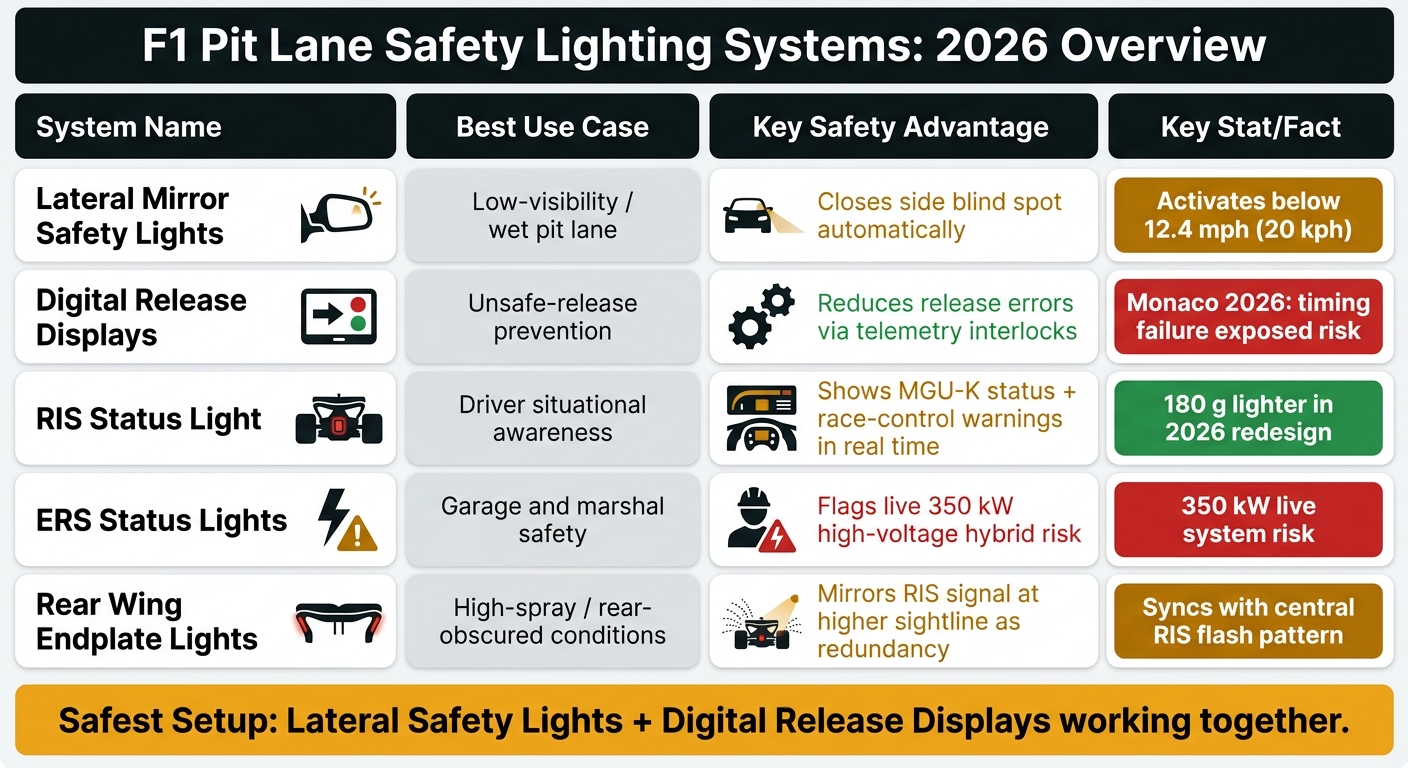
F1 Pit Lane Safety Lighting Systems: 2026 Comparison Guide
The comparison comes down to one thing: which lights cut risk the fastest when visibility falls apart. Safety gets better when the car’s lights and pit controls work together, and the 2026 rules make that direction pretty clear.
Right now, lateral safety lights and digital release displays bring the biggest immediate safety gain.
Lateral mirror-mounted lights deal with a simple but serious problem: the side blind spot. Tombazis said the lights were added because a sideways car can hide its rear light from approaching traffic. That matters a lot in wet or low-visibility pit lane conditions, where a driver may only catch a split-second glimpse of another car.
But seeing a car is only half the job. If a team releases a car into traffic too soon, the danger is still there.
That’s why digital release displays matter so much. When they’re linked to telemetry and interlocks, they help cut unsafe launches before they happen. In plain terms, they make the pit release system the other half of the safety chain.
The RIS status light carries the most data in a single signal. It gives drivers real-time status on the MGU-K and race-control warnings. ERS status lights are aimed more at garage crews and marshals, since they flag live 350 kW high-voltage risk. And rear wing endplate lights support the RIS signal from a higher line of sight when the rear of the car is hard to see.
| System | Best Use Case | Safety Advantage |
|---|---|---|
| Lateral Safety Lights | Low-visibility / wet pit lane | Closes the side-visibility blind spot below 12.4 mph (20 kph) |
| Digital Release Displays | Unsafe-release prevention | Reduces release errors through telemetry and interlocks |
| RIS Status Light | Driver awareness | Shows MGU-K status and race-control warnings in real time |
| ERS Status Lights | Garage and marshal safety | Flags live 350 kW high-voltage risk |
| Rear Wing Endplate Lights | High-spray visibility | Mirrors the RIS signal at a higher sightline when the rear is obscured |
The safest setup pairs high-visibility LEDs with automated release safeguards.
FAQs
How do mirror lights improve pit lane safety?
Mirror lights improve pit lane safety because they act as a mandatory hazard warning system.
Their amber lights are easier to spot from the front and sides of the car. That matters in messy moments, like a spin or crash, when the rear rain light can be blocked from view.
They also switch on automatically when a car stops, drops below 12.4 mph, or gets stuck in neutral. On top of that, they can indicate whether the high-voltage hybrid system is still active.
What can cause digital release displays to fail?
The sources don’t name exact causes. But they do make one thing clear: system reliability matters for safety.
Hardware problems can still happen. That’s why teams rely on real-time monitoring and predictive analytics to spot trouble early, before it turns into a bigger issue.
Component failures can also send the wrong message to people on the road. For example, if a rear light unit fails, it may display the wrong pattern and confuse other drivers about a car’s status.
Why does ERS lighting matter for pit crews?
ERS lighting matters for pit crew and trackside safety because modern hybrid power units can stay electrically live even when a car is sitting still.
These lights show whether the ERS is active, so anyone moving toward a stopped or damaged car doesn’t have to guess. That simple visual cue helps reduce the risk of electric shock and tells people to keep their distance until the car is declared safe.