Safety Car vs. Virtual Safety Car: Key Differences
How a full Safety Car bunches the field and reshapes strategy, while a Virtual Safety Car slows by delta and mostly preserves gaps.
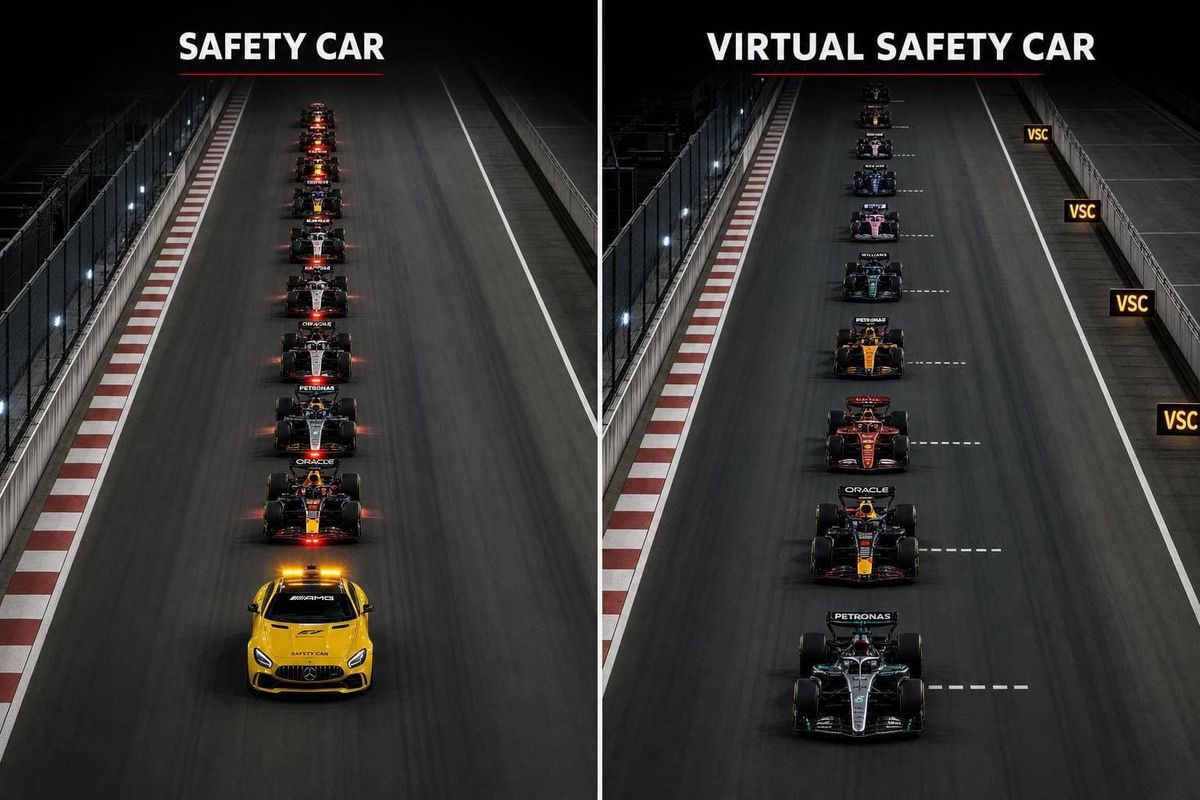
A full Safety Car changes the race more than a Virtual Safety Car. I’d sum it up like this: the Safety Car bunches the field up, cuts pit-stop time loss the most, cools tires and brakes more, and sets up a rolling restart. The Virtual Safety Car slows everyone with a delta time, keeps most gaps in place, and brings the race back without a pack restart.
If you want the short answer, here it is:
- Safety Car: best at neutralizing big hazards, but it can flip track position fast
- Virtual Safety Car: used for smaller incidents and causes less change to race order
- Pit stops: both help, but a full Safety Car helps more than a VSC
- Tires and brakes: both cool the car, but a Safety Car usually cools it more
- Restarts: Safety Car restarts are tighter and riskier; VSC restarts are simpler
- Race impact: a full Safety Car can erase a lead, while a VSC usually preserves gaps
One stat says a lot: under green conditions, a pit stop often costs about 20 to 25 seconds. Under neutralization, that loss drops, and it drops the most under a full Safety Car. And in Abu Dhabi 2021, Lewis Hamilton’s 11.9-second lead disappeared once the field closed up.
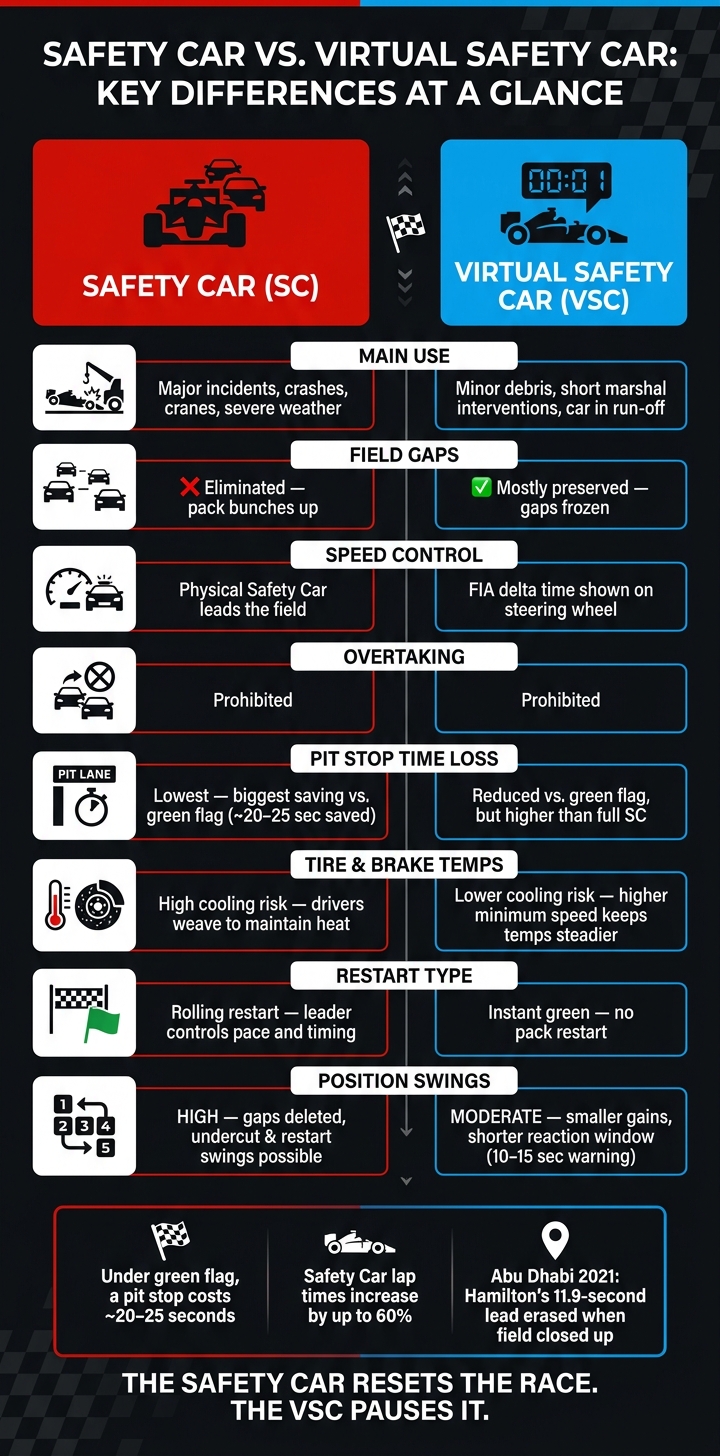
Safety Car vs. Virtual Safety Car: Key Differences at a Glance
Formula One (F1): Virtual Safety Car (VSC) Explained
sbb-itb-7c68254
Quick Comparison
| Point | Safety Car | Virtual Safety Car |
|---|---|---|
| Main use | Bigger danger on track | Smaller incident |
| Field gaps | Closed up | Mostly kept |
| Speed control | Physical Safety Car leads field | FIA delta time on dash |
| Overtaking | No | No |
| Pit-stop loss | Lower | Lower than green, but not as low as SC |
| Tire/brake temps | More cooling | Less cooling than SC |
| Restart | Rolling restart | Instant return to green |
| Race shuffle | Bigger | Smaller |
So if I had to put it in one line: the Safety Car resets the race; the VSC pauses it.
How the Safety Car Works
Race Control sends out the Safety Car when the track needs a full neutralization. It leaves the pit lane, picks up the race leader, and the rest of the field lines up in single file behind it. Overtaking is not allowed, so any big gaps disappear in a hurry.
When the FIA Deploys a Full Safety Car
The FIA uses a Safety Car when drivers, marshals, or recovery crews face immediate risk, but conditions still allow the race to continue without a red flag. Common reasons include major crashes, stranded cars, debris, marshals or recovery vehicles on track, and severe weather.
A clear example came at the 2021 Belgian Grand Prix, which ran entirely behind the Safety Car because of standing water. In cases like that, a Virtual Safety Car just isn't enough. It can't give the same physical buffer when marshals need extra time to work close to the incident.
How the Safety Car Reshapes the Race
As soon as the field bunches up, strategy changes. Under Safety Car conditions, lap times can increase by up to 60%. Cars that were spread across the circuit become one tight train, and each driver has to stay within 10 car lengths of the car ahead.
That's why the Safety Car has such a big effect on race strategy. Under green-flag running, a pit stop usually costs around 20–25 seconds. Under Safety Car conditions, that loss is smaller. A stop at the right moment can hand a driver better track position and fresher tires, especially since the lead driver controls the pace once the Safety Car lights go out.
Heat becomes a big issue too. At Safety Car speeds, tire and brake temperatures can fall fast, so drivers weave and brake hard to keep temperature in the car. Then comes the restart, one of the most tense parts of the race, as the field jumps from 62 mph (100 km/h) back to full pace. That sharp change is a big reason the difference between a full Safety Car and a Virtual Safety Car matters so much.
How the Virtual Safety Car Works
If a full Safety Car can shuffle the pack, the VSC is the lighter-touch option: slower, tighter, and much less disruptive. The Virtual Safety Car neutralizes the field without sending out a physical Safety Car. Overtaking is still banned, but the big difference is that the gaps between cars mostly stay where they are.
Each driver has to follow a delta time shown on the steering wheel display, which means slowing to about 30% to 40% below normal racing speed. The FIA checks that delta through mini-sectors, so drivers can't make up lost time later in the lap. On TV, that can look less dramatic. From a strategy point of view, though, it can matter just as much.
When Race Control Chooses VSC
Race Control usually turns to the VSC for smaller incidents, like clearing minor debris, recovering a car stopped in a run-off area, or dealing with a short marshal intervention. It gives marshals protection fast without sending out a full Safety Car and bunching up the field when that isn't needed.
How Delta Time Control Differs from a Safety Car Queue
Because the field stays spread out, the main opening is usually in the pit lane, not on the restart. Under the VSC, gaps are more or less frozen since every driver has to slow by the same percentage. Teams also get 10 to 15 seconds of warning before the VSC ends, so pit decisions often come down to a few frantic seconds rather than a longer window.
Safety Car vs. Virtual Safety Car: Side-by-Side Comparison
The biggest difference comes down to field compression. A full Safety Car bunches the whole pack together and wipes out the gaps that drivers built on track. The VSC does something else: it slows everyone down, but it mostly keeps those gaps in place. That one change shapes almost every call teams make.
Rules and Race Control: Direct Comparison
You can see the contrast most clearly side by side.
| Category | Safety Car | Virtual Safety Car |
|---|---|---|
| Deployment trigger | Major incidents, recovery cranes, large debris, severe weather | Minor debris, short marshal interventions, or a car behind a barrier |
| Pace control | Safety Car leads the field; cars stay within 10 car lengths of the car ahead | FIA delta time displayed on each driver's steering wheel |
| Field compression | Yes - gaps are eliminated as the pack bunches up | No - gaps are largely preserved because all cars slow at the same time |
| Overtaking | Prohibited; lapped cars may be instructed to unlap themselves | Prohibited; all cars hold position |
| Pit stop time loss | Lowest - field is slow and compressed | Reduced vs. green flag, but higher than under a full Safety Car |
| Tire and brake temps | High cooling risk; drivers weave and brake hard to maintain heat | Lower cooling risk; the higher minimum speed keeps temperatures steadier |
| Restart behavior | Rolling restart; leader controls pace and timing | Racing resumes immediately when Race Control ends the VSC |
| Position swings | High - compressed gaps create larger undercut and restart swings | Moderate - gains are possible but usually smaller |
That slower overall pace is also why tire and brake behavior splits so much between the two.
Which System Creates Bigger Winners and Losers
A full Safety Car usually creates the bigger winners and losers because it deletes gaps and gives teams a new pit window. The VSC can still shake things up, but it tends to do so in smaller ways.
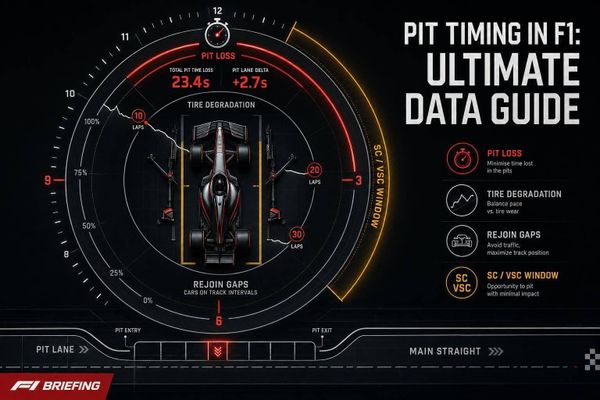
The clearest chance comes from a well-timed pit stop. The catch? The warning window is short, so teams have far less time to react and make the call. Under green-flag running, a pit stop usually costs a driver about 20 to 25 seconds compared with rivals. Both systems cut that loss, but a full Safety Car cuts it more because the whole field is circulating at a much slower pace.
That’s why these differences hit hardest in three areas: pit timing, tire prep, and restart planning.
How Each System Affects Race Strategy
Pit Stops, Tire Temperatures, and Restart Planning
Once race control sets the neutralization type, the pit wall has to move fast. A full Safety Car can make a pit stop MUCH cheaper in time lost. A VSC can help too, but it usually keeps more of the running order in place.
The biggest split comes at the restart. Under a Safety Car, the restart turns into a tactical chess match. The leader controls the pace before the green flag, and the whole bunched-up field is waiting for the exact moment to attack. Under a VSC, there’s no pack restart at all, so the risk is lower.
Strategy Comparison Table
That tradeoff is easiest to see side by side.
| Strategy factor | Safety Car | Virtual Safety Car |
|---|---|---|
| Pit-stop value | Often much higher because time loss drops more | Helpful, but usually less powerful |
| Field compression | High - gaps are eliminated, resetting track position | Low - gaps are mostly preserved |
| Tire management | More heat loss risk during slower running | Usually less extreme heat loss |
| Brake temperature | Bigger challenge before restart | Usually easier to manage |
| Driver restart workload | High due to pack racing and timing | Lower because there is no full-pack restart |
Fuel management is one area where both systems work in a similar way. Neutralization laps still count toward total race distance, but the cars burn less fuel during them. That lets teams bank fuel and then run higher engine modes later in the race.
Key Differences Teams React To
From there, the pit wall usually cuts the call down to three things: pit now, look after the tires, or defend track position.
A Safety Car forces fast answers to all three at once. Everything gets compressed, options change in seconds, and one call can flip the race. A VSC brings less pressure, but the window to act is still tight.
FAQs
Why does a full Safety Car help pit strategy more than a VSC?
A full Safety Car tends to help more because it bunches the field up and almost erases the gaps between cars. That gives drivers a big edge if they pit, since they lose far less time to rivals - usually around 10–12 seconds instead of 22–25 seconds under green-flag running.
A VSC can also cut pit-stop time loss because cars have to follow a slower delta. But it doesn’t pack the field together, so the strategy upside is smaller.
Can drivers gain or lose positions under a VSC?
Drivers can’t gain or lose places by passing under a VSC because overtaking isn’t allowed.
That said, teams can still pick up track position in the pits. The field remains spread out, so a pit stop usually costs less time than it would under green-flag racing, but more than it does during a full Safety Car.
Why are Safety Car restarts more chaotic than VSC endings?
Safety Car restarts tend to be more chaotic because the full Safety Car packs the field into a tight, single-file line. In plain English, it wipes out the gaps between drivers.
Once the Safety Car comes in, the leader controls the pace. That turns the restart into a tactical sprint, with everyone waiting for the exact moment the race goes green again.
Because the cars are running nose-to-tail, wheel-to-wheel fights can start almost at once. Track position suddenly matters a lot, and even a small mistake can cost places fast.
A VSC works differently. It keeps the gaps that already exist, so the order of the race usually stays more stable.