McLaren vs Ferrari: Resource Use Under Cap
McLaren’s lean spares vs Ferrari’s early upgrade push under the F1 cost cap — timing, supplier strain, and waste trade-offs.
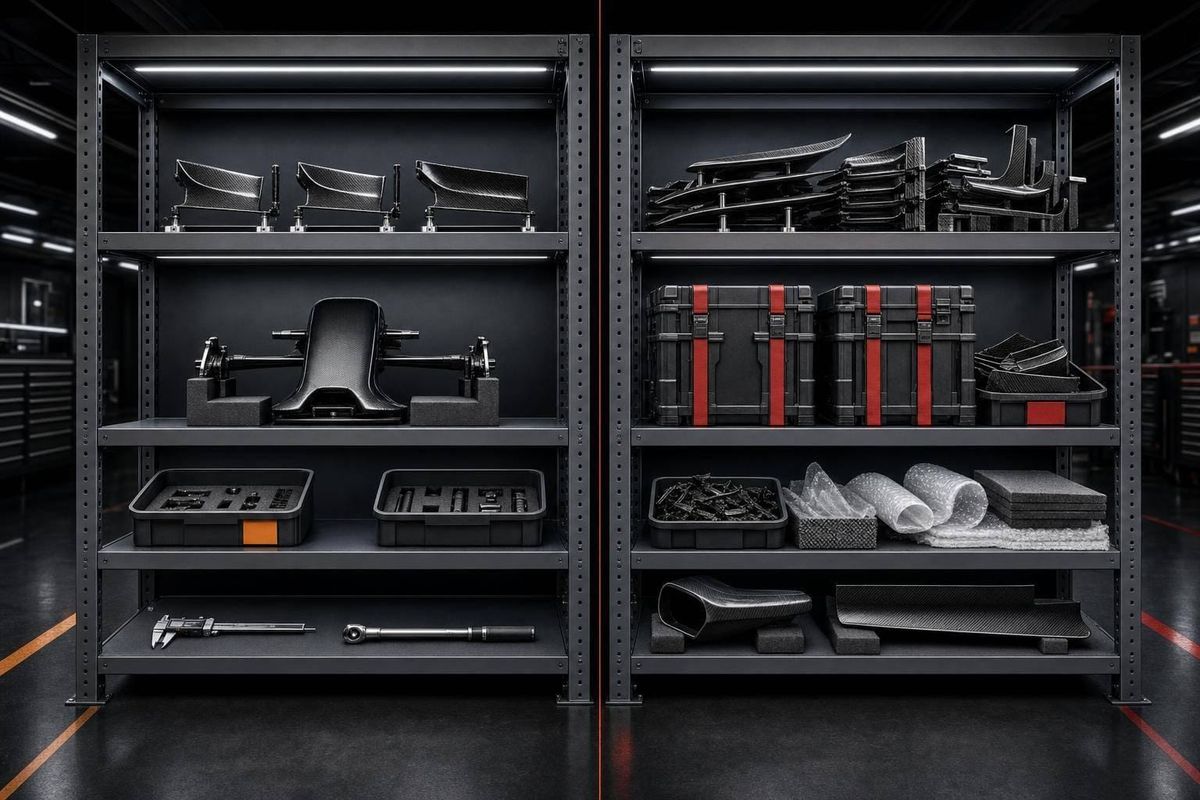
If I cut this down to one line, it’s this: McLaren spends more carefully to keep room for later, while Ferrari spends earlier to push parts to the car sooner.
If you want the short answer, here it is:
- McLaren runs with fewer spares, tighter part volumes, and more patience early in the season.
- Ferrari runs with more frequent upgrades, more early pressure on the factory, and less room to change course later.
- Under the cost cap, this is not just about speed. It’s about timing, spare stock, supplier load, and part waste.
- The same budget can lead to two very different paths: lower waste vs. earlier output.
In simple terms, I see McLaren as the team trying to protect cap space, factory hours, and part usage across the full season. Ferrari looks more willing to spend those resources early if it means finding lap time sooner. That can work. But it can also leave less margin when updates stack up, stock gets replaced, or suppliers get squeezed.
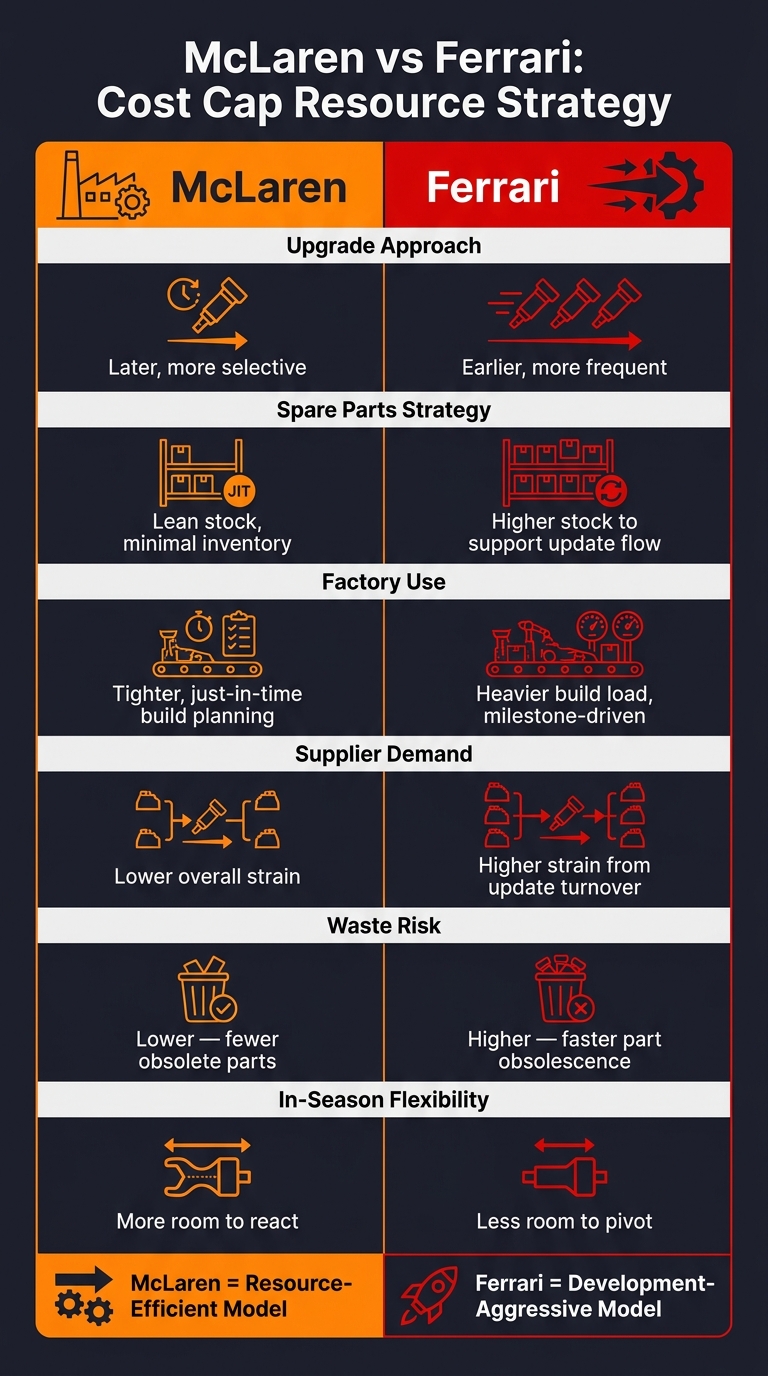
McLaren vs Ferrari: F1 Cost Cap Resource Strategy Compared
F1 budget cap: Why counting Ferrari upgrades is misleading 🚨 #Ferrari #FIA #Mercedes #F1 #Formula1
sbb-itb-7c68254
Quick Comparison
| Area | McLaren | Ferrari |
|---|---|---|
| Upgrade approach | Later, more selective | Earlier, more frequent |
| Spare parts | Lean stock | More pressure to support update flow |
| Factory use | Tighter build planning | Heavier build load |
| Supplier demand | Lower overall strain | Higher strain from update turnover |
| Waste risk | Lower | Higher |
| In-season room to react | More | Less |
My takeaway: McLaren looks more efficient with resources, while Ferrari looks more aggressive with development timing. That’s the core trade-off this article explains.
McLaren's Lean Resource Model

McLaren keeps spare production low so more budget room stays open for upgrade parts.
Tighter Spare Stock and Controlled Part Volumes
McLaren puts its production effort into parts that can add performance instead of spares that may barely get used. Fewer spare parts mean less inventory sitting still and more factory capacity for parts that matter more on track.
The downside is pretty clear: there’s less cover when something goes wrong. If a crash or other incident creates sudden demand, a lean spare stock gives the team less room to react. That puts a lot of pressure on close coordination between simulation, manufacturing, and race engineering.
Upgrade Timing as a Budget-Preservation Tool
McLaren can give up some early track mileage in exchange for more factory time and more budget later in the season. That choice has a direct effect on development speed. If the team holds resources back early, it can use them later for bigger upgrade packages when the season starts to tighten up.
Factory Workflow Built Around Efficiency
McLaren’s close link between design, simulation, manufacturing, and race engineering helps the team decide exactly which parts to build and how many to make. That cuts duplicate work and shortens turnaround times.
With an on-demand workflow, the factory stays locked in on what’s needed for the next race instead of filling shelves with stock that may never get used. The catch is that this setup leaves less breathing room when a heavier update schedule hits. Ferrari goes the other way, sending more parts through the factory and supplier chain at the same time.
Ferrari's Update-Heavy Development Model
Ferrari puts more of its cost cap into frequent upgrades. The upside is simple: if the team picks the right path, those early parts can bring lap time right away. The downside is just as clear. By spending hard at the start, Ferrari gives itself less room to pivot if the car stops moving in the right direction.
Early-Season Development Push and Its Upside
An early-season push can pay off fast. New parts can show gains on track within weeks, which matters when every tenth counts.
But there’s a catch. The more budget and aerodynamic test time Ferrari commits early, the less margin it keeps for the back half of the season. If the concept hits a wall, fixing it later gets a lot harder.
Sequencing Major Packages to Avoid Bottlenecks
That pace comes with a headache behind the scenes: operations get tight. Frequent updates squeeze design, manufacturing, and delivery into shorter windows.
When major packages, test parts, and spares all land in the same production cycle, things can bunch up. It’s a bit like trying to push three big shipments through one loading dock at once. Something usually slows down.
Frequent Updates Strain Suppliers and Factory Capacity
Every part still has to move through the same chain: design, validation, manufacturing, and on-time delivery. That doesn’t change just because the update schedule gets busier.
When upgrades arrive one after another, suppliers get less breathing room between orders. At the same time, in-house teams end up juggling overlapping work across design, simulation, and quality control. Under the cap, the main limit isn’t just money anymore. It becomes production capacity.
Higher turnover brings another problem too: superseded stock. These are parts that already used cap space, labor, and factory time, but never made it onto the car before a newer version took their place.
That trade-off shows up most clearly in timing, spares, and supplier load.
Direct Comparison: Timing, Spares, Supplier Strain, and Waste
The clearest gap between the two teams shows up in timing, inventory, and supply-chain load. It starts with when each team decides to commit, then rolls into spare parts, supplier pressure, and the day-to-day strain on the factory floor.
Upgrade Timing and In-Season Flexibility
McLaren is willing to give up early track time if that buys more development time back at the factory. In February 2026, the team chose to skip the first day of pre-season testing in Barcelona with the MCL40, while also preserving cap space and factory capacity. That move kept the car in design and production for longer, which gave McLaren more time to show up with a more developed spec instead of rushing out an early version. It also affects how much spare capacity the team can hold back for later use.
Ferrari usually moves earlier in the cycle. The team hit a key internal milestone for Project 677 ahead of schedule, which lines up with a workflow built around locking designs early and leaving enough lead time for supplier coordination and factory output. The upside is simple: earlier gains. The trade-off is just as clear: less room to change direction later. That pace can help early development, but it also tightens every production call that follows.
Spare Inventory, Supplier Capacity, and Workflow Pressure
Once the timing is locked, the next limit is how many parts each team can afford to keep on hand.
McLaren keeps spares lean to avoid obsolete stock. That cuts waste, but it also leaves less buffer when demand jumps. On the ground, that means the factory works in a tight just-in-time window, building for immediate need instead of piling parts up in advance. McLaren gives up early mileage for a cleaner development path. Ferrari gives up late-season flexibility for a better shot at finding performance sooner.
This isn't only about how often each team brings updates. It's also about how much waste each schedule creates. Ferrari's heavier update rhythm puts more strain on suppliers and factory scheduling because every new package increases turnover through the production chain. More turnover means more risk of obsolescence and more waste. At that point, the problem shifts from stock control to supplier throughput.
Those trade-offs feed straight into how much performance each team can get from the same cap space.
What This Means for Car Development and Waste Reduction
Those scheduling calls also decide how much material goes out of date before it ever makes it onto the car. Under the cost cap, development is as much about when you build as what you build. That turns waste into a direct performance cost.
This is where the gap between McLaren and Ferrari stands out most.
Which Model Is More Efficient vs More Aggressive
McLaren runs the more resource-efficient model. It gives up some early mileage in exchange for fewer out-of-date parts and a cleaner allocation plan across the season. The trade-off is simple: less early data, but a tighter path for development as the year moves on.
Ferrari, by contrast, follows the more aggressive model in practice. It pushes development earlier to chase gains sooner, but that puts more strain on suppliers and increases the risk of schedule clashes. The upside is there. So is the pressure if sequencing slips, because there is less room to recover from mistakes in the order of work.
At the simplest level, the difference comes down to three pressures: timing, waste, and factory load.
| McLaren | Ferrari | |
|---|---|---|
| Development pace | Controlled, factory-sequenced | Fast, milestone-driven |
| Waste risk | Lower - fewer obsolete parts | Higher - faster part obsolescence |
| Operational load | Lower supplier and factory pressure | Greater supplier and factory pressure |
Key Takeaways
Under the cap, sequencing matters as much as speed. Spare strategy, supplier scheduling, and factory workflow are not just background logistics anymore; they shape how much performance a team can pull from its budget.
Waste reduction does not mean building fewer upgrades. It means planning well enough that the parts you make do not expire before they are used. So this is not a clean split between smart planning and bad planning. It is a trade-off between lower waste and higher aggression. Under the cap, McLaren leans toward waste reduction, while Ferrari leans toward early output.
FAQs
Why does McLaren keep fewer spares?
Under Formula One’s cost cap, McLaren keeps fewer spares so it can put more of its budget into regular car development and aerodynamic performance.
Instead of stockpiling parts, the team puts that money and factory time into upgrades, design changes, and virtual testing. The goal is simple: get as much performance as possible while staying inside the spending limits.
What does Ferrari gain by upgrading earlier?
Upgrading earlier gives Ferrari more room to press its edge over a full race weekend. The team gets extra time to fine-tune management strategies and get more out of the car, all while working inside strict budget caps and development limits.
There’s another upside too. Starting development and wind tunnel testing sooner gives engineers data earlier, which can help them claw back lost performance. That matters when the goal isn’t just a short burst of pace, but keeping the car stable over the long haul while still finding gains now.
Which model works better under the cost cap?
Under the cost cap, the best model puts money into upgrades that move the needle and trims waste instead of chasing short-term fixes every weekend. The teams that do this well treat development like an investment portfolio. They use data to decide when to shift time and budget between aerodynamics, engine refinement, and reliability.
The strongest approach is a balance. Teams need gains they can use now, but they also need longer-term projects that may pay off later. That means using current data to shape future work while keeping part of the budget in reserve for problems no one saw coming.