F1 Media Rights Drive 2026 Revenue Growth
Broadcast renewals and annual escalators, led by the U.S., will drive F1's 2026 revenue more than adding races.
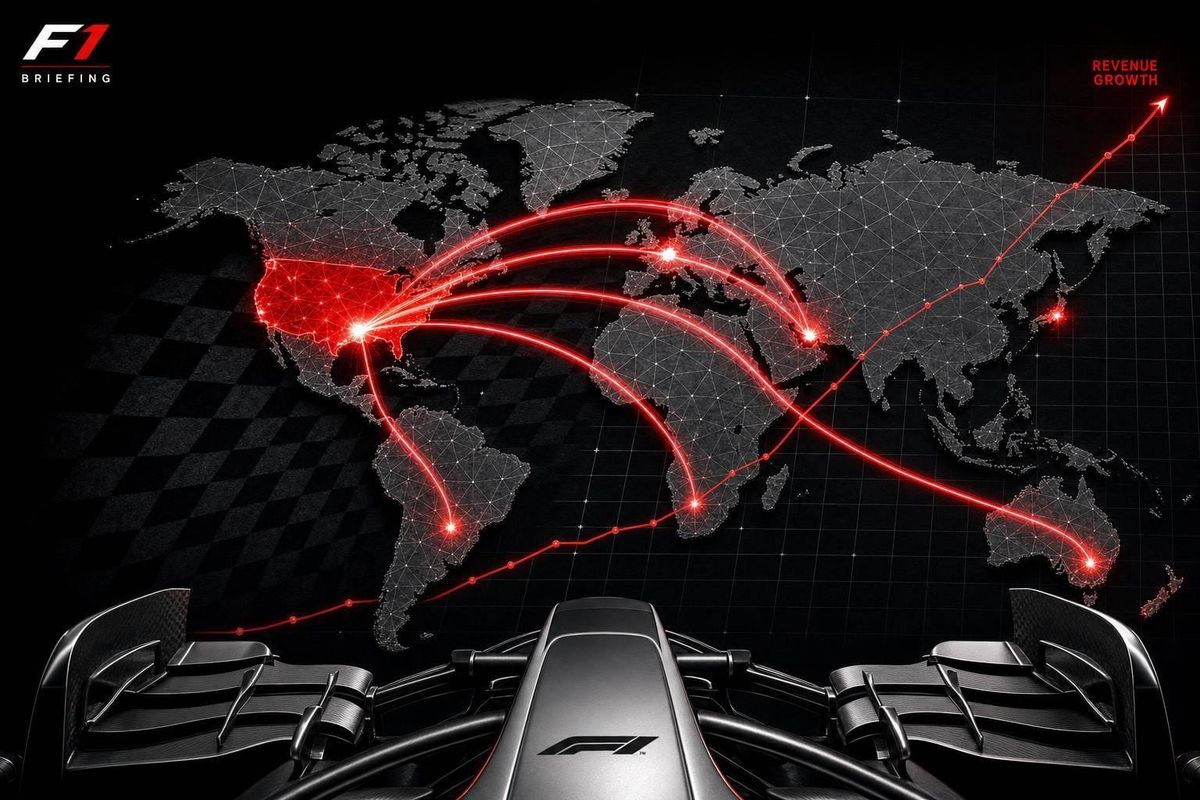
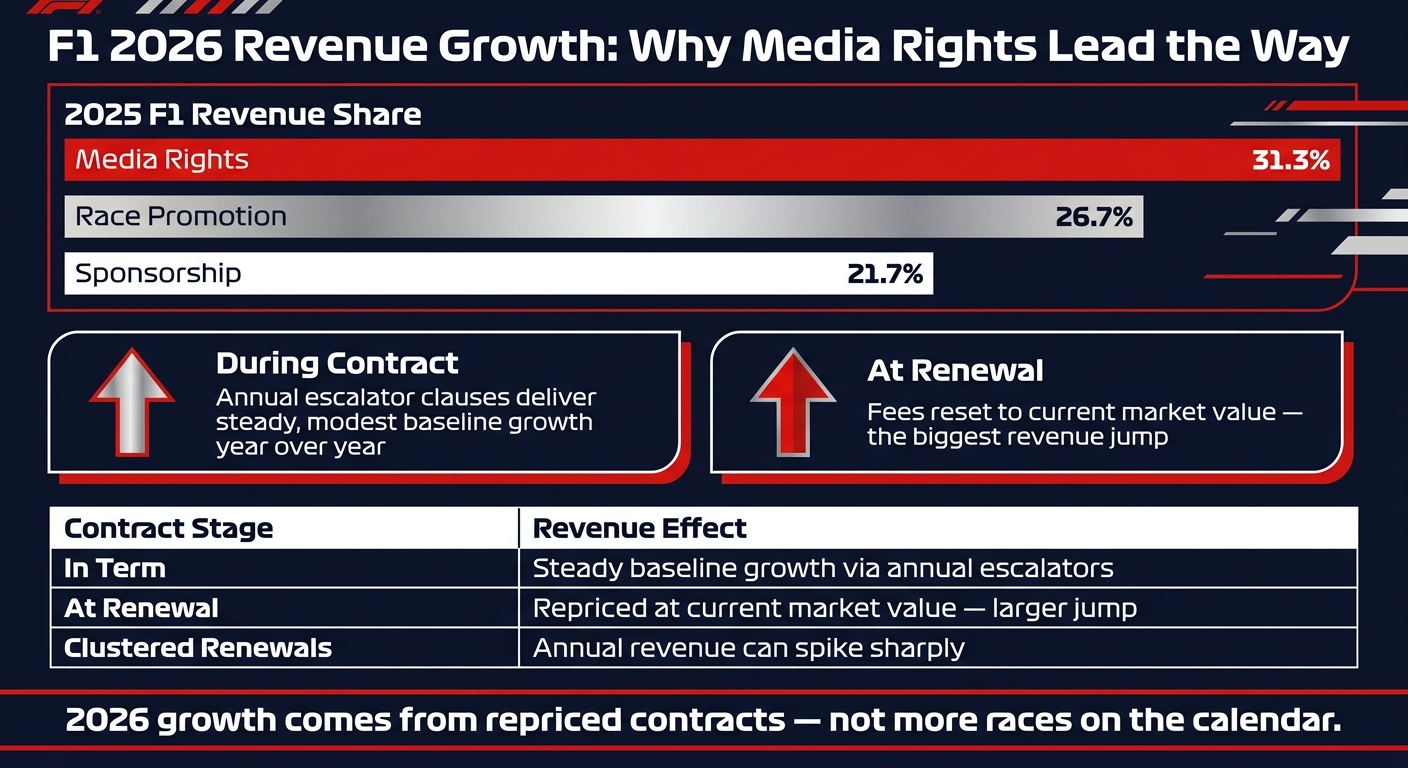
Formula 1’s clearest 2026 growth lever is TV and streaming rights, not more race weekends. In 2025, media rights made up 31.3% of total revenue, ahead of race promotion at 26.7% and sponsorship at 21.7%. I’d sum it up this way: F1 can get more money from better-priced contracts than from stuffing more races onto the calendar.
If you want the short answer, here it is:
- Media rights are F1’s biggest revenue stream
- Most deals run 3 to 5 years
- Many contracts include yearly fee step-ups
- The bigger jump comes when deals renew
- 2026 matters because renewals can reset prices in high-demand markets
- The U.S. stands out because it can support higher rights fees
That’s the whole story in one line: 2026 revenue growth depends more on contract timing and market pricing than on adding races.
| Revenue source (2025) | Share of revenue | What drives 2026 growth |
|---|---|---|
| Media rights | 31.3% | Yearly step-ups and renewal repricing |
| Race promotion | 26.7% | Venue deals and local market terms |
| Sponsorship | 21.7% | Brand spending and partner demand |
So when I look at F1’s 2026 outlook, I don’t start with the schedule. I start with broadcast renewals, because that’s where the biggest step-up can happen.
F1 2026 Revenue Streams: Media Rights vs. Race Promotion vs. Sponsorship
How broadcast deals convert audience demand into predictable revenue
Broadcast fees, contract length, and annual escalators
Formula 1 sells territory licenses, not one-off broadcasts. In each market, a single deal bundles practice, qualifying, sprint sessions, the race, highlights, and digital clips into one exclusive license.
Most of these agreements run three to five years, which gives F1 a steady base for revenue planning. Instead of guessing season by season, it can count on a set fee stream across multiple years. Many contracts also include annual escalator clauses, which push fees up each year without a full renegotiation.
That setup does two things at once: it locks in income now and builds in growth before the next renewal. The bigger pricing reset tends to happen when a territory comes up for renewal.
Why rights income scales better than adding races
In 2026, that setup matters a lot. Escalators and renewals can lift revenue without adding more races to the calendar.
That’s part of why repricing broadcast rights is so attractive. The audience demand is already there. If viewership has grown, renewal talks can reflect that proof and the market’s higher price point. Put simply, F1 doesn’t need to create demand from scratch in these cases. It can use audience data it already has.
The biggest upside comes from markets that can support higher rights fees.
Why media rights outpace race promotion and sponsorship
Media rights stand out because they recur and are easier to forecast. Race promotion fees can also offer stability through multi-year venue agreements, but the economics depend on the terms of each host contract.
Sponsorship is a bit less steady. It has more exposure to shifts in brand budgets and market sentiment.
Broadcast deals work differently. They combine exclusivity, multi-year contract length, and annual escalators into one revenue stream. That means income can keep building between renewals, with the next jump tied to territories that can command the highest fees.
sbb-itb-7c68254
Regional pricing and why key markets matter more in 2026
The price gap between mature and growth territories
Formula 1's regional rights mix rests on a simple trade-off between established markets and growth territories. Established markets support current rights fees. Growth territories hold the biggest upside when contracts come up again.
Not every market moves at the same pace, and F1 prices them accordingly. It pulls in more revenue where demand is strongest. That gap becomes more important in 2026, because the highest-value markets can be repriced against stronger audience demand.
Why U.S. rights carry the most weight in 2026
The main issue isn't only contract length. It's also about which territories can handle a higher price.
In 2026, timing matters because renewals give F1 a chance to reset pricing in markets where demand has already climbed. Mature markets tend to reset at a higher level when deals renew. Growth markets, by contrast, build leverage for later cycles.
Regional renewals that shape the 2026 rights portfolio
Renewals are where the big revenue jump happens. Annual escalators usually add only modest increases.
When major territories come up for renewal, F1 can capture more of the value created by audience growth instead of leaning on small step-ups alone. Put simply, regional pricing decides where F1 gets its next lift.
Why contract timing produces step-change revenue gains in 2026
Renewal cycles vs. annual escalator growth
Key territories are already priced based on market strength. So the main issue is when that value shows up in revenue.
Media rights tend to grow in two ways. First, you get smaller annual increases during the contract term. Second, you get a much bigger reset when the deal comes up for renewal.
During an active contract window, escalators add steady baseline growth. But the larger jump usually comes at expiry. That’s when F1 can price the deal against current audience demand, not the demand in place when the original contract was signed.
That’s the gap: modest annual growth on one side, and a renewal-driven reset to current market value on the other.
Why 2026 falls in a favorable renewal window
Renewals in 2026 give F1 room to reprice deals against stronger demand in the market today.
So 2026 isn’t just another escalator year. It’s a year when repricing can produce a larger revenue jump. How much upside F1 gets depends on one thing: how far current demand has moved above the price set in the original deal.
Timeline: how territory renewals affect year-to-year revenue
The impact doesn’t show up evenly from one year to the next. That’s why renewal timing matters more than small annual escalators.
| Contract stage | Revenue effect |
|---|---|
| In term | Annual escalators deliver steady baseline growth |
| At renewal | Fees can be repriced at current market value |
| Clustered renewals | Annual revenue can jump more sharply |
Formula 1 revenue falls 38% as $1bn opportunity emerges 📊 #F1 #Formula1 #LibertyMedia #Motorsport
Conclusion: Media rights are F1's clearest revenue lever in 2026
Put it all together, and media rights stand out as Formula 1's clearest revenue lever in 2026.
They offer two ways to grow at once: annual escalators and bigger step-ups when contracts come up for renewal. Race promotion and sponsorship still play a big role. But media deals, especially by territory, give F1 more room to push pricing in premium markets like the U.S.
That’s why 2026 matters more than a standard escalator year. If several renewals land in the same window, revenue can move up faster than escalators alone would allow. In plain English, more of the growth can come from repriced contracts, not just from adding more races to the calendar.
FAQs
Why are media rights more important than adding races in 2026?
Media rights matter more because they turn F1 into an always-on, data-rich digital product, not just a sport tied to a fixed number of race weekends. With real-time data and interactive features, broadcasts become multi-platform subscription experiences. That shift can lift both revenue and the value of the rights package.
Contract cycles matter too. Big exclusive deals can bring in large, predictable income in a way that adding more races usually can't match for consistency or scale. They also make sponsorships more attractive by giving brands broader reach and clearer ways to measure engagement.
Why does the U.S. market matter so much for F1 rights growth?
The U.S. market matters because it’s a mature, digital-first test case for Formula 1’s global streaming plan. With 83% of U.S. adults using streaming, it’s one of the best places to move from cable to integrated digital platforms.
It also gives Formula 1 direct access to audience data and real-time engagement metrics. Add in a 52 million-strong U.S. fan base, and the market becomes even more attractive for subscriptions and targeted advertising.
How much growth comes from renewals versus annual escalators?
Formula One’s 2026 revenue growth comes from two main drivers: contract renewals and built-in annual escalators.
Big renewals are doing a lot of the heavy lifting. The five-year, $700 million U.S. broadcast deal with Apple adds major value, and the extended Sky Sports partnership through 2034 gives the business long-term stability.
Then there are the annual escalators. These baked-in increases push revenue up in a steady, predictable way over the life of each contract.
Broadcasting revenue also gets support from premium digital subscriptions and data-integrated content. Those products give Formula One more ways to grow beyond the base media deals.