Pit Wall vs. Driver: Communication Limits
FIA radio rules keep strategy with the pit wall while forcing drivers to execute and adapt alone at speed.
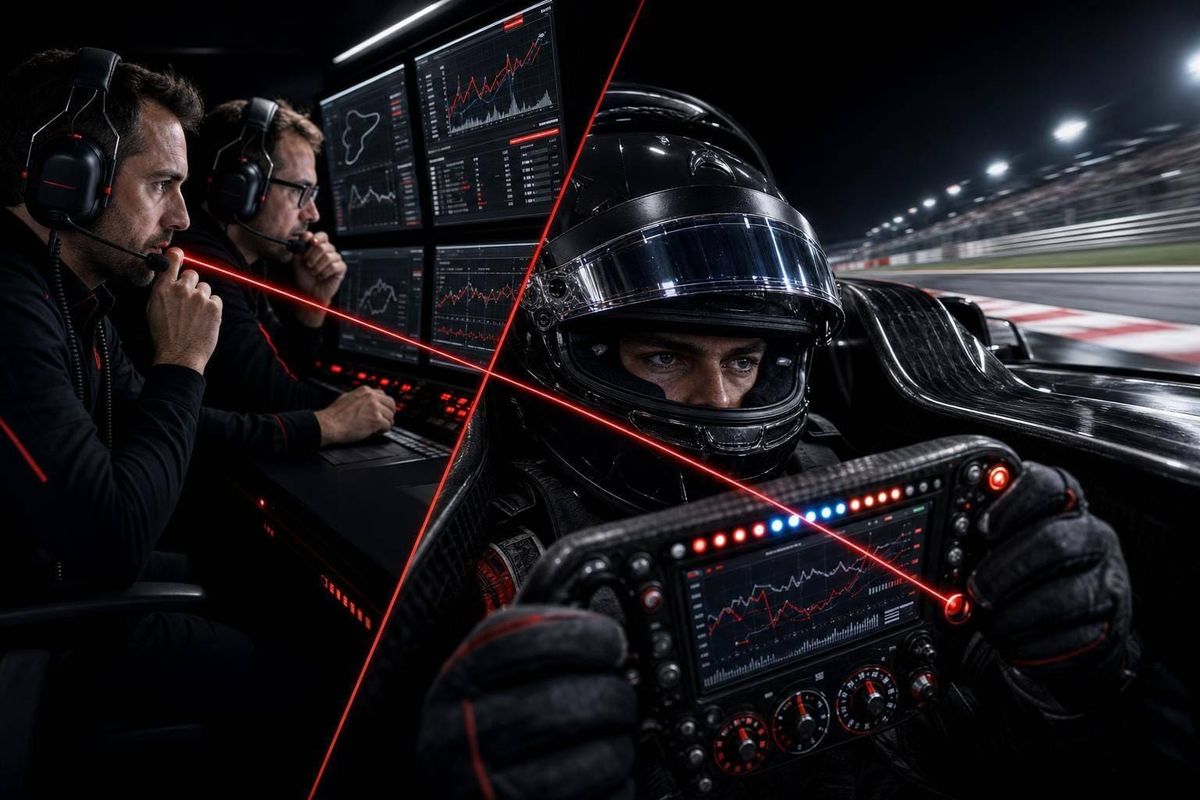
In F1, the team can shape the race, but the driver still has to drive the car alone. That is the whole point of the FIA radio limit: the pit wall can share gaps, weather, tire plans, and car warnings, but it cannot coach the driver corner by corner.
Here’s the short version:
- The pit wall owns the big-picture call
- pit stops
- tire plan
- gaps to rivals
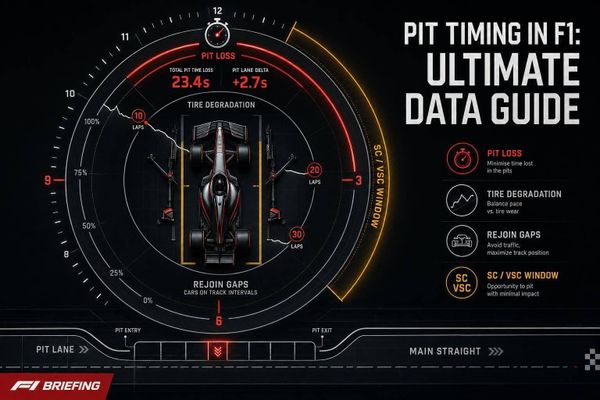
- Safety Car and VSC timing
- weather updates
- The driver owns the live part
- braking feel
- grip changes
- starts and restarts
- overtakes
- fixing mistakes in the moment
- The rule line is simple: the driver must drive “alone and unaided” under FIA Sporting Regulation Article 27.1
- The split matters most when races flip fast
- sudden rain
- tire drop-off
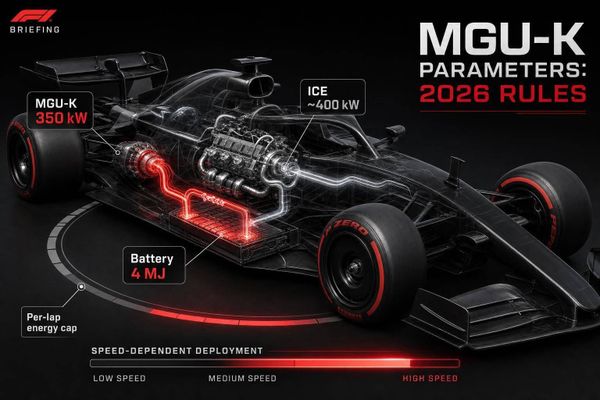
- energy targets
- reliability trouble
- late Safety Car calls
In other words: the team sees more data, but the driver feels more of the car. That gap is where races can be won or lost.
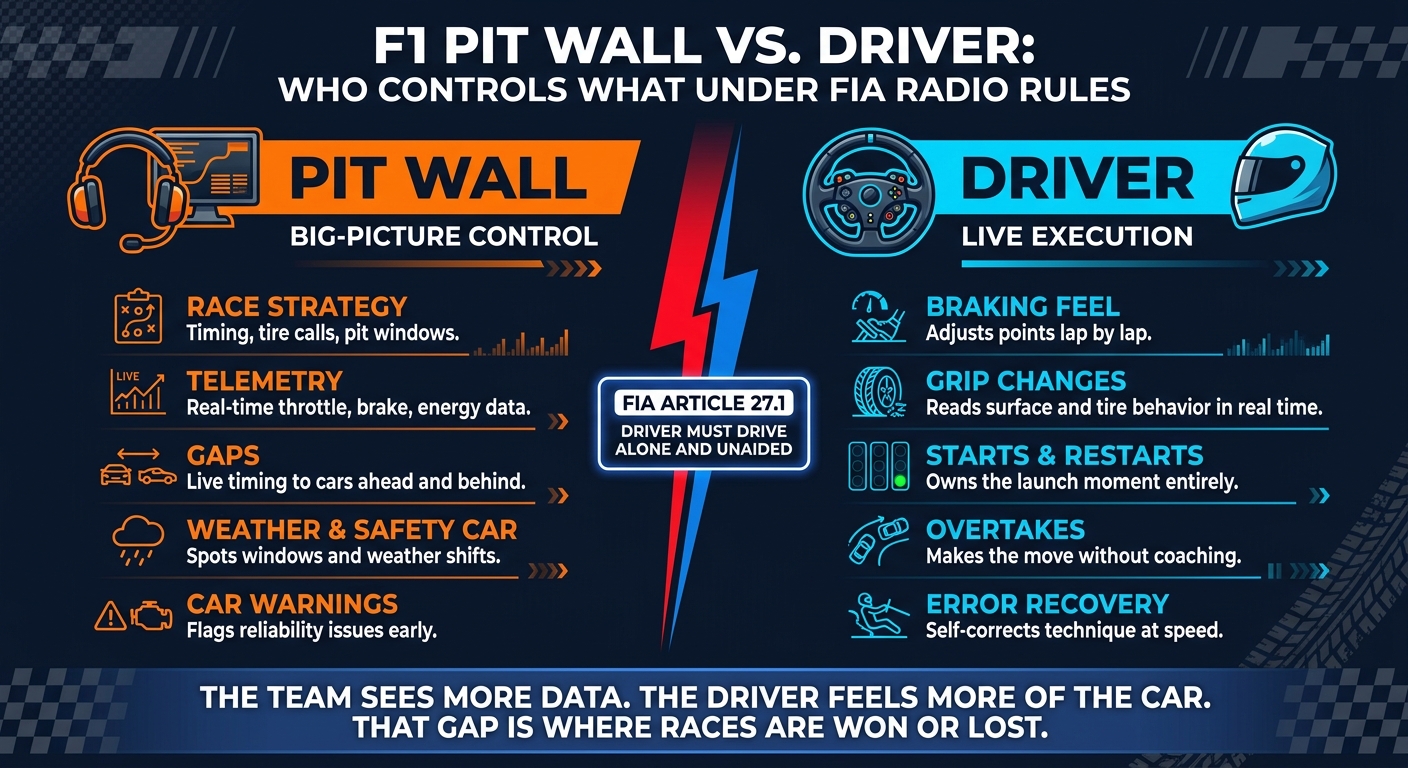
F1 Pit Wall vs. Driver: Who Controls What Under FIA Radio Rules
HOW does Team Radio work in F1?
sbb-itb-7c68254
Quick Comparison
| Area | Pit Wall | Driver |
|---|---|---|
| Race view | Full timing and data view | Limited to what is felt in the car |
| Tire calls | Picks stop window and stint plan | Manages tire feel lap by lap |
| Radio use | Can give facts and race info | Must turn short messages into action |
| Car feel | Sees lap-time loss and telemetry | Feels grip, balance, and brake feel first |
| Fast moments | Can call the plan | Must execute alone |
One fact stands out: an F1 driver can make hundreds of inputs per lap, while the engineer can only send short, rule-limited radio messages. That’s why radio limits do not remove team control. They shift the last part of the job back to the cockpit.
Bottom line: the pit wall handles planning, the driver handles execution. If you want to understand who has the last word under radio limits, it’s the person holding the wheel.
How FIA Radio Rules Split Pit Wall and Driver Roles
FIA radio rules draw a clear line between what the pit wall can say and what the driver has to figure out alone.
The basic idea is simple: the team can pass along certain facts, but it can't coach the driver through every moment of the lap. That split changes how race engineers talk, how drivers manage pressure, and how much decision-making stays inside the cockpit.
On the pit wall side, radio is still used for things like:
- Gaps to cars ahead or behind
- Tire status and stint plans
- Safety Car, VSC, and weather updates
- Car issues or setup-related warnings
- Instructions tied to race procedure
But there’s a limit. Teams can’t use radio as a running guide for driver technique or solve every problem step by step while the car is on track. In plain English, the driver can't be remote-controlled from the garage.
That puts more weight on the person behind the wheel. A driver still has to judge braking feel, grip, energy use, switch settings, and racecraft in the moment. If something feels off, the team may point to the issue, but the driver often has to manage the fix under load, at speed, with very little hand-holding.
You can think of it like this: the pit wall handles the big picture, while the driver handles the live execution.
That split matters because Formula 1 cars are packed with systems, switches, and procedures. Without limits, radio can drift from race communication into lap-by-lap coaching. The FIA rules are meant to stop that, or at least keep it in check.
The result is a more tense back-and-forth. Engineers have to choose words with care. Drivers have to read between the lines, stay calm, and make calls on instinct as much as instruction. Sometimes a short message carries a lot of meaning. Sometimes silence says even more.
Pit Wall vs. Driver: Strengths Under FIA Communication Limits
When radio limits cut down what engineers can say, both sides have to lean harder on what they already do best. That’s where the trade-off stands out. And it puts the main question of this article in plain view: who gets more out of restricted radio coaching?
What the pit wall can still influence
Even with strict radio rules, the pit wall still controls the outside forces that shape a race. Strategy tools keep running lap after lap, pulling in live timing, tire degradation curves, and competitor behavior. Engineers can still call the undercut window, bring a car in, or change the tire plan mid-stint. None of that depends on talking a driver through a corner.
Telemetry gives them another angle. The pit wall can see throttle traces, brake bias shifts, and energy deployment in real time. If a pattern starts to show up - say a driver keeps dropping time in one sector - the engineer can point out the sector without saying exactly how to fix it. That stays inside the rules, and the message still lands.
What the driver must manage alone
On the other end of the radio, the driver has to deal with what the numbers don’t fully show. Grip can change from lap to lap. Tire behavior can shift a little at first, then all at once. A driver who feels that early - and changes braking points, entry speed, or steering load without being told - has an edge that no strategy tool can match.
With less coaching, instinct matters more. So does self-control under pressure. The driver still owns the start, the restart, and the late-race overtake. Those moments move too fast for radio help to matter much anyway, even when radio is open.
Comparison: gains and constraints under communication limits
| Variable | Pit Wall | Driver |
|---|---|---|
| Strategy | Full control - timing, tire calls, pit windows | Executes the call; limited input once the stop is triggered |
| Telemetry | Real-time data access; can flag patterns without coaching | No live data view; relies on feel and engineer cues |
| Grip and feel | Sees the result in lap time, not the cause | Direct read on balance, load, and surface changes |
| Execution | Plans the move; cannot coach it in real time | Owns the start, restart, and overtake moment entirely |
| Error recovery | Can redirect strategy after a mistake | Must self-correct technique without step-by-step guidance |
The limits don’t take power away from the pit wall so much as shift where that power matters most. Strategy and data still sit with the engineers. What changes is the last layer - execution. That’s where driver instinct and self-correction can decide everything. When radio coaching is restricted, the driver who needs the least help stands to gain the most.
Where Communication Limits Change Race Outcomes
These limits show up most clearly when a race flips in an instant.
Radio rules matter most when the track picture changes fast. Safety cars, weather swings, and sudden tire drop-off can turn a solid plan into a scramble. That’s when the gap between what the pit wall knows and what the driver hears starts to shape the result.
Safety Cars, Weather Shifts, and Tire Calls
During a safety car, in mixed weather, or when tires suddenly lose pace, the pit wall can see the bigger picture. The driver can’t. And with radio limits in place, that gap gets harder to close.
The team may spot the best window to pit, see where rivals are stacking up, or notice that the weather radar is turning ugly. But the driver still has to react with only part of that picture. Radio restrictions cut down how much of the pit wall’s read can get through, so the driver often has to make the call earlier and with less context.
That same issue shows up in long-run management too. The radio can warn the driver that something is going wrong, but it can’t talk them through every step of fixing it.
Reliability and Energy Management Under Limited Coaching
Reliability, energy management, and tire saving bring the same tension.
The pit wall can set the plan, map out the targets, and spot trouble before the driver feels it. But once the car is out there, the driver has to carry out that plan with less radio help. In plain English: the team can point to the problem, but the driver still has to handle it alone in the moment.
Conclusion: Where pit wall control ends and driver independence begins
FIA Sporting Regulation Article 27.1 sets the boundary: the driver must drive alone and unaided. The pit wall can feed the driver data, timing, and race plans. The driver has to turn that input into lap time.
That split shows up most clearly when conditions change in a hurry. The issue isn’t influence. It’s remote control. Teams can still shape the race with allowed radio messages about gaps, weather, and car status, but they can’t drive the car from the pit wall. Strategy stays with the team. Execution stays with the driver.
Key takeaways from the comparison
This boundary matters most in the race-defining moments. Think about a VSC window that’s about to close, a tire call that can swing track position, or a reliability problem that forces a driver to change approach mid-stint. In those moments, the divide stops feeling abstract. The team sees the problem first. The driver deals with it at speed, on track.
The pit wall sets the plan. The driver makes it happen.
FAQs
What can F1 teams still tell drivers over the radio?
Under current FIA rules, teams can still use radio for strategy, reliability, car settings, and safety. Engineers can give clear instructions, but the driver has to make every adjustment on their own.
That means radio traffic often covers things like:
- Pit stops
- Tire calls
- Energy use
- Safety warnings
- Updates on position, gaps, and pace
Teams also rely on short code words to keep messages tight and cut down on distractions.
Why does FIA Article 27.1 matter so much during races?
FIA Article 27.1 says the driver must drive the car alone and unaided.
In a race, that rule has a big effect. It blocks teams from using telemetry to control car functions from the pit wall, and it also limits how much step-by-step coaching engineers can give over the radio.
The point is simple: keep the result tied to the driver’s skill and split-second choices in the car. Teams can still communicate, but those radio messages need to be brief and often coded to stay within the rule.
Who really makes the final call: the pit wall or the driver?
In Formula 1, the final call is usually a team decision. The pit wall - led by the Chief Strategist and Race Engineer - makes the main strategy calls using live telemetry, simulations, and competitor modeling.
That said, the driver still has a big say. Their live feedback on tire wear, car balance, and track conditions can shift the plan - or, at times, override it.