Urban vs. Rural F1 Fans: Key Viewership Trends
Urban fans drive F1's digital boom while rural viewers stay loyal yet risk losing access as broadcasts shift to streaming.
Formula 1's U.S. fanbase is booming, with 52 million fans in 2025 and a 135% viewership increase since 2018. But urban and rural fans engage with F1 differently:
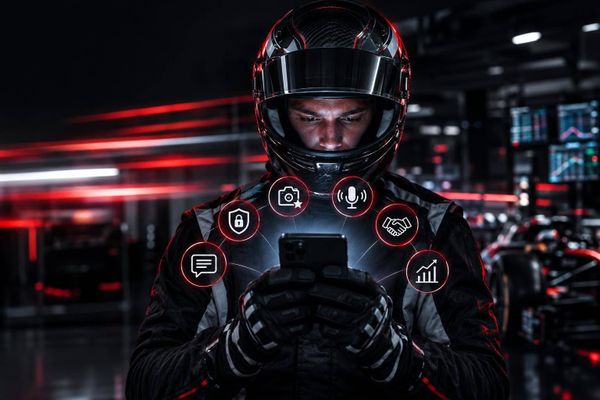
- Urban Fans: Younger, tech-savvy, and drawn to lifestyle content. They consume F1 daily, favor streaming platforms like TikTok and YouTube, and enjoy live events in cities like Miami and Las Vegas.
- Rural Fans: Loyal and focused on race strategy and driver performance. They rely on cable broadcasts but face challenges with streaming due to internet limitations.
Key Stats:
- 70% of Gen Z fans consume F1 content daily.
- Female fans make up 48% of new U.S. fans.
- Urban fans are 84% more likely to engage with luxury and fashion brands.
The 2026 move from ESPN to Apple TV highlights the need to balance urban fans' digital habits with rural fans' access challenges. Tailored strategies for both groups are crucial to F1's continued growth.
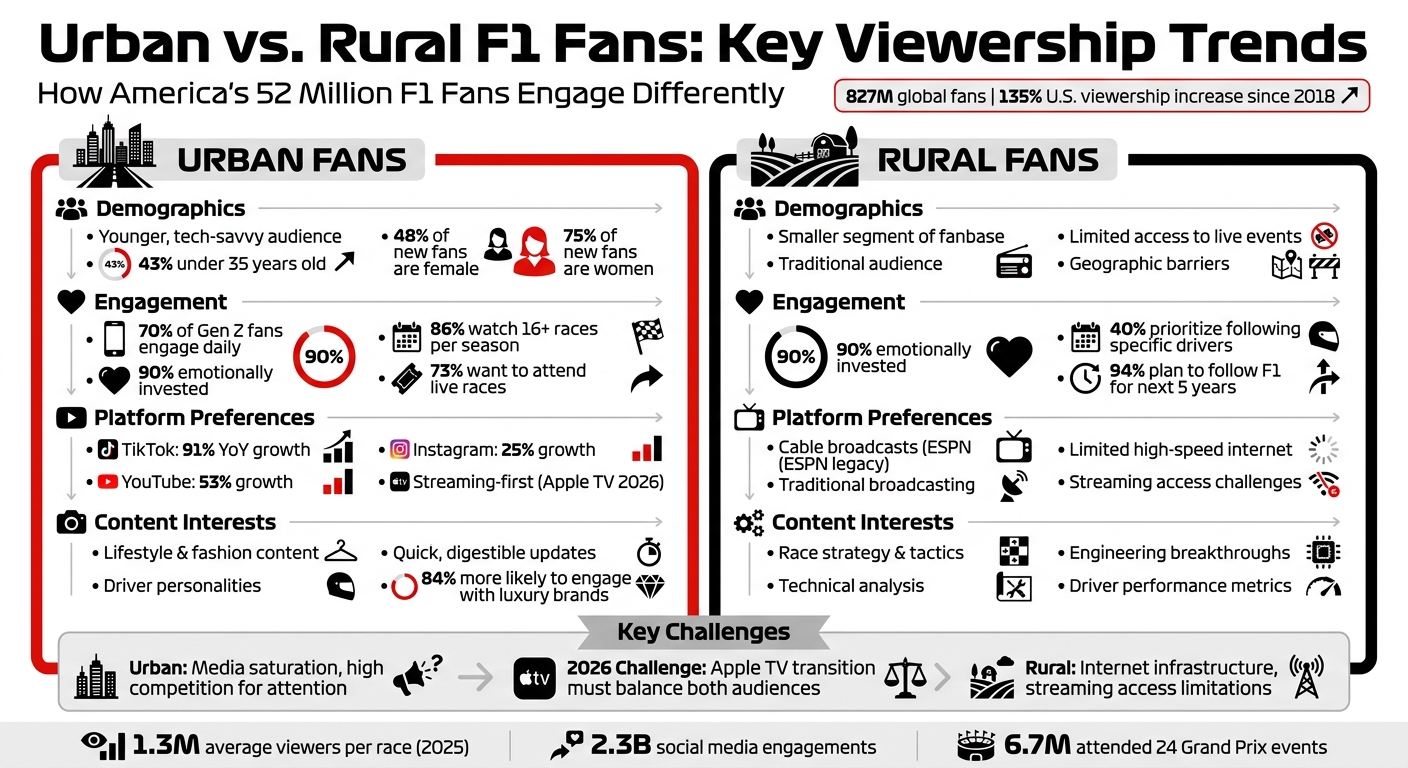
Urban vs Rural F1 Fans: Key Differences in Demographics and Engagement
1. Urban F1 Fans
Urban F1 fans stand out with unique characteristics, ranging from their demographics to their strong digital engagement, creating a distinct profile compared to rural fans.
Audience Size
The majority of F1's American fanbase is rooted in urban areas, where the sport aligns with luxury and fashion trends that resonate with city dwellers. A significant portion - 43% - of F1's fanbase is under 35 years old, with younger fans predominantly found in metropolitan areas. The focus on "destination" races in cities like Las Vegas and Miami has boosted F1's visibility, making these events more accessible to urban audiences. Cities also offer year-round F1-related activities, such as interactive exhibits and arcade installations, keeping fans engaged even outside of race weekends.
Female fans, in particular, show strong engagement in urban settings. They are 84% more likely to browse beauty and fashion websites and 54% more likely to shop at department stores compared to the general population. This urban concentration not only drives attendance at events but also fosters a deeper, ongoing connection with the sport.
Engagement Levels
Urban fans maintain a constant connection to Formula 1, far beyond the race day experience. A striking 61% of fans engage with F1 daily, with this figure climbing to 70% among Gen Z fans. Additionally, 90% of fans report being emotionally invested in the sport, and 86% watch at least 16 races per season. Werner Brell, CEO of Motorsport Network, highlighted this trend, stating:
"Gen Z, women, and US fans are driving an always-on, connected, and culturally powerful era for F1."
Urban fans also show a strong desire to participate in live events. In the U.S., where major urban races like Miami and Las Vegas take place, 73% of fans aim to attend a race in the future. Among those who haven't yet, 41% plan to do so. For many Gen Z fans, Formula 1 carries a sense of status and image, with 70% identifying with the sport's cultural influence.
Platform Preferences
Urban fans, supported by fast digital infrastructure, are fueling F1's social media growth. TikTok leads the charge with an impressive 91% year-on-year growth, followed by YouTube at 53%, Facebook at 51%, and Instagram at 25%. Together, these platforms generated over 2.3 billion engagements in 2025. Streaming services also align with urban viewing habits. For instance, when F1® The Movie became the highest-grossing sports film of all time, earning over $630 million, it quickly topped Apple TV's streaming charts. Meanwhile, Formula1.com saw a 73% rise in unique female visitors, with the 25–34 age group experiencing a staggering 670% surge.
Content Interests
Urban fans are drawn to content that blends racing with lifestyle elements, reflecting their broader consumption habits. Shows like Drive to Survive have brought in new fans while amplifying the influence of drivers. For example, Charles Leclerc's audience grew by 430% since 2023, with his followers showing a strong preference for luxury fashion brands. F1's social media audiences are also far more likely to engage with brands like Longines (30 times more likely) and Cartier (28 times more likely) compared to average users.
Content preferences vary by age. Younger urban fans favor quick, digestible updates on platforms like TikTok and Instagram, while older fans lean toward detailed technical analysis on YouTube. Sprint races have become particularly popular, generating 8% more social mentions and 4% higher reach than standard race weekends. There's also growing interest in the F1 Academy, with 42% of female fans already following the all-female racing series, signaling a demand for more diverse representation in the sport.
sbb-itb-7c68254
2. Rural F1 Fans
Urban fans may have the luxury of live events and an abundance of digital content, but rural fans engage with Formula 1 in a way that's shaped by different circumstances. They represent a smaller segment of America's F1 audience yet remain deeply loyal to the sport, navigating unique challenges to stay connected.
Audience Size
While F1 data doesn't break down fan demographics by geography, the heavy concentration of events and activities in major cities often limits rural fans' access to in-person experiences. Globally, the F1 fanbase hit 827 million by late 2025, reflecting a 12% growth compared to the previous year. In the United States, 73% of fans have expressed a desire to attend a domestic race someday, but for rural fans, distance and accessibility often delay those plans. These barriers contribute to a distinct engagement pattern for this audience.
Engagement Levels
Rural fans are just as engaged as their urban counterparts, embodying the "always-on" approach that defines modern F1 fandom. During the 2025 season, Formula 1 races averaged 1.3 million viewers per race on ESPN networks, a 17% jump from 2024. However, with U.S. broadcasting rights shifting to Apple TV in 2026, rural fans will need reliable high-speed internet to keep up with streaming. Despite these potential hurdles, rural audiences remain committed, tuning in to most races even when connectivity poses challenges.
Platform Preferences
For rural fans, traditional broadcasting and on-demand streaming services are key. ESPN's eight-year run with Formula 1 saw a massive 135% increase in viewership since 2018. As the sport transitions to a new streaming platform, accessibility could become a concern for rural viewers who rely on stable, conventional broadcasting options. These preferences highlight the importance of dependable platforms in keeping rural fans connected.
Content Interests
Rural fans tend to focus on the technical and competitive aspects of Formula 1. While urban audiences often lean toward lifestyle and fashion tie-ins, rural fans are drawn to race strategy, engineering breakthroughs, and driver performance. The sport's growing presence on streaming platforms and its emphasis on storytelling have helped extend its appeal beyond city centers, allowing rural audiences to engage deeply with the competitive side of F1. With 94% of fans planning to follow Formula 1 over the next five years, this focus on the technical elements underscores the long-term passion rural fans have for the sport.
Audience Size and Demographics
Formula 1's global audience has grown to an impressive 827 million fans, reflecting a diverse and dynamic mix of viewers. While there isn’t specific data on the urban versus rural divide, major cities have been pivotal in driving this growth. In U.S. hotspots like Miami, Austin, and Las Vegas, immersive events - ranging from pop-ups to arcade-style venues - have created fan hubs that draw in new audiences and deepen engagement.
The sport's fanbase is becoming younger and more female. Among newer fans, an astounding 75% are women, and nearly half of Gen Z respondents identify as female. The 18–49 age group saw an average of 511,000 viewers per race in 2025, a 24% rise compared to the previous year. Globally, 43% of Formula 1 fans are under the age of 35.
Geographically, China leads the way with 221.1 million fans, followed by India at 78.8 million. Meanwhile, the United States has seen its fanbase grow to 52 million, marking an 11% increase year-over-year. The 2025 season also brought 6.7 million fans to 24 Grands Prix, with 19 of those events completely selling out. These numbers highlight how urban-centric activities and experiences contribute significantly to fan turnout and enthusiasm.
Digital engagement is another key factor, particularly among Gen Z fans in the U.S., where 70% engage daily - well above the global average of 61%. Streaming platforms play a major role in this trend. For example, Apple TV, with over 45 million subscribers, demonstrates how high-speed internet access enables the "always-on" nature of F1 fandom.
"Gen Z, women, and US fans are driving an always-on, connected, and culturally powerful era for F1."
- Werner Brell, CEO, Motorsport Network
While rural fans remain loyal, the sport’s growth is being fueled by urban audiences. This group - marked by its youth, digital connectivity, and increasing female representation - continues to shape the future of Formula 1, highlighting the distinct trends in how different regions engage with the sport.
Engagement Levels and Viewing Habits
F1 fandom is thriving, with 61% of fans engaging with content daily. But when it comes to how fans interact with the sport, urban and rural audiences show distinct patterns shaped by their environments.
In the U.S., urban fans have the upper hand when it comes to digital access. Gen Z, in particular, leads the way with daily interactions, thanks to high-speed internet providing instant access to highlights, behind-the-scenes content, and driver profiles. For rural fans, the experience is a bit different. While they share a similar emotional connection to the sport, they tend to rely more on scheduled live broadcasts rather than the continuous stream of digital content that urban fans enjoy.
Interestingly, rural fans are just as devoted. 90% report being deeply invested in race outcomes, and 86% watch 16 or more races per season. However, their focus often shifts to individual drivers, with 40% prioritizing following specific racers.
Another big difference lies in access to in-person F1 experiences. Urban fans enjoy perks like pop-up events, brand showcases, and interactive activities that enhance their connection to the sport. For rural fans, though, geographic barriers make these experiences harder to reach. Despite this, their enthusiasm remains strong, with 94% expressing a commitment to following Formula 1 over the next five years.
Platform Preferences and Content Interests
The shift from cable to streaming has reshaped how F1 is experienced in the U.S. Starting in 2026, U.S. race broadcasts moved from ESPN to Apple TV, signaling a stronger focus on digital platforms. This transition aligns well with urban audiences, who already rely heavily on streaming services and social media for their F1 content. In fact, 70% of Gen Z fans in the U.S. engage daily with F1 content via streaming and social media, with Instagram, TikTok, and YouTube standing out as key platforms. However, this contrasts with the challenges faced by rural fans, where limited broadband access often keeps them tethered to traditional cable broadcasts.
For urban fans, the ability to stream effortlessly supports the "always-on" F1 culture, where 61% of fans interact with content daily. Meanwhile, rural audiences, constrained by unreliable digital infrastructure, tend to stick to scheduled race broadcasts, making it harder to stay as actively engaged with the sport.
Content preferences also highlight generational and regional differences. Younger, urban fans are drawn to driver personalities and dramatic storylines, with 40% of U.S. fans prioritizing following a specific driver. This has led to a surge in demand for lifestyle content, behind-the-scenes footage, and quick, digestible highlights. On the other hand, older, more traditional fans are more interested in the technical side of the sport. They focus on topics like aerodynamics, tire strategies, and team tactics, favoring detailed race analysis over personality-driven narratives. For these fans, platforms like F1 Briefing deliver in-depth coverage of strategies and technical innovations, catering to their preference for substance over spectacle.
"Formula 1 is no longer just a technically driven sport for male enthusiasts. It's become a global entertainment phenomenon." - Natalie Soutter, Sales Director, Comscore
To bridge the gap, F1 content now spans both ends of the spectrum. Social media creators blend technical insights with lifestyle content, offering something for everyone. Whether it's quick Instagram reels or detailed race breakdowns, the sport's digital reach ensures fans can engage in ways that suit their preferences. However, access remains a key factor, with urban fans enjoying the benefits of seamless streaming while rural audiences face limitations. This divide underscores the need for tailored strategies to connect with fans across different regions and demographics in the U.S.
Pros and Cons
This section dives into the unique strengths and challenges of engaging urban and rural audiences, building on earlier discussions about audience size and digital habits.
Urban audiences bring high commercial value and a strong grasp of digital platforms, making them ideal for collaborations with luxury brands and immersive activations. For instance, urban fans engage with luxury brands like Longines and Cartier at rates 30x and 28x higher, respectively, on social media. Cities also offer opportunities for in-person experiences, such as F1 Arcade venues and pop-up events. A notable example is the Drivers' Parade in Miami, which achieved record-breaking partner content reach. However, urban markets are highly competitive, with media saturation demanding a constant flow of short, engaging content to hold attention.
On the other hand, rural audiences may lack access to physical events but make up for it with deep emotional connections. A striking 90% of surveyed rural fans reported being emotionally invested in race outcomes. Their engagement relies heavily on digital platforms, highlighting the importance of high-quality streaming services. Yet, infrastructure challenges often limit the "always-on" connectivity that urban fans enjoy.
Here’s a quick look at the key differences between urban and rural audiences:
| Aspect | Urban Audiences | Rural Audiences |
|---|---|---|
| Commercial Value | Strong affinity for luxury, fashion, and beauty brands | Preference for traditional automotive and energy brands |
| Access | In-person activations | Digital-only access through streaming and social media |
| Engagement Style | Frequent consumption of short, daily content | Focused engagement during race weekends |
| Content Preference | Driver personalities and lifestyle stories | Technical analysis and race strategies |
| Infrastructure | High-speed internet and seamless streaming | Limited broadband, often reliant on cable |
Urban audiences benefit from superior digital access, while rural fans may face connectivity hurdles, relying more on traditional cable. These differences emphasize the need for tailored digital strategies that cater to both urban innovations and rural accessibility. Sponsors play a vital role in enhancing the F1 experience for both groups, ensuring engagement across diverse fan bases.
Conclusion
Formula 1's massive global fanbase of 827 million reflects a variety of audience preferences that demand tailored engagement strategies. Urban fans often gravitate toward daily digital content and luxury brand collaborations, while rural fans - many of whom have limited access to live events - show a deep emotional connection to the sport.
To cater to these differences, F1's approach to content delivery continues to evolve. The upcoming Apple TV broadcasting model, set to launch in 2026, is a prime example. By offering free practice and qualifying sessions while keeping race-day access premium, this strategy aims to lower barriers for rural fans while addressing the digital consumption habits of urban viewers. The effectiveness of F1’s digital outreach is clear, with TikTok engagement up by 91% and YouTube viewership growing by 53%.
Sponsors also play a crucial role in enhancing the fan experience. With 76% of fans believing that partnerships improve their connection to the sport and 40% of Gen Z fans more likely to buy from F1 sponsors, crafting sponsorships that resonate with diverse audience segments is essential.
Content creators further amplify engagement by focusing on storytelling. As Stefano Domenicali, President & CEO of Formula 1, puts it:
"The sport is embedded in culture now, via streaming, storytelling, and social media, and that's helping more people connect".
Looking ahead, F1 can strengthen its global community by combining frequent digital content for urban fans with accessible race-day options for rural audiences. With 94% of fans planning to follow the sport over the next five years, the potential for deeper connections is immense. By aligning technological advancements with the unique needs of its diverse audience, F1 can continue to expand its global reach while honoring the different ways fans experience the excitement of the sport.
FAQs
How will the 2026 Apple TV switch affect rural viewers?
The upcoming shift to Apple TV in 2026 could pose challenges for rural Formula 1 fans, especially those without reliable high-speed internet. If streaming fully replaces traditional TV broadcasts, viewers in these areas might struggle to stay connected to the sport. That said, if Apple TV offers widespread availability and budget-friendly plans, it has the potential to bring Formula 1 to more people, particularly younger, tech-oriented audiences who are already drawn to the sport's evolving digital presence.
Why do urban fans prefer lifestyle content over technical analysis?
Urban audiences tend to gravitate toward lifestyle content in Formula 1, drawn more to the entertainment, personalities, and human stories than the technical side of the sport. Shows like Netflix's "Drive to Survive" have played a big role in this shift, making F1 feel more relatable and accessible. Social media platforms further fuel this trend by spotlighting fashion and personal narratives, catering to urban fans who crave a richer, more entertainment-focused experience rather than just the technical intricacies of racing.
What can F1 do to keep rural fans engaged with limited internet?
F1 can connect with rural fans who have limited internet access by focusing on offline engagement. This could include expanding TV broadcasts, introducing radio coverage, and distributing printed materials like schedules or race summaries. Hosting local events or viewing parties can create shared experiences, while community activities tied to F1 themes can strengthen bonds with the sport.
Additionally, providing physical content such as magazines, posters, or collectibles can keep fans engaged. Tailoring materials to reflect local traditions and interests ensures fans feel valued and included, even without constant digital access. These efforts can help sustain enthusiasm and loyalty among rural audiences.