2006 Monaco GP: Red Bull Claims First Podium
A midfield team turned seventh on the grid into its first F1 podium at Monaco through strategy and rivals' misfortune.
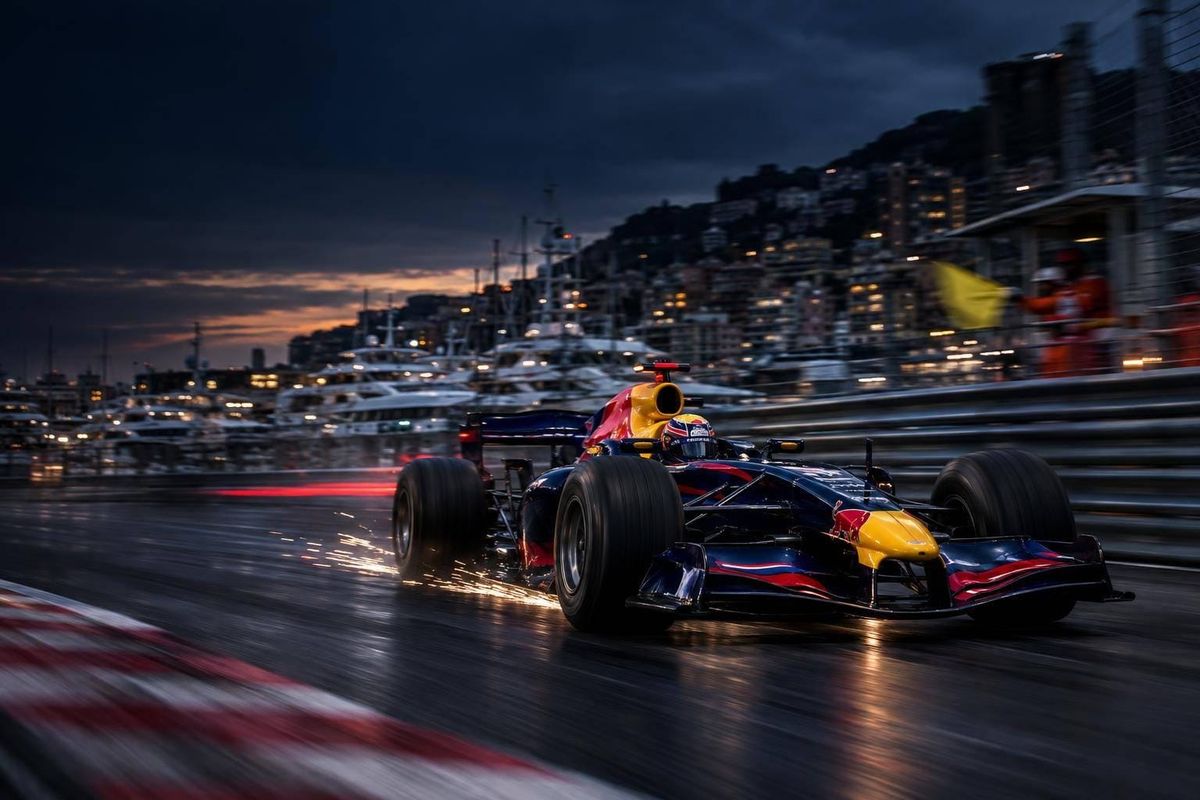
David Coulthard earned Red Bull Racing’s first podium at the 2006 Monaco Grand Prix, finishing third after starting seventh. The result came on May 28, in the team’s second Formula 1 season.
The path to third wasn’t about top-three pace. Grid penalties improved his starting position, rear-tire wear forced a Lap 29 pit stop, and rivals’ retirements and a pit-lane penalty moved him forward. Jarno Trulli’s retirement on Lap 74 delivered the final place Coulthard needed.
At a track where passing is difficult, staying in contention paid off.
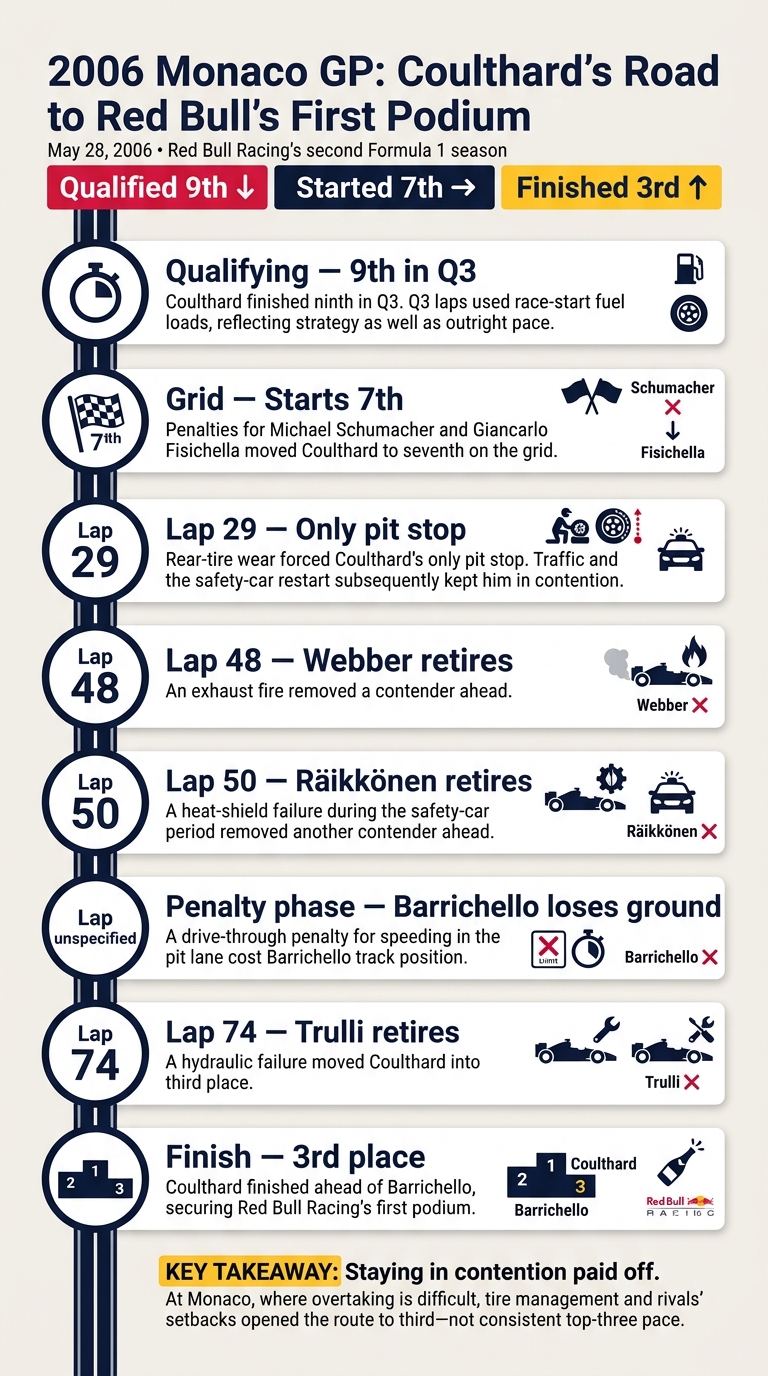
2006 Monaco GP: Coulthard’s Road to Red Bull’s First Podium
The Answer is Monaco 2006... What is the Question? 🤔
sbb-itb-7c68254
Qualifying: How Coulthard Secured Seventh on the Grid
Coulthard’s track-position advantage began in qualifying. He finished ninth in Q3 but moved up to seventh on the grid after penalties for Michael Schumacher and Giancarlo Fisichella.
Qualifying Times, Fuel Loads, and Grid Penalties
Under the 2006 knockout format, drivers usually ran Q1 and Q2 laps with lighter fuel loads. In Q3, they carried their race-start fuel loads, so Coulthard’s ninth-place lap reflected strategy as well as outright pace.
Starting Position Versus Car Pace
Starting seventh put Coulthard ahead of most midfield traffic and within reach if drivers ahead suffered strategy mistakes or reliability problems. It gave Red Bull a solid starting point, with race strategy and pit timing still to decide the result.
Race Strategy: Coulthard’s Pit Stop
After starting seventh, Coulthard had to pit on Lap 29 because of rear-tire wear. Protecting his position mattered more than outright pace - any time lost in the pits would be hard to make up.
Traffic and the safety-car restart kept him in contention after the stop, close enough to take advantage when rivals ran into trouble later in the race.
Rival Setbacks Open the Path to Third
Mechanical Failures and Barrichello’s Penalty
After his Lap 29 pit stop, Coulthard needed rivals to drop out or lose ground. Webber retired on Lap 48 with an exhaust fire. Räikkönen followed on Lap 50 with a heat-shield failure during the safety-car period. Barrichello then lost track position to a drive-through penalty for speeding in the pit lane. Each setback moved Coulthard forward without a pass on Monaco’s narrow streets.
Trulli’s Late Retirement Gives Coulthard Third
Trulli’s hydraulic failure on Lap 74 handed Coulthard third place. With so few chances to overtake at Monaco, that retirement mattered more than raw pace. Coulthard held third to the flag.
Timeline: From the Start to the Podium
| Lap or phase | Event and effect |
|---|---|
| Start | Coulthard starts seventh on the grid |
| 29 | Coulthard makes his only pit stop |
| 48 | Webber retires with an exhaust fire, removing a contender ahead |
| 50 | Räikkönen retires with a heat-shield failure during the safety-car period |
| Penalty phase | Barrichello’s drive-through for pit-lane speeding costs him track position |
| 74 | Trulli retires with a hydraulic failure, moving Coulthard into third |
| Finish | Coulthard finishes third ahead of Barrichello, securing Red Bull’s first podium |
Conclusion: How Red Bull Turned Its Chance Into Third
Coulthard turned seventh on the grid into Red Bull’s first podium by managing tire wear through his Lap 29 stop and staying close enough to gain places as rivals retired or received penalties.
What the Podium Proved - and What It Did Not
The result showed Red Bull could adjust its race plan under pressure and take advantage when rivals faltered. But the podium depended on Monaco-specific conditions - not consistent top-three pace.
FAQs
How did Q3 fuel rules affect Coulthard’s strategy?
The provided sources don’t explain how Q3 fuel rules shaped David Coulthard’s strategy at the 2006 Monaco Grand Prix. Those sources alone aren’t enough to answer the question.
Why was a one-stop strategy valuable at Monaco?
A one-stop strategy made sense at Monaco, where the short, tight layout makes on-track overtaking nearly impossible. Track position comes first, so fewer pit stops mean less time lost in the pit lane - and less risk of losing places or getting stuck in traffic after rejoining.
Did this podium signal a breakthrough for Red Bull?
Yes, the 2006 Monaco Grand Prix marked Red Bull’s first-ever Formula 1 podium - a major step in the team’s development. On a circuit where overtaking is notoriously difficult, holding track position showed how well-timed race strategy and precise execution could help Red Bull compete with faster rivals.