Budget Allocation for Pit Stop Improvements
Shows why crew training delivers the best pit-stop gains under the FIA cost cap, with equipment second and analytics third.
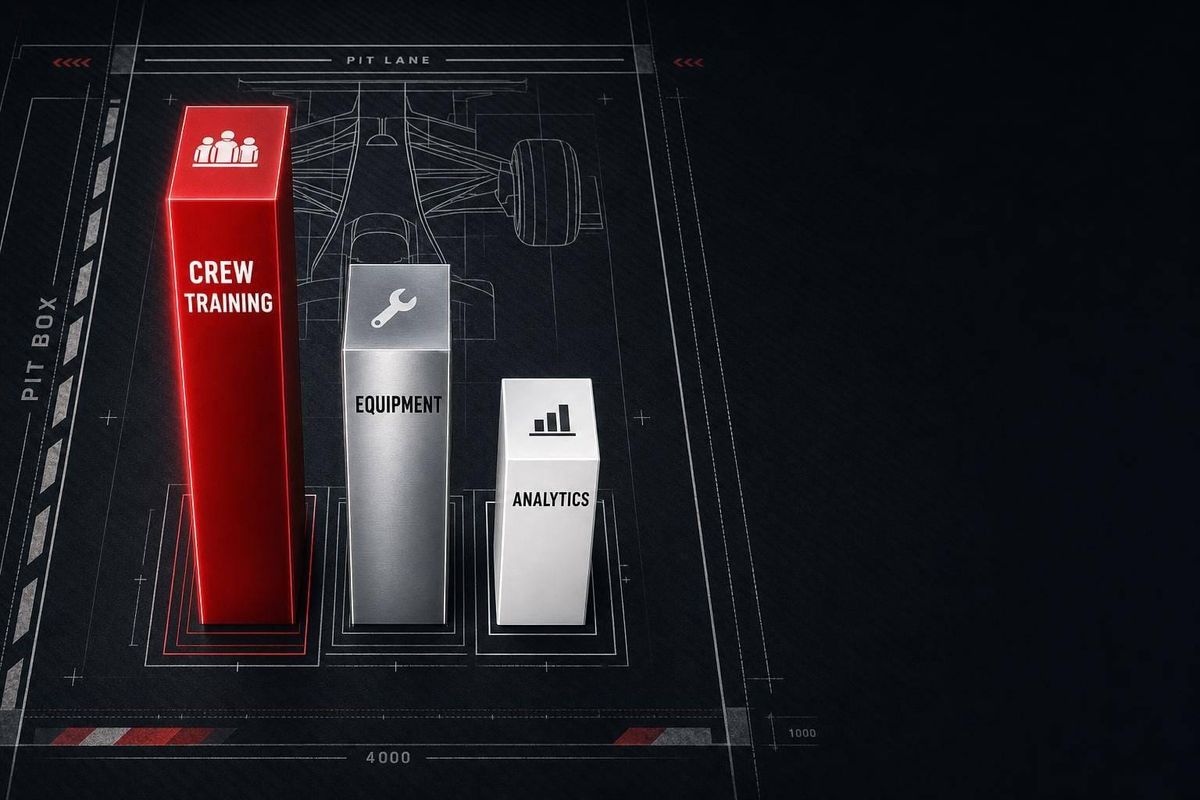
Faster pit stops do not always come from bigger spending. From what I see here, the best return under the FIA cost cap comes from crew training first, equipment second, and data work only when it helps race calls.
If you want the short answer, here it is:
- Red Bull is still the pit-stop benchmark because it keeps both speed and low error rates
- Mercedes puts more of its budget into the car, so its stops are solid but not field-leading
- Ferrari gets a lot from high practice volume and tight process control
- McLaren blends crew prep with select hardware and owns the 1.80-second record
- Aston Martin leans toward repeatable stops over chasing the lowest single time
- Williams has the least room to spend, so it must focus on clean execution per dollar
What matters most is simple: teams are not just buying pit-stop speed. They are deciding whether a gain of a few tenths in the pit lane is worth more than work on aero, chassis, reliability, and tire use.
Quick comparison
| Team | Main budget lean | Pit-stop pattern | Main trade-off |
|---|---|---|---|
| Red Bull | Pit stops treated as core performance spend | Fast and steady | Keep pit edge without cutting car progress |
| Mercedes | Car development over pit-lane push | Strong average, lower peak | Protect lap-time gains elsewhere |
| Ferrari | Training, repetition, role coverage | High return from process | More crew work means less room for car work |
| McLaren | Crew prep plus select hardware | Very fast ceiling, controlled risk | Spend enough for near-clean stops, not extra stop-heavy plans |
| Aston Martin | Repetition and physical prep | Midfield pace, few big misses | Give up some peak speed for cleaner race-day work |
| Williams | Low-cost process gains | Focus on avoiding errors | Every pit-stop dollar competes hard with car upgrades |
In short, I’d frame the whole article this way: the best pit-stop budgets cut mistakes and variation, not just raw time. The sections below show how each team makes that trade under the same cap.
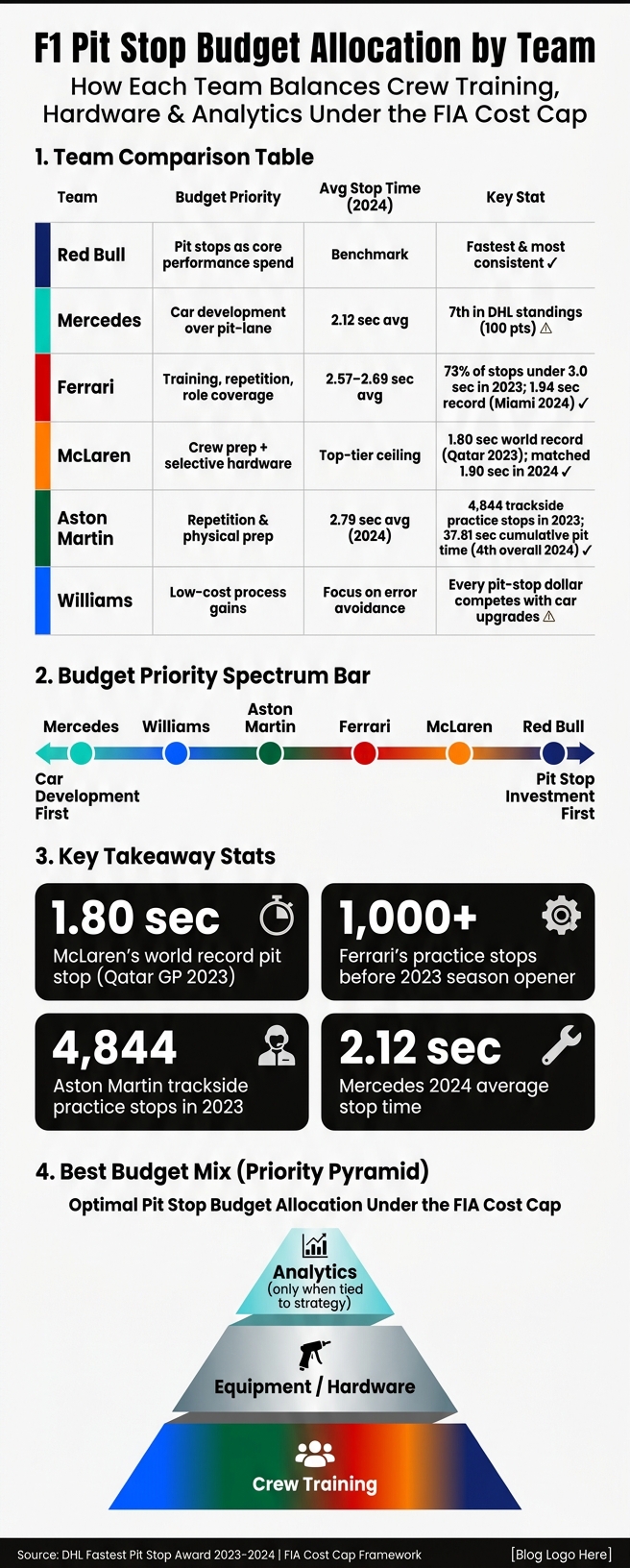
F1 Pit Stop Budget Allocation by Team: Speed vs. Strategy
1. Red Bull Racing
Budget Focus
Red Bull sets the bar for pit stop speed in Formula 1. Every team working under the FIA cost cap has to make trade-offs. If money goes into pit stops, that same money can't go into car development. Red Bull has stood out because it treats pit stop execution as a core part of performance, not just a support function.
That's the big difference. The team hasn't just found speed in the pit lane. It's managed to keep those stops fast and reliable without squeezing the budget for the car itself. In a sport where every dollar has a job, that balance is hard to pull off.
That standard becomes the target for everyone else. Red Bull's job isn't only to stay fast. It's to keep that edge without weakening the rest of its car-development spend. The teams that come next show just how hard that is under the same cap.
sbb-itb-7c68254
2. Mercedes
Budget Focus
Mercedes treats pit-stop work as a lower budget line than car development. It still pays for crew training, equipment, and telemetry review, and the team runs about 60 practice stops with 22 crew members on each race weekend. But every dollar spent here goes up against aero and chassis work.
That puts Mercedes in a different spot from Red Bull. Instead of going all-in on pit stops, Mercedes spends with more restraint to protect lap-time gains in other parts of the car.
Pit Stop Performance
That spending choice leads to stop times that are strong, but not at the top of the field. In 2024, Mercedes averaged 2.12 seconds per stop, slower than Red Bull and faster than Ferrari.
The DHL Fastest Pit Stop standings tell the same story. Mercedes ended the 2024 season in 7th place with 100 points.
Consistency and Risk
You can see that same trade-off in how Mercedes handles risk. Season data shows the team leans toward repeatability instead of chasing the absolute fastest single stop.
That approach also lines up with lessons from past failures. One clear case was Valtteri Bottas' 2021 Monaco Grand Prix wheel-nut issue, which pushed home the need for clear visual and auditory checks, conservative release rules, and extra margin in the stop process.
Cost-Cap Trade-Offs
Under the cost cap, Mercedes weighs pit-stop spending against aero and chassis gains. The team backs aero gains, which add up every lap, instead of putting more money into smaller gains in the pit lane.
That choice makes Mercedes rely more on race pace and tire management than on hard undercut moves. The program is built with reliability first and speed second.
3. Ferrari
Budget Focus
Ferrari sits in the middle ground between Mercedes’ restraint and Red Bull’s all-out push for pit-lane speed. Its budget leans toward repetition, role flexibility, and clean execution.
Under Frédéric Vasseur, Ferrari aimed for 1,000 practice stops before the 2023 season opener. That says a lot about the team’s approach: more work on training, less on a big equipment outlay. Ferrari also used cross-training so crew members could step into more than one job when needed.
The team tracks every stop against a strict internal scale. A stop under 3.0 seconds is very good, 3.0–3.5 seconds is acceptable, 3.5–4.0 seconds is poor, and anything above 4.5 seconds counts as a failure. That kind of system shows a team focused on process, not guesswork.
Pit Stop Performance
The results showed up on track. Ferrari recorded a 1.94-second pit stop in Miami in 2024, one of its first sub-2.0-second stops on 18-inch wheels. It also produced several low-2.1-second stops in 2023, including in Jeddah.
Across 2024, Ferrari averaged about 2.57–2.69 seconds per stop, with many clustered in the 2.27–2.40-second range. In 2023, the team averaged about 2.90 seconds per stop and finished second in the DHL Fastest Pit Stop Award standings, behind Red Bull.
Fast stops look great on paper. The harder part is doing them when the race is tense and one small mistake can wreck the whole plan.
Consistency and Risk
Ferrari got better on that front too. In 2023, 73% of its pit stops came in under 3 seconds. That was above Red Bull’s 71%, though still short of Ferrari’s own 80% target.
Under the cost cap, that’s a strong return from a modest spend on training and process control. Still, there’s no free lunch. Every bit of work poured into pit stops is work and money that can’t go into car development. Even so, Ferrari’s crew ranks among the most reliable in the field, while Red Bull still holds the edge on outright pace.
Ferrari’s setup is a good case of high return without top-tier spend in the pit lane.
4. McLaren
Budget Focus
McLaren takes a different route from Ferrari. Instead of leaning hard on a training-first model, it blends crew development with selective hardware work. Even so, the bigger share goes to people. Training starts in January and continues through pre-season, with the goal of building enough depth that the strongest crew is ready to race.
That choice makes sense under the cost cap. McLaren puts money into the crew first because clean, repeatable execution tends to pay back faster than chasing gains through gear alone. Physical prep also matters here. Crew members train with strength and conditioning staff at the Optimum Nutrition McLaren Performance Hub so they can handle the strain of repeated high-intensity stops over a long season.
McLaren still invests in equipment. Its 1.80-second record stop depended on tuned jacks, wheel guns, and a pit-box layout built to trim tiny delays. The idea is simple: hardware helps the crew do its job better. It doesn't replace the crew.
Pit Stop Performance
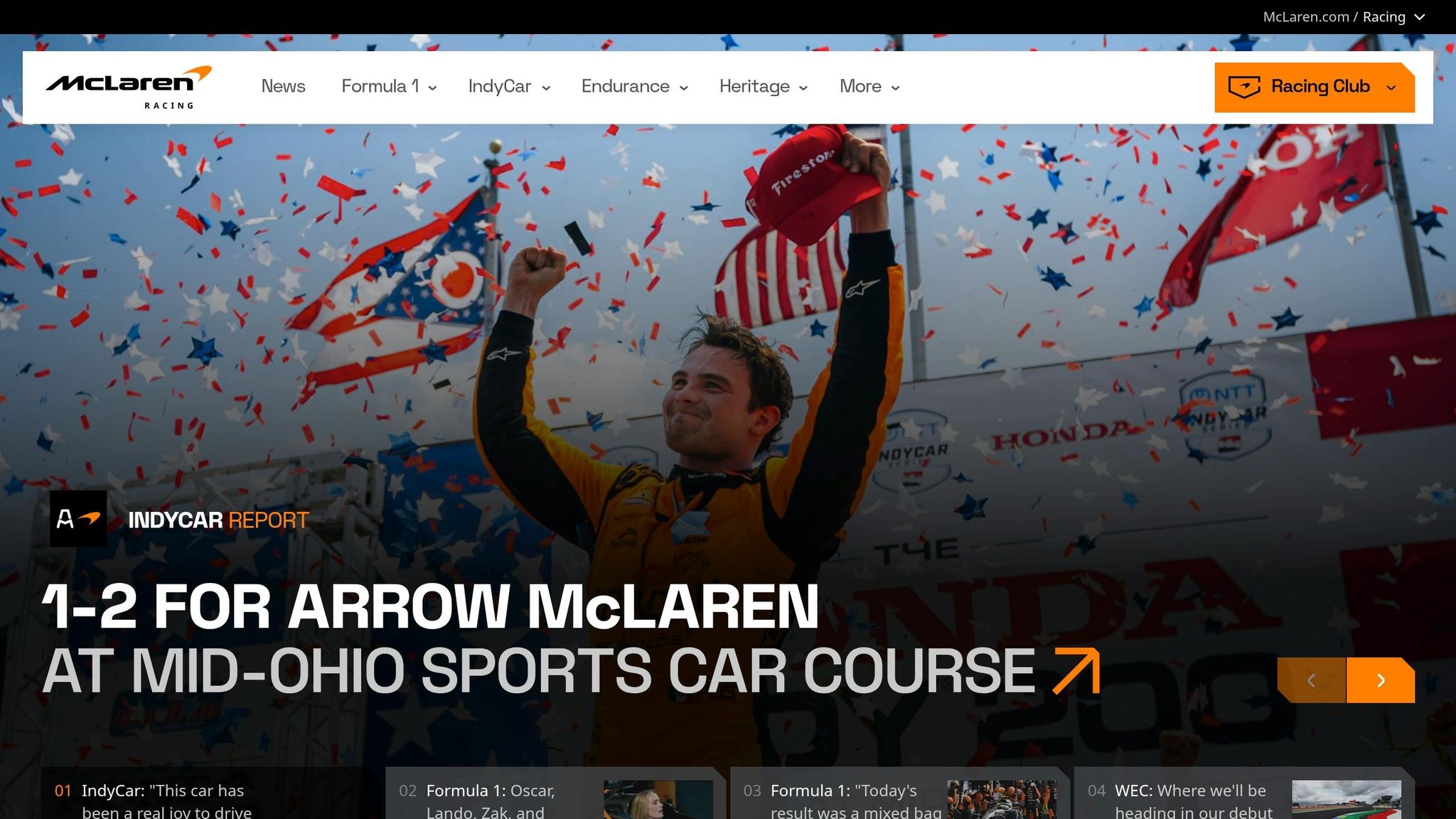
The results line up with that spending. At the 2023 Qatar Grand Prix, Lando Norris recorded a 1.80-second stop, the fastest pit stop in Formula One history. That mark was still standing as of mid-2026.
McLaren backed that up in 2024 by matching Red Bull's fastest single stop of the year at 1.90 seconds. So the Qatar stop wasn't just a lightning strike. It pointed to a system that could deliver again.
Across the 2023 season, McLaren placed six stops in the top ten fastest of the year, split evenly between Norris and Oscar Piastri. That's a strong sign that the pace came from the process, not from one standout moment or one standout crew.
Consistency and Risk
McLaren doesn't chase records at any cost. The team cares more about hitting the mark over and over again. Practice volume is treated like something the team can control: more repetitions when the crew changes, fewer when fatigue becomes a bigger risk.
At hot and humid races like Singapore, McLaren cuts back the number of practice stops on purpose. The aim is to manage fatigue and lower the odds of a slow stop or a mistake when the race is on the line. When errors show up, the team studies them and adjusts the process before race day.
Cost-Cap Trade-Offs
Under the cost cap, McLaren sees pit stop work as a relatively cheap way to gain time. Training, rotation, and conditioning can improve performance across an entire race weekend without the kind of spend tied to bigger car-development programs.
Still, the team doesn't let pit crew speed push strategy too far. Internal modeling says a multi-stop race plan needs to show at least a six- to seven-second gain on paper before McLaren will take that route. Extra stops burn through tire allocations and add more things that can go wrong. So the budget logic is pretty clear: spend enough to make each planned stop close to perfect, but don't let fast stops tempt the team into strategy calls the numbers don't support.
That puts McLaren in the middle of the field for this discussion: not as extreme as the biggest spenders, but far from the tighter limits faced by smaller teams.
5. Aston Martin

Budget Focus
Like McLaren, Aston Martin puts a lot of its pit-stop spend into people. But there’s a slight twist: this team seems more focused on repetition than on chasing flashy one-off times.
That shows up in the workload. In 2023, Aston Martin practiced 4,844 pit stops trackside, with more sessions at its Silverstone campus over the winter break. Pit crew members also spend a lot of time in the gym before the season starts, with strength and conditioning built into the plan.
The team’s broader $250 million Silverstone campus investment helps support that setup, but the pit-stop side still looks centered on people, drills, and physical prep more than extra hardware.
Pit Stop Performance
The results point to a team that has settled into the middle tier.
In 2023, Aston Martin averaged 3.08 seconds per stop. That ranked the team fourth overall, behind Red Bull, Ferrari, and McLaren, but ahead of Mercedes.
By 2024, independent analysis put Aston Martin’s average at 2.79 seconds, which kept it firmly in the middle of the field and ahead of Haas, Williams, and Sauber. Aston Martin also has not posted a stop faster than 2.30 seconds, which suggests the team isn’t pushing for the outer edge of pit-lane risk.
Consistency and Risk
Aston Martin’s crew turned in clean stops through 2023, with few major pit-lane mistakes. That steadiness mattered in races like Abu Dhabi, where Fernando Alonso finished P7 and Lance Stroll P10 while the team handled split strategies cleanly.
There’s more proof in the full-season numbers. In 2024, Aston Martin’s cumulative pit time came to 37.81 seconds, good for fourth overall and ahead of McLaren’s 40.96 seconds. For a team that isn’t known for record-setting stops, that’s a strong return.
Cost-Cap Trade-Offs
Under the cost cap, this approach makes sense. Training volume and physical prep cost less than major car development work, yet they can still trim average stop times and cut down on mistakes.
So the trade-off is pretty clear: accept a small gap to the top crews in exchange for fewer errors and less risk on race day.
That fits Aston Martin’s budget logic. The team appears to spend for consistency, not for record-chasing risk. Put money into training and process, stay clean in the pit lane, and send the rest of the budget toward car development. Williams shows how much tougher that same balancing act gets when the budget is smaller.
6. Williams
Budget Focus
Williams has less room to spend, so every pit-stop dollar needs to show up on the stopwatch. The team has to get the most time back for every $1 spent. That means putting money into repetition, deeper role coverage, and faster data review instead of hardware-heavy upgrades.
Pit Stop Performance
The biggest gains for Williams come from cleaner execution and faster data review. In plain English: smoother stops, fewer small mistakes, and quicker feedback after each run.
Consistency and Risk
For Williams, avoiding penalties and slow releases matters more than chasing tiny speed gains that are hard to repeat. A stable, clean stop is worth more than a one-off flash of pace that falls apart under pressure.
Cost-Cap Trade-Offs
Even with more room under the cap, Williams still has to weigh pit-stop work against other car upgrades. That makes Williams a clear example of the spending trade-offs compared in the next section.
How F1 Teams ACTUALLY Spend $350M a Year (ft. Guenther Steiner)
Pros, Cons, and Returns by Spending Type
Pit-stop spending doesn't pay back the same way for every team. A front-runner and a midfield team can put similar money into pit operations and get very different results. Why? Because team strength and cost-cap pressure change what that money actually fixes - stop-time consistency, release mistakes, and repeatability all shift depending on where a team sits on the grid.
For the teams at the front, the logic is pretty direct. Russell Braithwaite, CFO of Mercedes-AMG Petronas F1 Team, said it plainly:
"We always want to be spending what's available for performance in the belief that there's lap time behind all of those dollars."
That mindset helps explain why Mercedes leans on real-time analysis and tight inventory control. For them, data isn't just there to track spending. It's part of how the team chases performance in the moment.
Midfield teams deal with the same issue, but with less room for error. The big call is whether pit-stop investment beats what that same money could do in car development. Sometimes it does. Sometimes it doesn't. In this part of the grid, pit-stop spending tends to make more sense when it cuts mistakes and improves consistency, not when it's expected to deliver a huge one-off time gain. The cost cap pushes that trade-off even harder, since hardware and infrastructure now hit the cap more than they used to.
The three spending types below show where teams tend to get the most back.
| Spending Type | Front-Runner Perspective | Midfield Perspective | Best Return |
|---|---|---|---|
| Post-Stop Analytics | A must for finding small gains and keeping spending tightly aimed. | Helpful for spotting easy fixes, but that same budget may do more in aero or mechanical work. | Highest for teams already strong across the rest of the car |
| Hardware / Inventory | Helps reliability, but depreciation now counts against the cap. | Matters for basic consistency, though the upfront cost can squeeze other development work. | Best when a team has already removed major operational weak spots |
| AI-Driven Simulation | Can make performance spending faster and more efficient, but it depends on good data and specialist partnerships. | May cut the need for physical testing, but the setup cost is tough to justify. | Strongest for teams with the technical depth to support it |
The best returns usually come from spending that sharpens decisions and cuts execution mistakes. After that, the key issue becomes which teams can turn each type of spend into lap time.
Conclusion
Across the grid, the pattern stays the same: pit-stop gains come from cutting variance, not from paying for raw speed. The big takeaway is simple. More spending does not guarantee faster pit stops. The best-funded teams still win by getting three basics right: they cut variation and mistakes, keep error rates low, and treat the pit stop as part of race strategy instead of a stand-alone task.
Red Bull is still the benchmark, while Williams remains well back. McLaren and Aston Martin have pushed closer to the front by improving their processes.
That points straight to the best budget mix under the cost cap: put crew training first, equipment second, and analytics third. Analytics only pays when it shapes strategy - undercuts, safety car windows, and tire-life calls - not when it sits off to the side as its own function. That’s the main trade-off running through the whole article: pit-stop spend versus car-development spend. Every $1 put into the pit lane is $1 not going into aero or chassis work, so the payoff needs to be clear and repeatable.
The biggest returns come from crew-led development, then from balanced crew-and-equipment programs, then from analytics tied straight to strategy. The most efficient teams per dollar - Red Bull and, more and more, McLaren - have narrowed their spending to the exact constraints that cost them time. The best pit-stop budgets go after the specific sources of lost time.
FAQs
Why is crew training the top pit-stop investment?
Crew training is the top pit-stop investment because steady execution gives teams more room to make race-day calls. Going after sub-2.0-second stops can lead to more mistakes, but hard training and reaction drills help crews hit reliable, repeatable times.
Cutting 0.3 to 0.5 seconds from a stop can open race-shaping gaps for moves like the undercut. When the line between a great stop and a painful delay is that thin, teams lean on human performance under pressure.
When does pit-stop spending beat car development?
Pit-stop spending can beat car development when technical limits cap what the car can gain, and those upgrades save less time than a sharper stop in the pit lane.
If pit-lane time loss is too high to make aggressive undercut or overcut moves work, teams may get more from better pit-crew reliability, faster calls on the pit wall, and sub-2.5-second stops.
Why do some teams choose consistency over record pace?
Teams often choose consistency over all-out pit stop speed. That makes sense over the course of a championship, where reliability tends to matter more than one headline-grabbing stop.
A sub-2.0-second stop looks great on screen. But chasing that kind of pace can also increase the chance of mistakes, and those mistakes can cost far more time than a team would save with one blistering stop.
In practice, steady stops in the 2.0- to 2.5-second range usually give teams more room to work with. They make it easier to hit target pit windows, stick to the race plan, and adjust strategy without adding extra risk. And in many cases, that matters more than pulling off the occasional ultra-fast stop.