What F1 Sporting Directors Do on Race Weekend
How F1 sporting directors manage compliance across a race weekend: planning, parc fermé control, race procedures, and post-race checks.
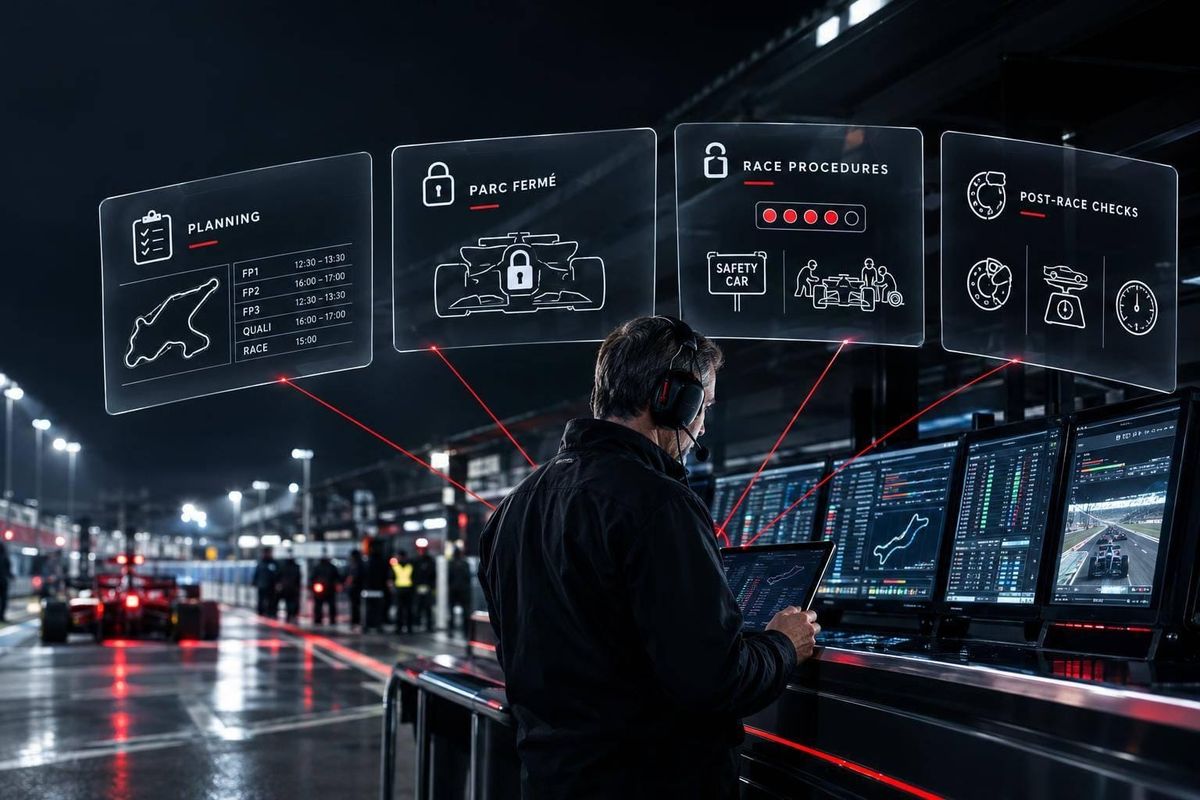
An F1 sporting director keeps the team’s race weekend within the rules - from Thursday planning to Sunday’s post-race checks. I’d sum up the job in three steps: assign each task, confirm what’s allowed, and keep records of decisions.
Here’s how that work changes across the weekend:
- Thursday: Turn FIA instructions into a team schedule, with an owner and deadline for each task.
- Friday and Saturday: Track incidents, handle FIA messages, and check what work is allowed under parc fermé restrictions.
- Sunday: Confirm grid, start, and pit-lane procedures; respond to safety cars and red flags; and manage inspections, hearings, or protests.
- After the race: Review mistakes and assign fixes before the next event.
The distinction I’d keep in mind: engineers and race planners chase performance. The sporting director helps confirm <u>what the team can legally do</u> - and makes sure everyone gets the same instruction.
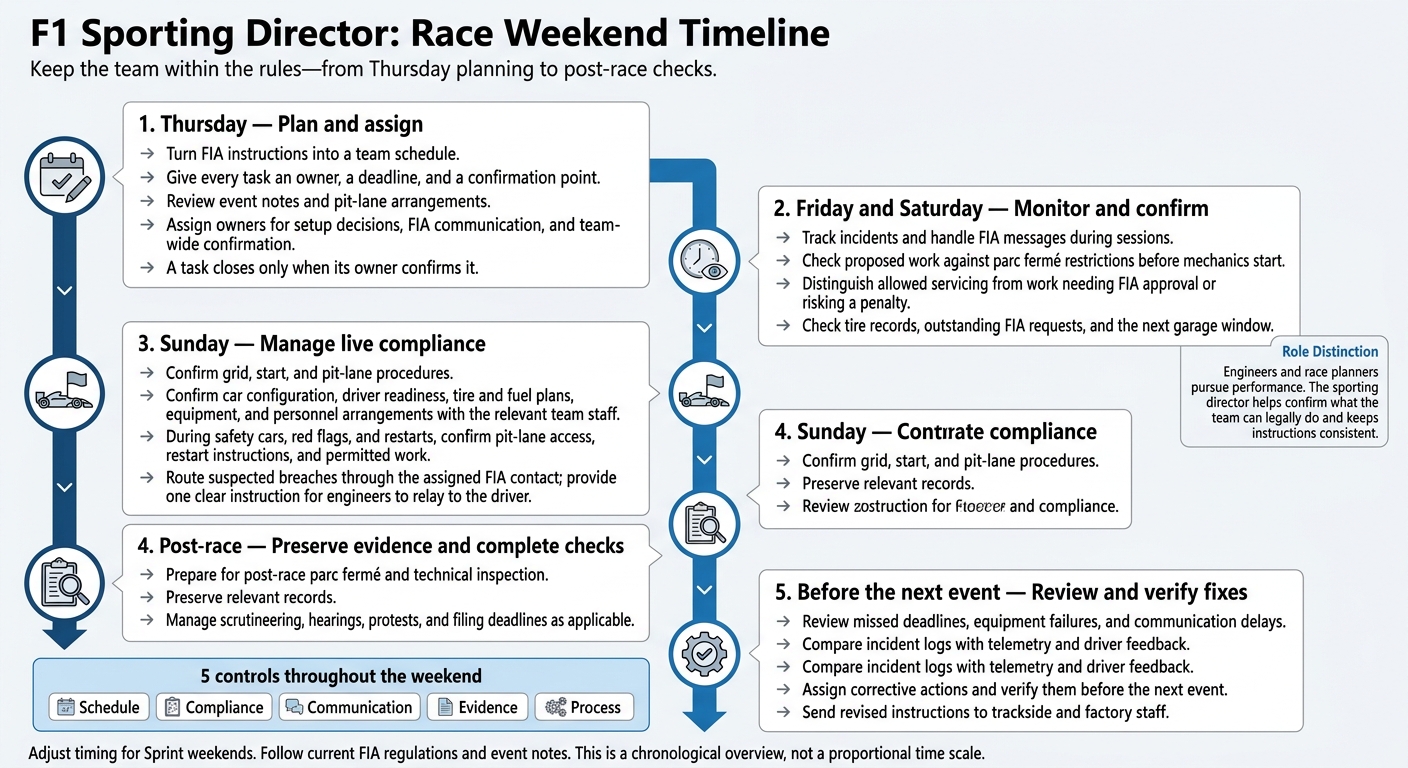
F1 Sporting Director: Race Weekend Timeline
Episode 10: Jonathan Wheatley | Red Bull F1 Sporting Director Interview
sbb-itb-7c68254
Thursday: Turn FIA Instructions Into a Team Plan
With the weekend rules and briefing structure set, Thursday turns them into a team plan. It’s preparation day, but the schedule follows the event timetable. Before cars run, give every task an owner, a deadline, and a confirmation point.
Build the Team Run Sheet
Work backward from session start times, FIA deadlines, and the relevant briefing blocks. Include garage work and driver commitments, with named tasks for engineering, mechanics, pit crew, and communications.
Plan for weather and delays. Name who updates the run sheet and passes changes to trackside and remote staff. A task closes only when its owner confirms it. Carry those assignments into Friday, when live session decisions begin.
Review Event Notes and Pit-Lane Arrangements
Review the latest FIA event notes and pit-lane arrangements. Turn race control instructions and last-minute changes into action items for drivers, race engineers, garage staff, and pit crew. Link each instruction to an action and an owner.
Assign Decision and Communication Owners
Keep setup decisions separate from FIA coordination. Assign one owner to setup decisions, one to FIA communication, and one to team-wide confirmation.
The sporting director sends each instruction to the right owner. The internal-update owner passes along changes, confirms receipt and completion, and keeps trackside and remote staff in sync.
These same owners manage session updates and parc fermé restrictions once track running starts.
Friday and Saturday: Sessions and Parc Fermé
Monitor Sessions and Handle Incidents
Once the run sheet is live, Friday and Saturday move from planning to real-time compliance. The sporting director monitors compliance during sessions while engineers manage setup and strategy. Use live telemetry to spot rule breaches in practice, qualifying, and Sprint sessions, including pit-lane speeding.
Control Work Under Parc Fermé
Once parc fermé begins, the focus shifts to what the team can still work on. The sporting director must distinguish allowed servicing from work that needs FIA approval or could trigger a penalty. Confirm what’s permitted before mechanics start.
Some interventions, such as fuel cooling for circulation, are prohibited once parc fermé applies.
Complete Qualifying and Sprint Checks
Before the session ends, check tire records, outstanding FIA requests, and whether the next garage window is still open. This tells the team what it can finish before the next restriction takes effect.
Sunday: Race Procedures and Post-Race Duties
On Sunday, the sporting director moves from preparation to live compliance.
Check Grid, Start, and Pit-Stop Procedures
The sporting director leads the team’s compliance work for the grid, start, pit lane, and post-race process. Before the start, they work with engineers and race staff to confirm the car configuration, driver readiness, tire and fuel plans, equipment, and personnel arrangements. The final briefing locks in the start procedure and any last-minute changes to how the team will work.
Before each pit stop, the sporting director checks the pit-lane speed limit and any maintenance restrictions, including those on fuel-system work. The pit-lane speed limit is typically 62 mph (100 km/h) at most circuits.
Handle Safety Cars, Red Flags, and FIA Instructions
During a safety car, red flag, or restart, the team must separate what could improve performance from what the rules allow. Strategists assess performance choices. The sporting director works with the team to confirm pit-lane access, restart instructions, and permitted work.
If the team suspects a breach, the sporting director routes it through the assigned FIA contact and gives engineers one clear instruction to relay to the driver.
Manage Post-Race Checks, Hearings, and Protests
After the race, the focus shifts from trackside calls to paperwork and inspection readiness. The car enters post-race parc fermé and technical inspection. The sporting director must preserve the relevant records and prepare for any steward hearing or protest under the FIA sporting regulations and event notes.
Conclusion: 5 Controls and a Weekend Checklist
The sporting director keeps the weekend on track with five controls: schedule, compliance, communication, evidence, and process. Briefings bring them together in one working plan.
Thursday-to-Sunday Checklist
Give each checklist item a named owner and require sign-off. Adjust the timing for Sprint weekends.
| Timing | Check | Owner | Sign-off |
|---|---|---|---|
| Thursday | Update the run sheet and communication assignments | Sporting director | [ ] |
| Friday and Saturday sessions | Log incidents and FIA correspondence | Sporting director / engineers | [ ] |
| Each parc fermé period | Check proposed work against parc fermé limits | Sporting director / technical lead | [ ] |
| Before the race | Confirm grid, start, and pit-stop readiness | Sporting director / strategist | [ ] |
| Sunday | Manage post-race scrutineering, hearings, and filing deadlines | Sporting director | [ ] |
The checklist turns briefing decisions into daily tasks. After the weekend, the same five controls guide the debrief for the next event.
Apply Lessons at the Next Event
Use the debrief to fix the process, not just the last error. Review missed deadlines, equipment failures, and communication delays. Compare incident logs with telemetry and driver feedback to find where the process failed.
Assign a corrective action for each issue and verify it before the next event. Send revised instructions to both trackside and factory staff. Clear handoffs improve pit-lane calls, reduce penalty risk, and support protests.
FAQs
How does a Sprint weekend change a sporting director’s workload?
A Sprint weekend moves a sporting director’s workload earlier, packing key decisions around Friday and the Sprint - not just Sunday. They still lead pit-wall compliance and serve as the main contact with FIA Race Control, but they must track FIA notes and enforce parc fermé restrictions sooner. Back-to-back sessions also call for tighter pit-lane scheduling and clearer handoffs between the team and the FIA.
Can teams repair damage under parc fermé rules?
Yes. Teams can repair damage under parc fermé rules, but the permitted work is strictly limited. They must send the stewards a formal written request for approval. Officials then check the repairs against technical and safety requirements.
If a car has been involved in an incident or has undergone major modifications, FIA scrutineers must inspect it again before it can return to competition.
What evidence does a team need to file a protest?
To file a formal protest, a team must give the FIA stewards verifiable evidence that a technical or sporting rule was broken. This could include telemetry logs, photos of car components that don’t meet the rules, or reports of team communications that weren’t permitted [3].
The stewards then review the evidence to decide whether a violation occurred. Penalties can range from added time to disqualification [3].