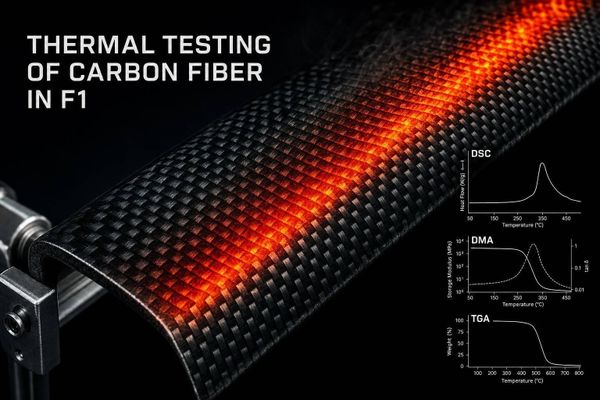
Thermal Testing of Carbon Fiber in F1
How resin softening, stiffness loss, and lab tests (DSC, DMA, TGA) determine F1 carbon‑fiber part performance under race heat.
How resin softening, stiffness loss, and lab tests (DSC, DMA, TGA) determine F1 carbon‑fiber part performance under race heat.

Teams win by keeping a fixed global identity and flexing local liveries, sponsors, and activations to stay recognizable.

How F1 moved from delayed analog logs to live digital streams from hundreds of sensors, reshaping strategy and reliability.
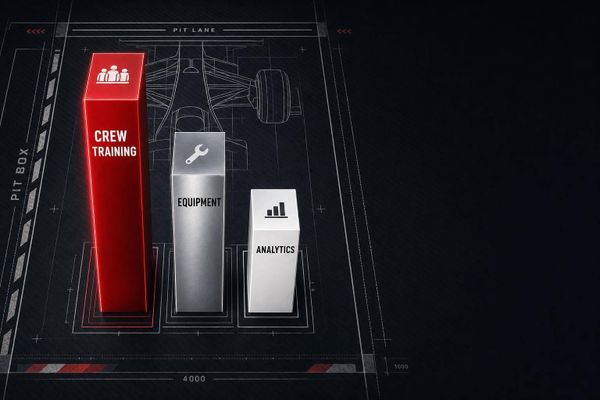
Shows why crew training delivers the best pit-stop gains under the FIA cost cap, with equipment second and analytics third.

How race engineers turn telemetry and team strategy into short, well-timed radio calls that protect the car and improve lap times.
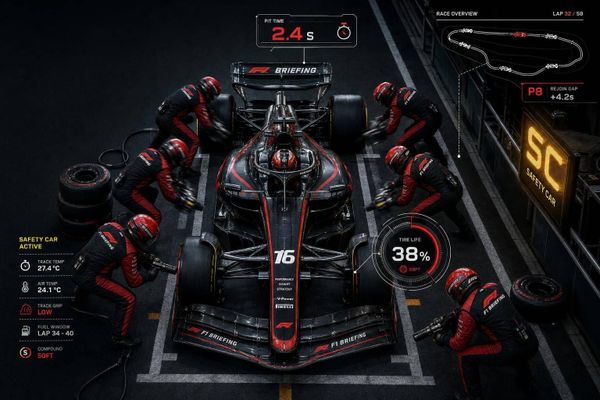
Decide whether to pit under Safety Car or VSC by weighing rejoin position, tire life, and pit-lane execution.

How F1 teams prepare hybrid power units for FIA checks: parts traceability, fuel/ERS limits, parc fermé access, and post-race fixes.

When to undercut or overcut in F1: balance tire wear, warm‑up, pit loss and traffic to pick the fastest pit call.

Layered use of RL, supervised learning, PINNs and MPC in F1 simulations for strategy, prediction, and physics-aware control.
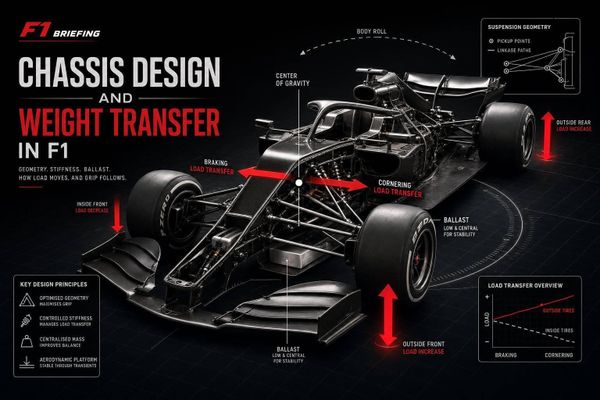
Explains how suspension geometry, stiffness and ballast control dynamic load transfer to optimize braking, traction and cornering.
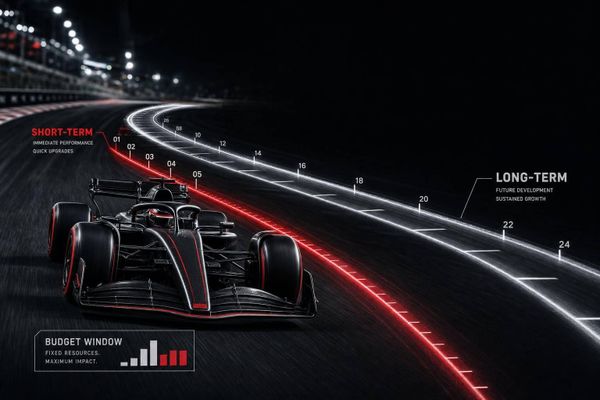
How F1 teams balance immediate upgrades versus future car development under the $135M cost cap and why timing beats raw spend.
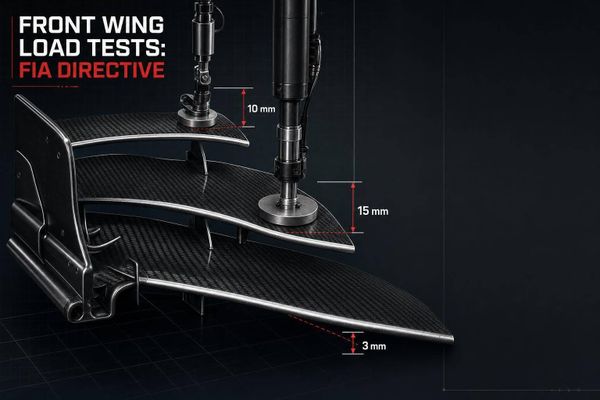
FIA tightened 2025 front-wing deflection limits—mainplane to 10/15 mm and flaps to 3 mm—forcing stiffer, often heavier designs.